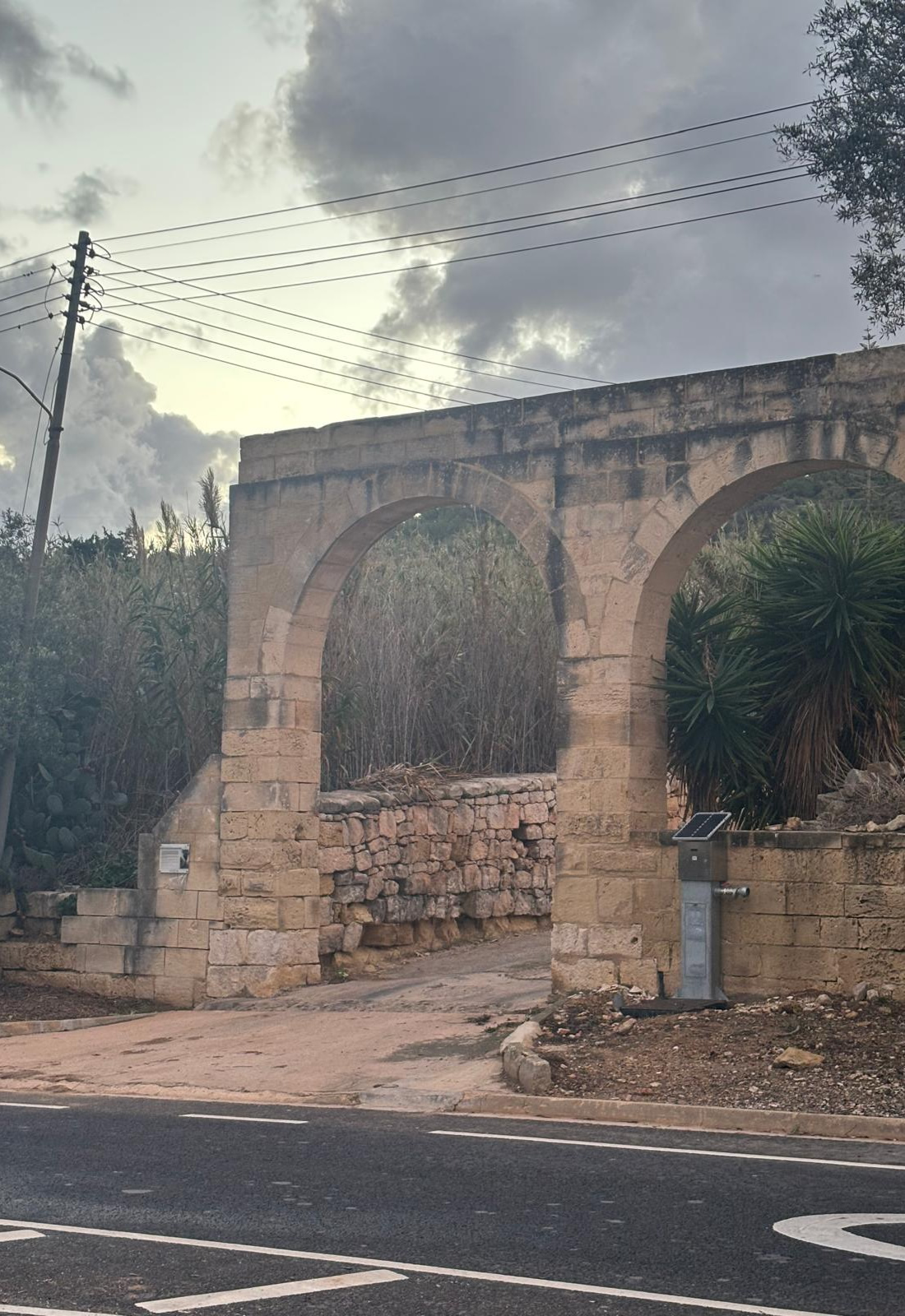
The Xemxija Aqueduct
Google Map Link
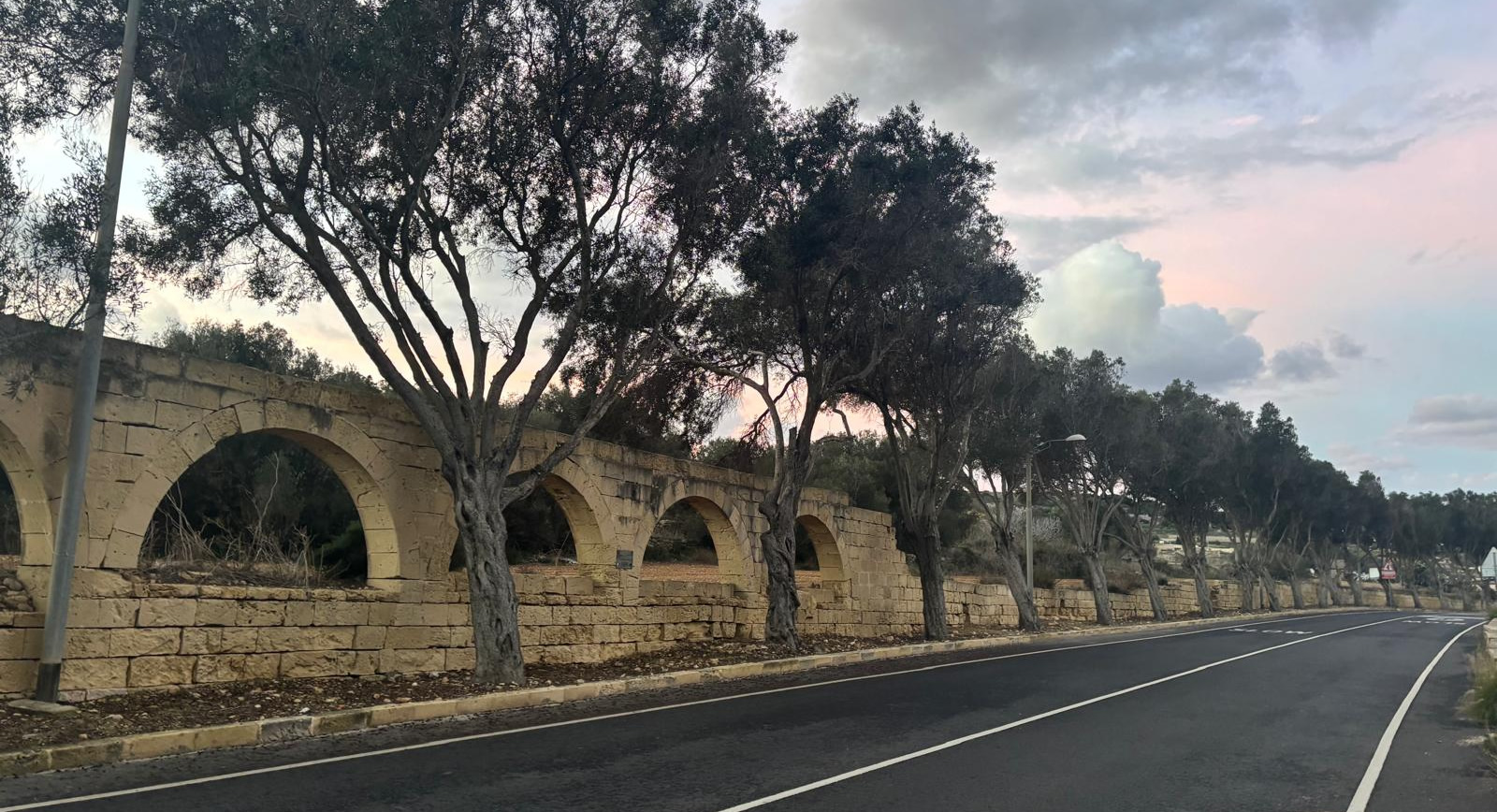
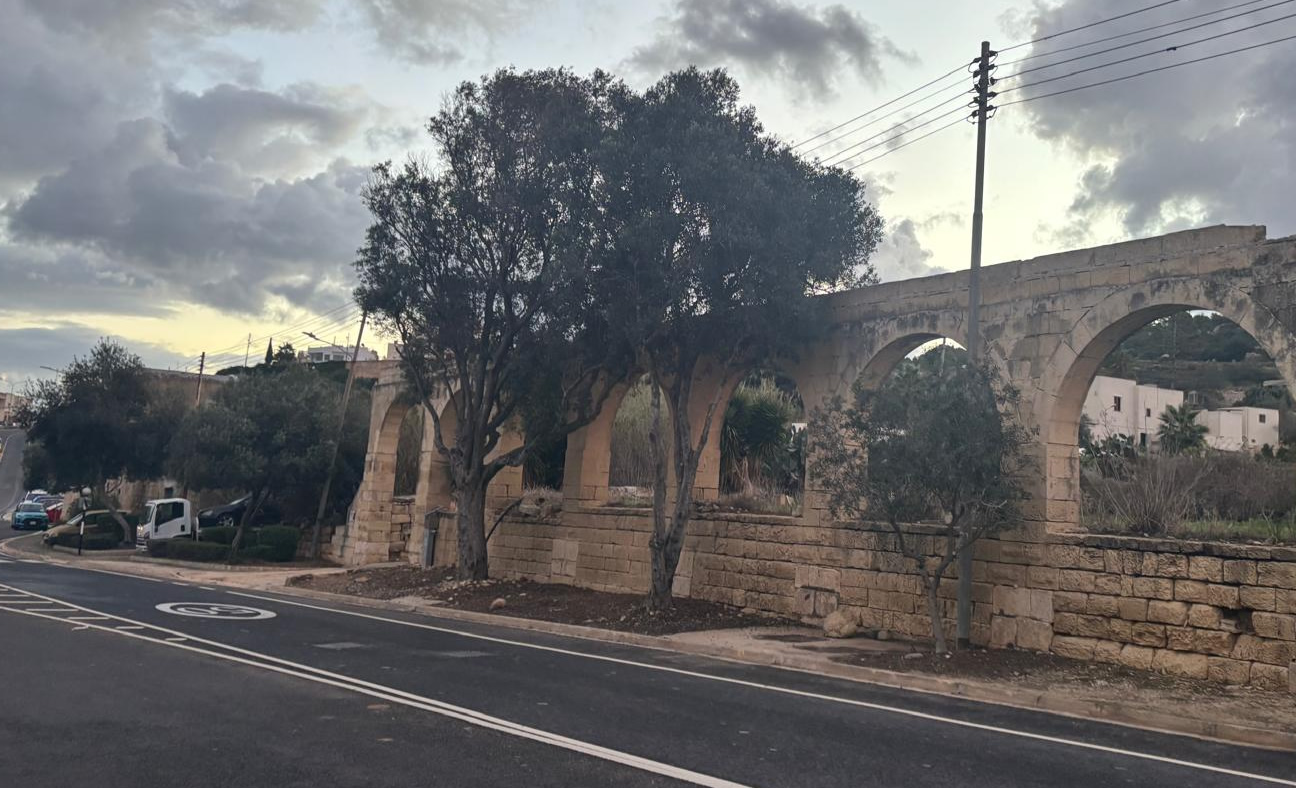
The Xemxija Aqueduct in Malta, the British-built aqueduct completed in 1839.
Full History of the Xemxija Aqueduct (1839) – British Period
The Xemxija Aqueduct, completed in 1839, was a British-engineered water system built to improve the supply of freshwater to the northern settlements of Malta, particularly the rapidly developing areas around St. Paul’s Bay, Xemxija, and their surrounding agricultural valleys. Unlike the 17th-century Wignacourt Aqueduct—which served Valletta and the central regions—this aqueduct was entirely a 19th-century British infrastructure project, reflecting new engineering approaches introduced during Malta’s colonial administration.
⭐ Construction Details of the Xemxija Aqueduct (1839)
The Xemxija Aqueduct, completed in 1839, was designed and constructed under the direction of the British Royal Engineers as part of a wider effort to modernize Malta’s rural water infrastructure.
Its construction reflected the engineering standards of the early Victorian period while making full use of traditional Maltese building materials and techniques.
1. Route and Purpose
The aqueduct was built to transport water from the natural springs of Xemxija Valley, channeling it across uneven terrain toward reservoirs and agricultural distribution points. Its route required crossing a low valley where a raised structure was needed to maintain the precise gradient necessary for gravity-fed water flow.
2. Materials Used
The aqueduct was constructed almost entirely from locally quarried Globigerina limestone, chosen for:
availability,
ease of shaping,
durability, and
compatibility with Maltese construction methods.
Limestone blocks were hand-cut and laid in orderly courses using lime-based mortar, following long-established stone masonry practices.
3. Structural Design
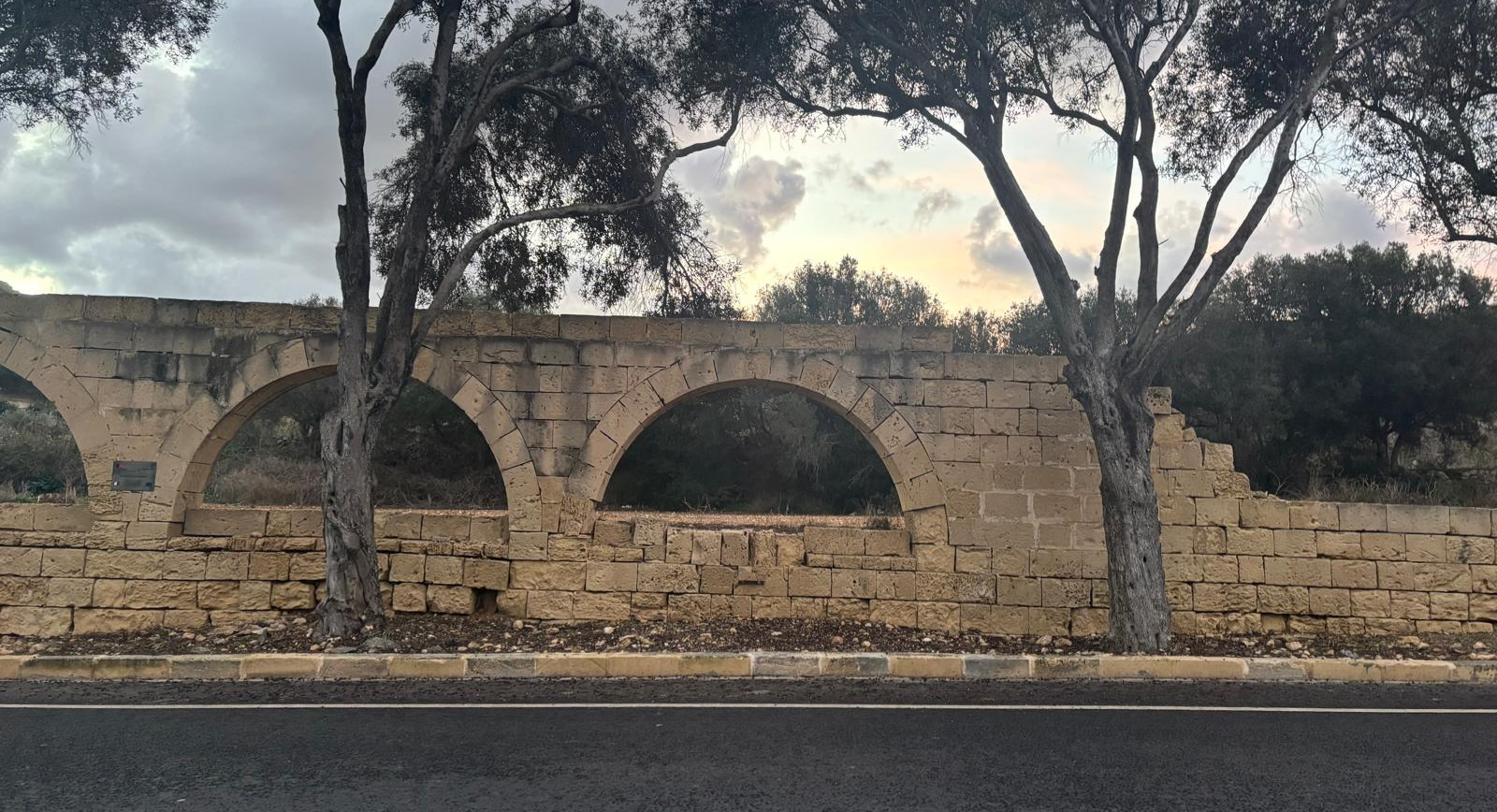
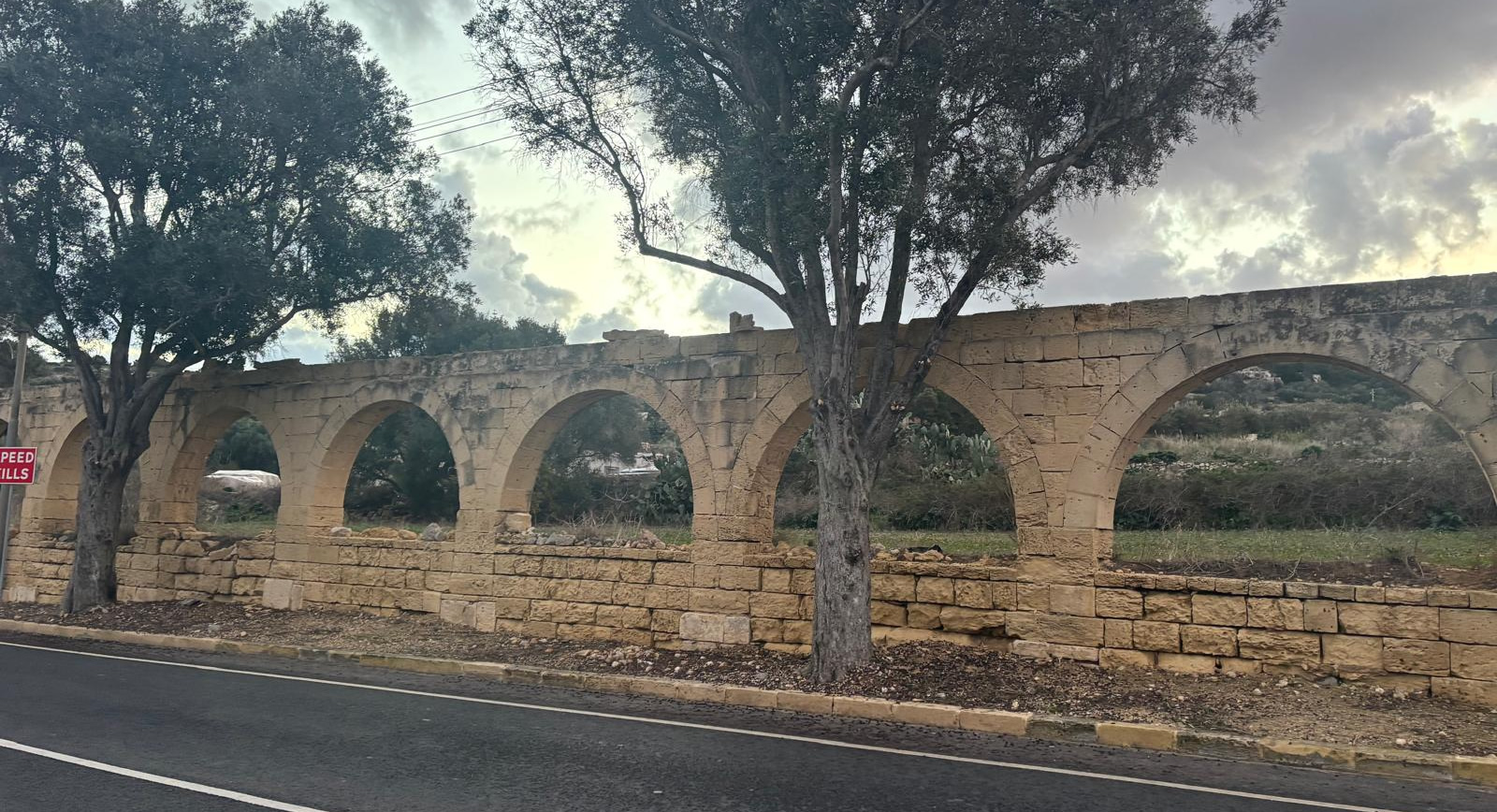
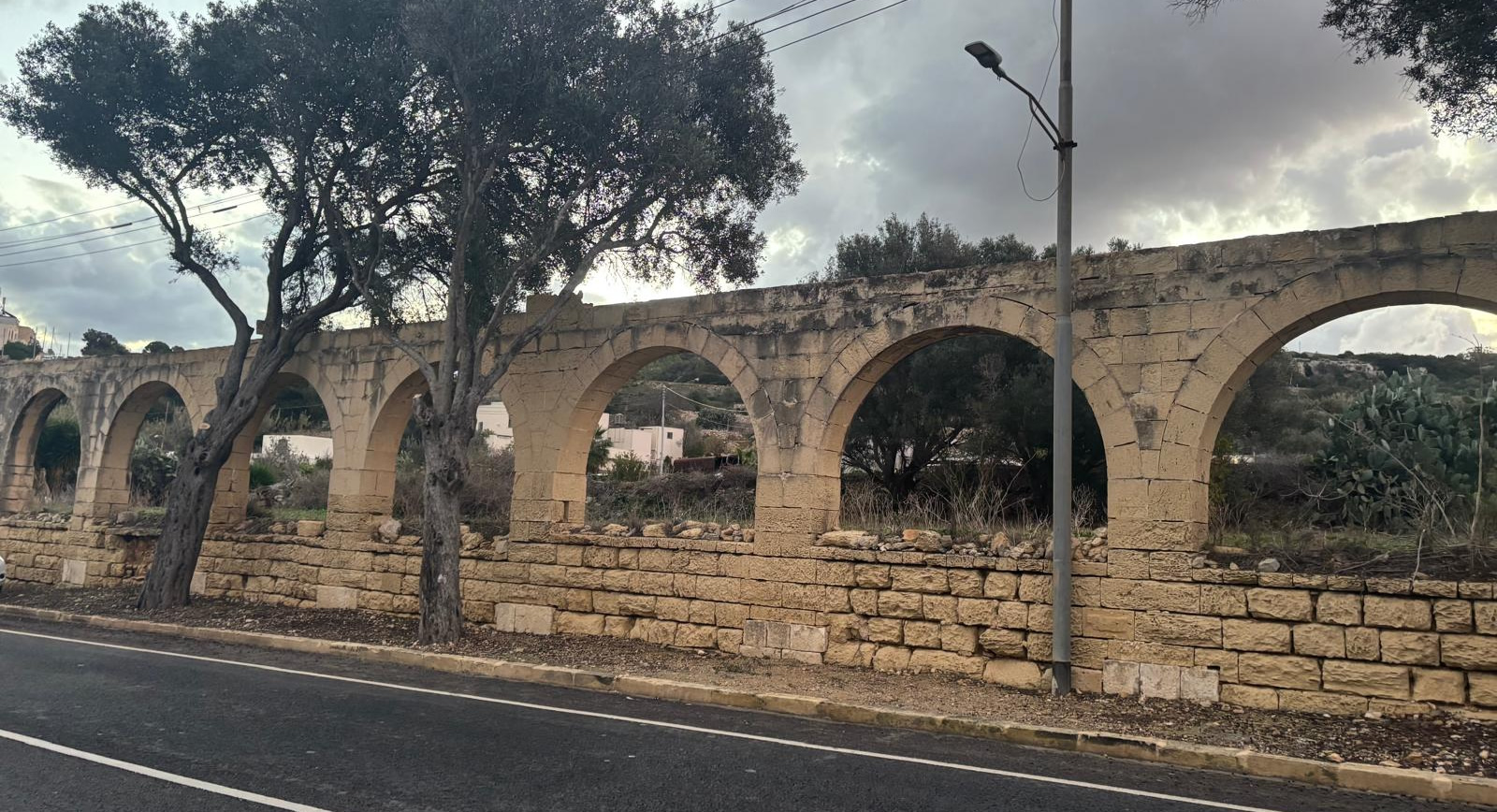
The most visible part of the aqueduct consists of a series of semi-circular arches that elevate the water channel above the valley floor. Key features include:
Arched Supports: Uniformly spaced arches distribute weight evenly and provide stability across uneven terrain.
Piers (Vertical Supports): Solid limestone pillars support each arch; wider at the base to ensure load-bearing strength.
Voussoirs and Keystone: Each arch was constructed using wedge-shaped stones, with a central keystone locking the structure in place.
Spandrels: The spaces between arches were filled with masonry to reinforce stability.
4. Water Channel (Specus)
Atop the arches ran the specus, a narrow stone-lined channel where water flowed. Its construction included:
A smooth plastered interior to reduce friction,
A slightly arched or slabbed cover to protect water from contamination,
A controlled gradient—shallow but continuous—to maintain flow.
The gradient was calculated meticulously to avoid stagnation or overflow, using surveying tools of the period such as leveling staves and sighting instruments.
5. Foundation and Earthworks
To ensure long-term stability:
The piers were built on excavated foundations set directly into bedrock or compacted soil.
Drainage considerations were included to prevent water buildup around the bases.
Earth was reshaped around the structure to guide runoff and limit erosion.
6. Workforce and Construction Methods
The aqueduct was built using a combination of:
British military engineers, who oversaw design and surveying,
Local Maltese stonemasons, highly skilled in limestone construction,
General laborers, responsible for transporting stone and assembling scaffolding.
Timber centering frameworks were used to build the arches, removed once the keystone was set and mortar cured.
7. Finishing and Maintenance Features
Additional construction elements included:
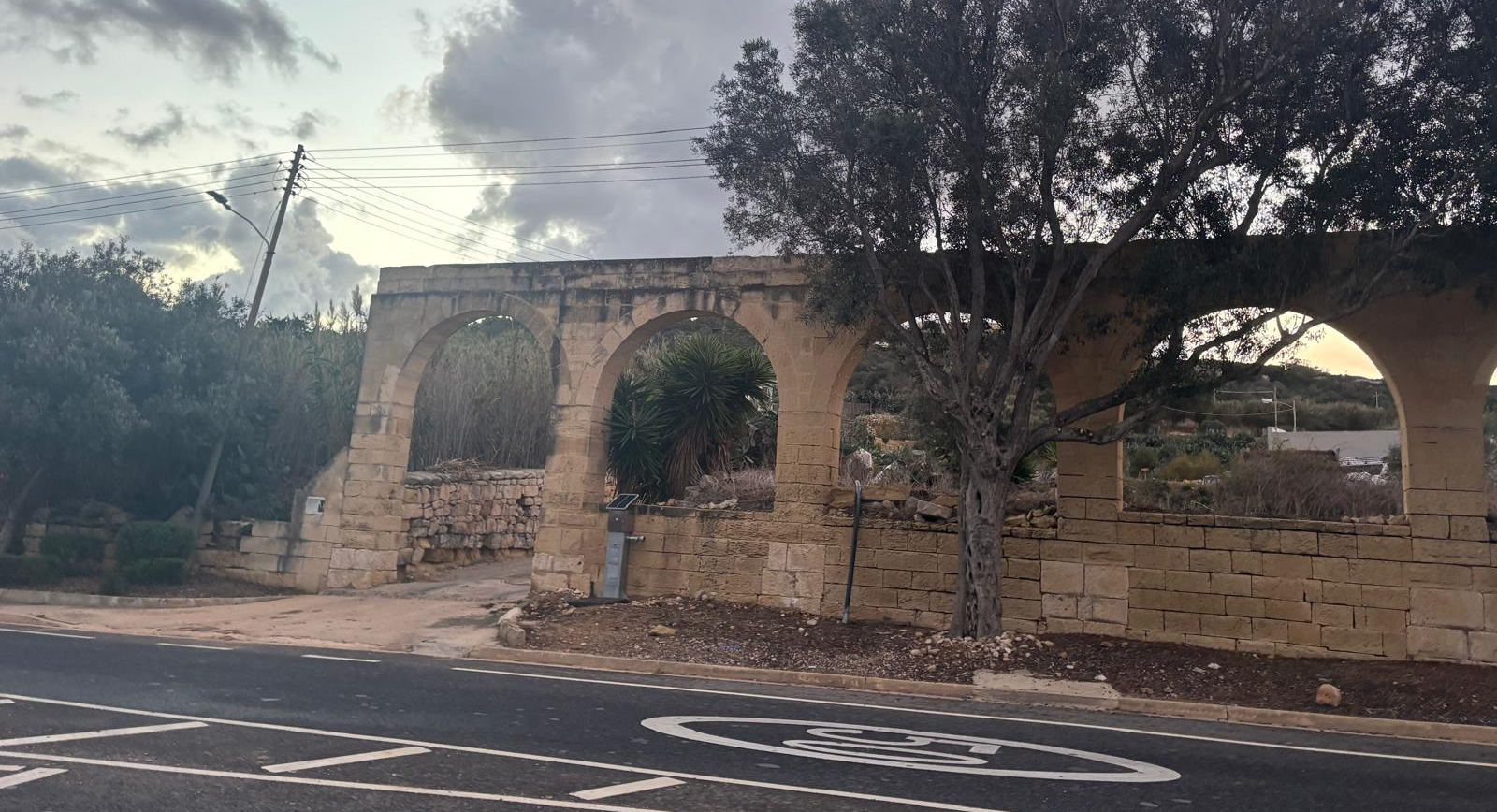
Inspection openings and access points along the route,
Boundary marker stones denoting government ownership,
Protective stone parapets in exposed sections.
These details show that the aqueduct was built not only for immediate use but also with long-term durability in mind.
⭐ Summary
The 1839 Xemxija Aqueduct stands as a fine example of early British engineering in Malta—combining modern surveying principles with centuries-old Maltese stone masonry. Its arches remain a striking landscape feature and a testament to the island’s evolving water management systems.