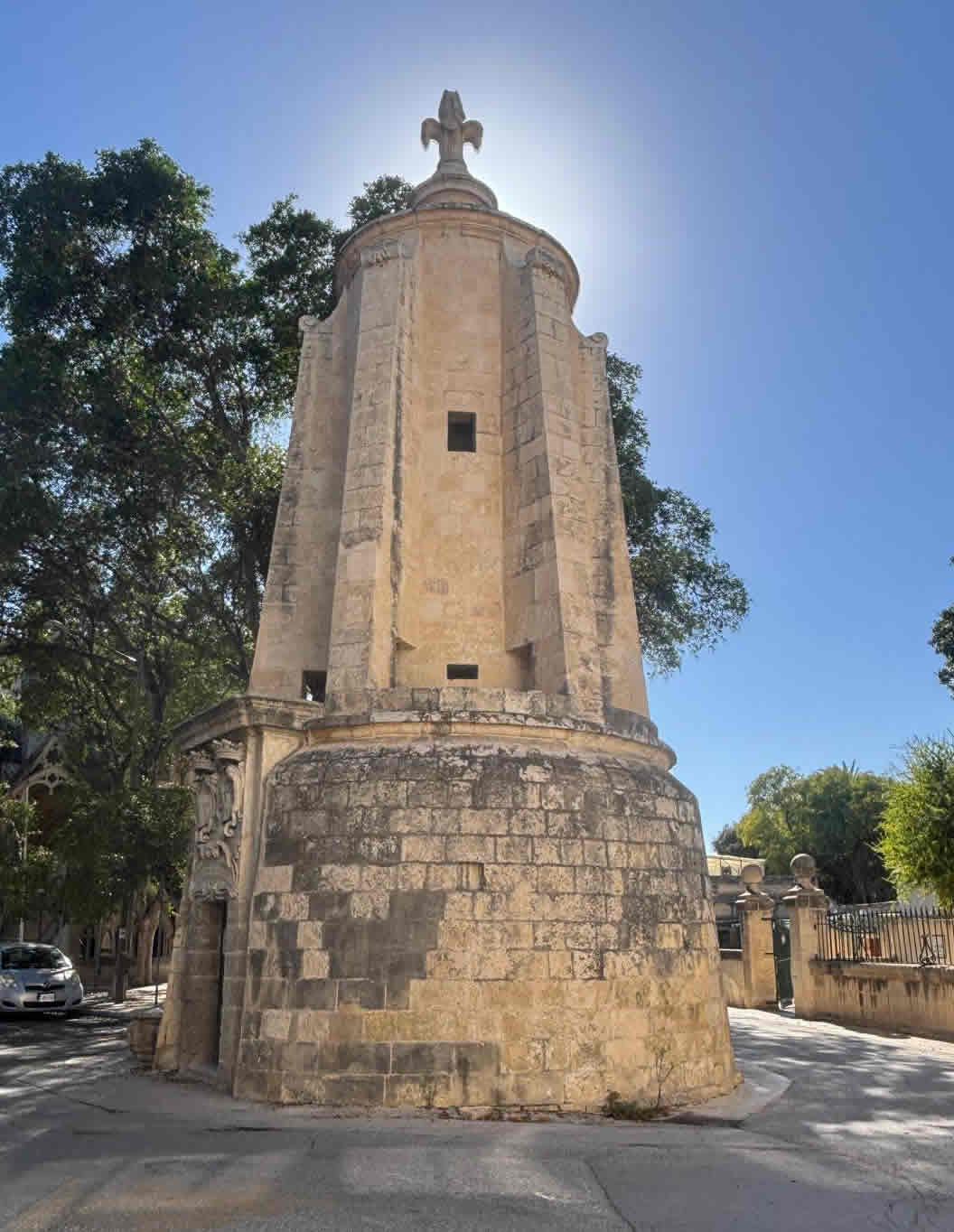
Wignacourt Water Tower
Here’s a detailed history & construction overview of The Wignacourt Water Tower in Floriana, Malta.
Overview
The Wignacourt Water Tower is one of three inspection / water towers in the Wignacourt Aqueduct system (the others being St. Joseph Tower in Santa Venera, and the Hamrun tower / Atocia turret).
Its location is in Floriana, close to the Argotti Botanical Gardens and the Sarria Church.
It marks the point in the aqueduct where water has essentially reached Floriana, just before its onward delivery into Valletta. It serves as a decorative & functional monument in addition to its water‐inspection role.
Historical Context & Purpose
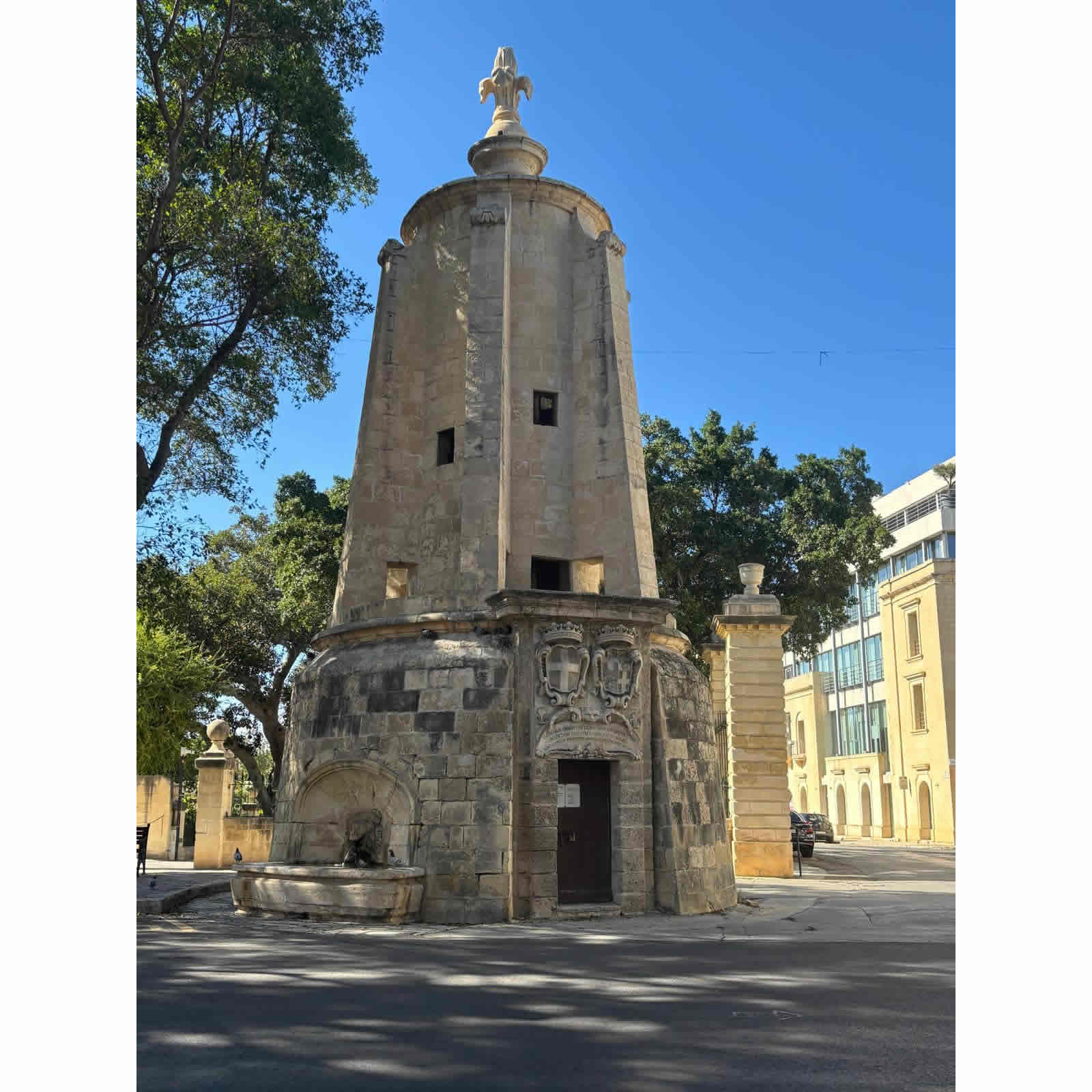
The Wignacourt Aqueduct was built between 1610‑1615 under Grand Master Alof de Wignacourt, to solve Valletta's water supply problem by channeling fresh water from springs in Dingli/Rabat to Valletta.
The Floriana Water Tower was built as part of the aqueduct infrastructure. It is not only a functional “inspection / control” tower but also a commemorative / symbolic structure marking the arrival of the water supply in that area.
Architecture & Construction Details
Here are the known construction and architectural features of the Floriana Wignacourt Water Tower:
| Attribute | Details |
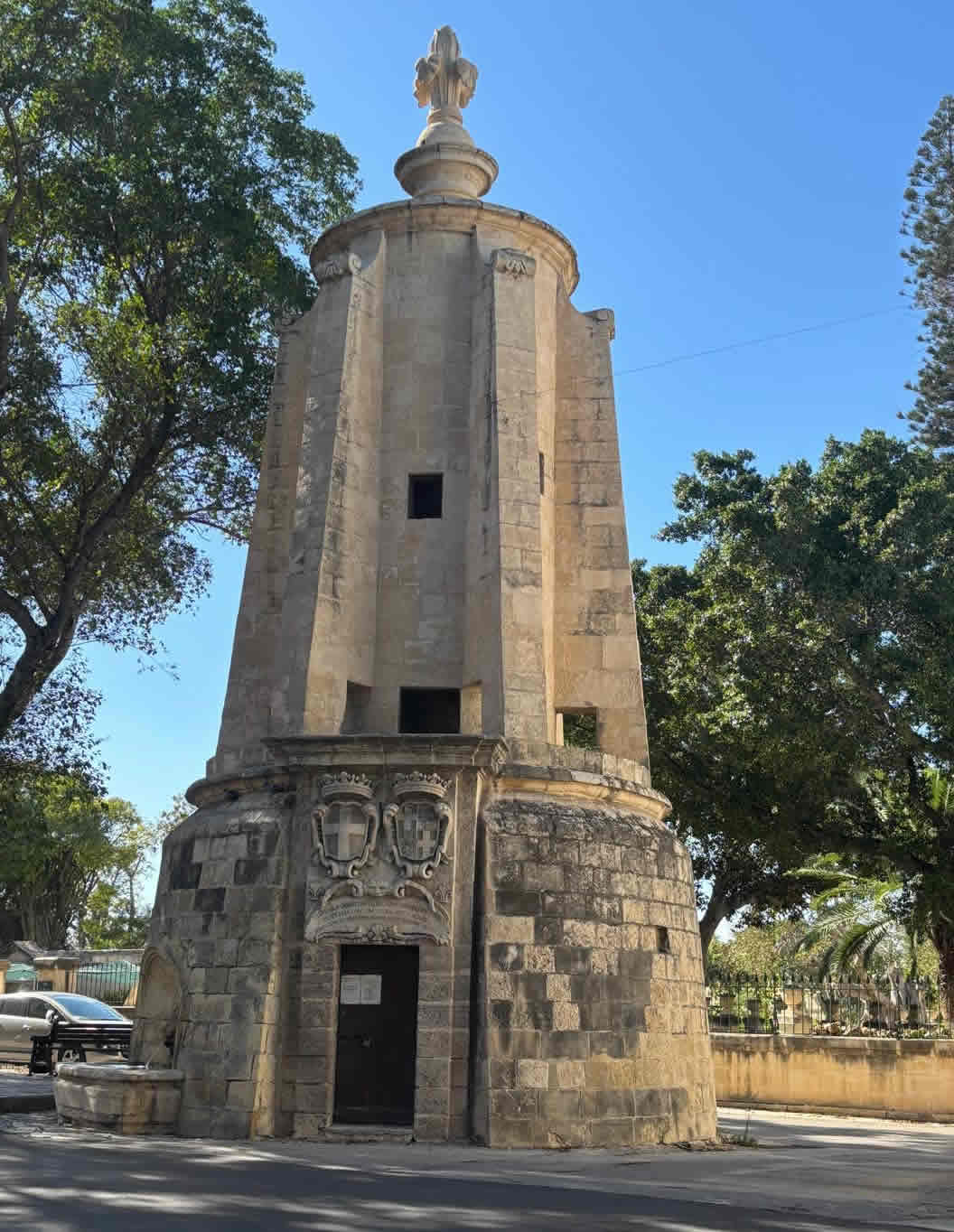
| Pedestal / Foundation | The tower stands on a circular pedestal about 3 metres high. This pedestal contains a fountain and horse trough. |
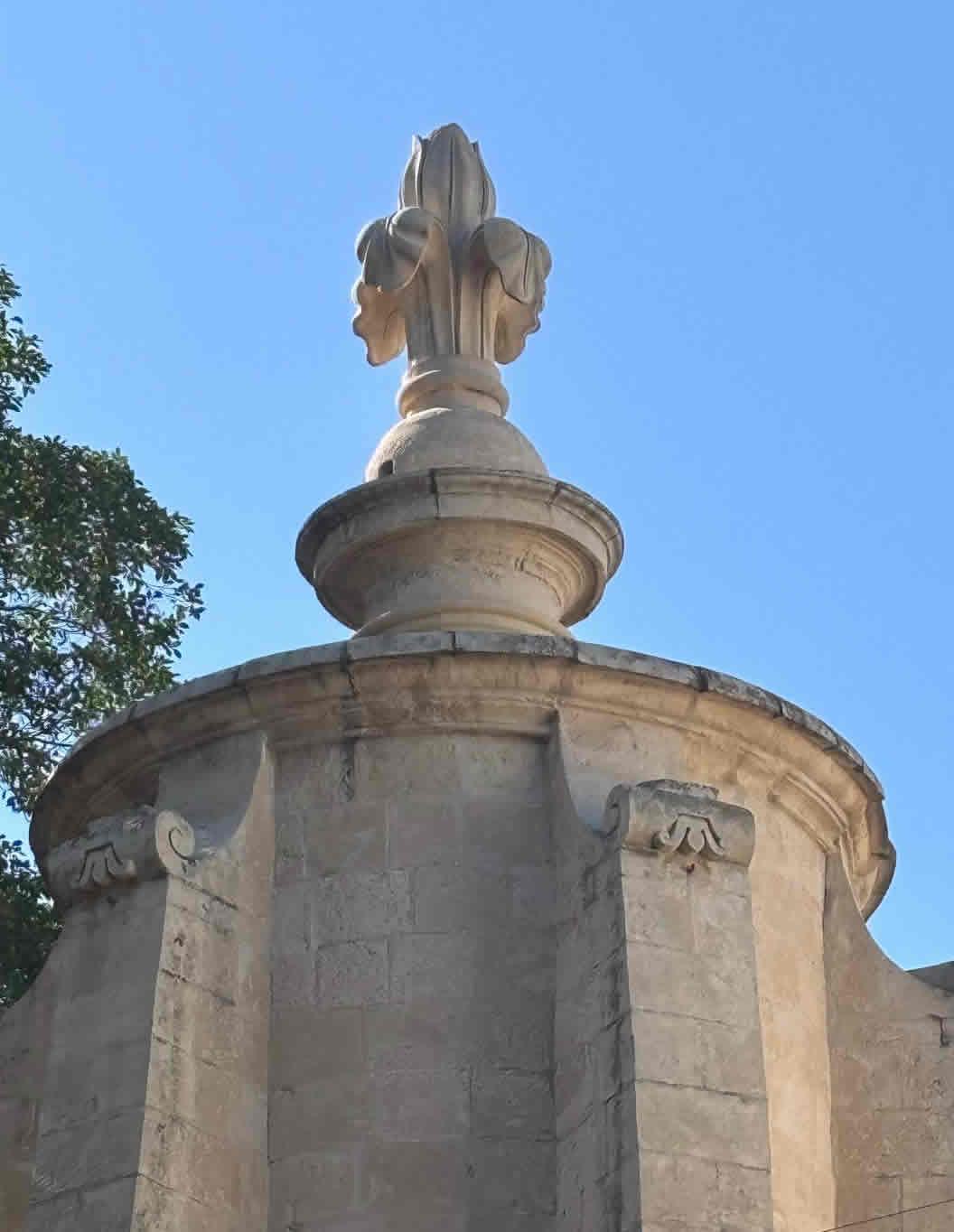
| Tower Superstructure | Above the pedestal is a rounded / circular tower structure, supported by pilasters. The tower has decorative stone work including a sculpted fleur‑de‑lis at the top. |
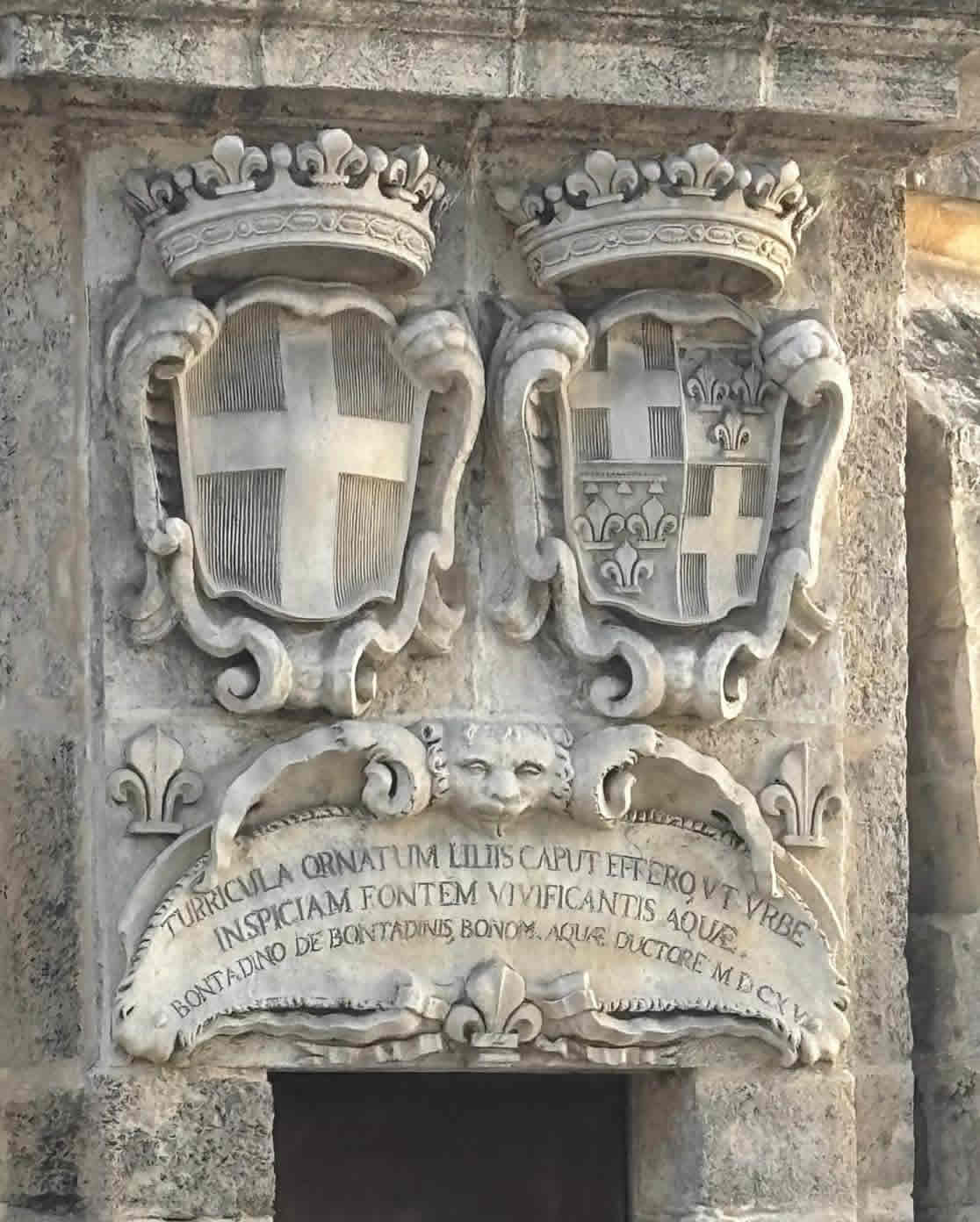
| Decoration & Ornamentation | • Coats of arms: of the Order of St. John, and of Wignacourt himself. • Floral stone sculpture topping the tower. • Fountain with lion’s head spout; a semi‑octagonal basin; a trough for horses. |
| Interior / Structural | Contains a spiral staircase inside, used for access up the tower. It also has features such as siphons for cleaning impurities from the water. |
| Inscription | There’s an inscription on the tower’s pedestal or door marking its connection to the aqueduct system and commemorating its role. The exact text appears in older official accounts. |
Role & Function in the Aqueduct System
The tower was part of the inspection / control system: it functioned to mark the delivery of water to Floriana, to facilitate inspection, maintenance, and perhaps to act as a small reservoir or overflow point. It also likely served partly to maintain pressure and to regulate flow in the final stretch towards Valletta.
As with the other towers, apart from the functional role it has a strong symbolic / commemorative purpose. It includes decorative and heraldic inscriptions and sculptures marking Grand Master Wignacourt’s contribution.
Restoration & Conservation
The tower is designated as a Grade 1 scheduled property since 1994.
It was restored between June 2015 and June 2016 by the Ministry for Transport & Infrastructure. Restoration included external and internal stone work, cleaning, restoration of the staircase, and replacement of deteriorated decorative elements (e.g. the lion relief water spout).
Part of the restoration was strengthening the stairway (via infusing iron rods), as well as restoring skylight/openings etc.
Present Condition & Significance
It is well preserved as one of the surviving original towers of the aqueduct system.
It has both heritage value (architectural, historical) and visual prominence in Floriana. It is an accessible landmark and part of the local monuments / point‑of‑interest lists.