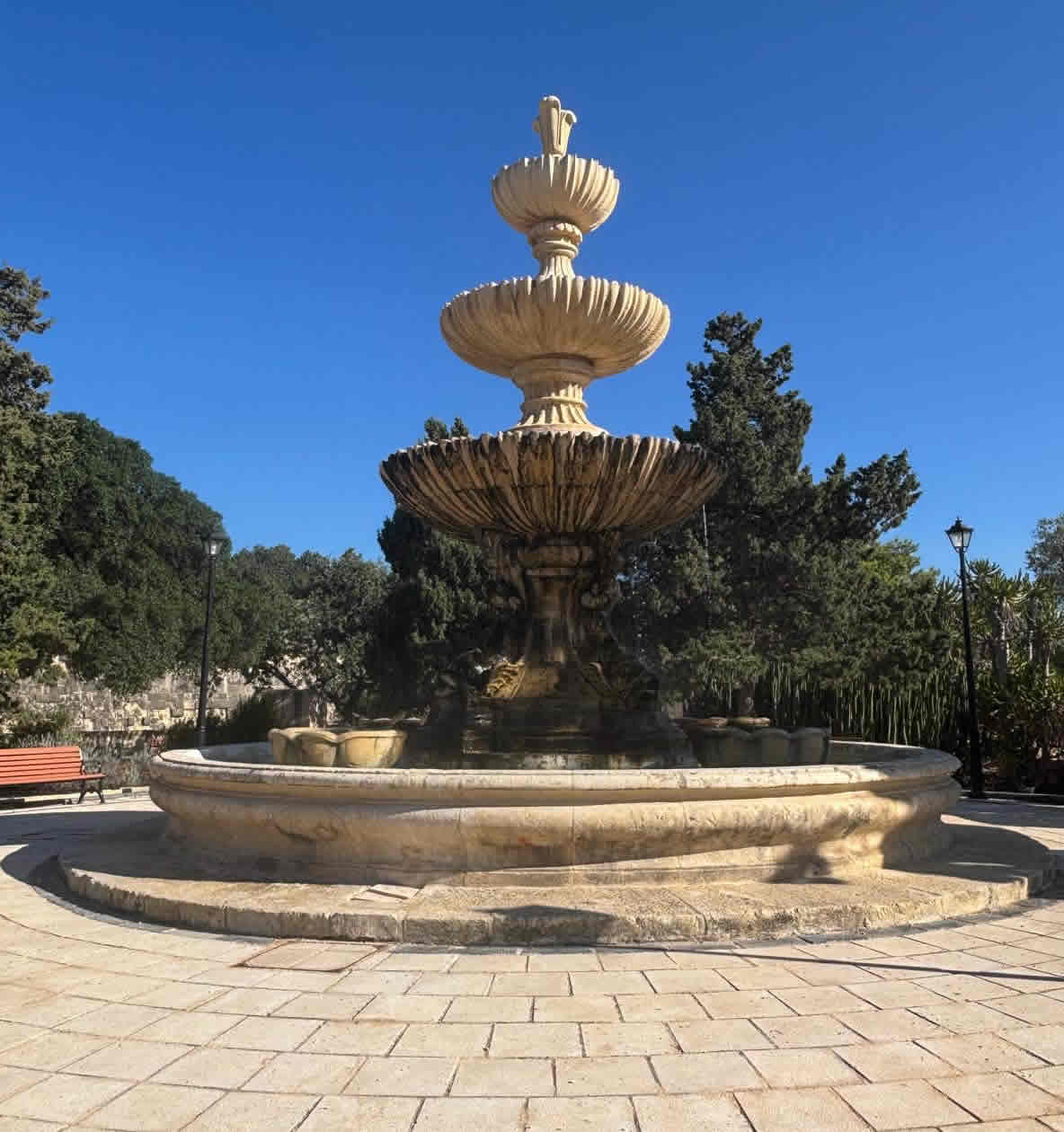
Wignacourt Fountain
Here’s a detailed history & description of the Wignacourt Fountain in Valletta / Floriana, Malta — its origin, construction, style changes, relocations, and current status.
Origins & Purpose
The Wignacourt Fountain was one of the fountains built as part of the Wignacourt Aqueduct system, a project completed by Grand Master Alof de Wignacourt to bring fresh water from springs in Rabat / Mdina into Valletta. Water first reached Valletta in 1615.
The fountain served both practical and symbolic purposes: a place for public access to fresh water, and a monument celebrating the aqueduct and the arrival of steady water supply into the city.
Construction & Design
Here are the construction details and architectural‑features:
| Feature | Description |
| Date of original build / inauguration | Built in 1615, and officially part of the aqueduct system inaugurated on 21 April 1615. |
| Location | Originally it was located in St George’s Square (Pjazza San Ġorġ) in Valletta, opposite what later became the Royal Opera House. |
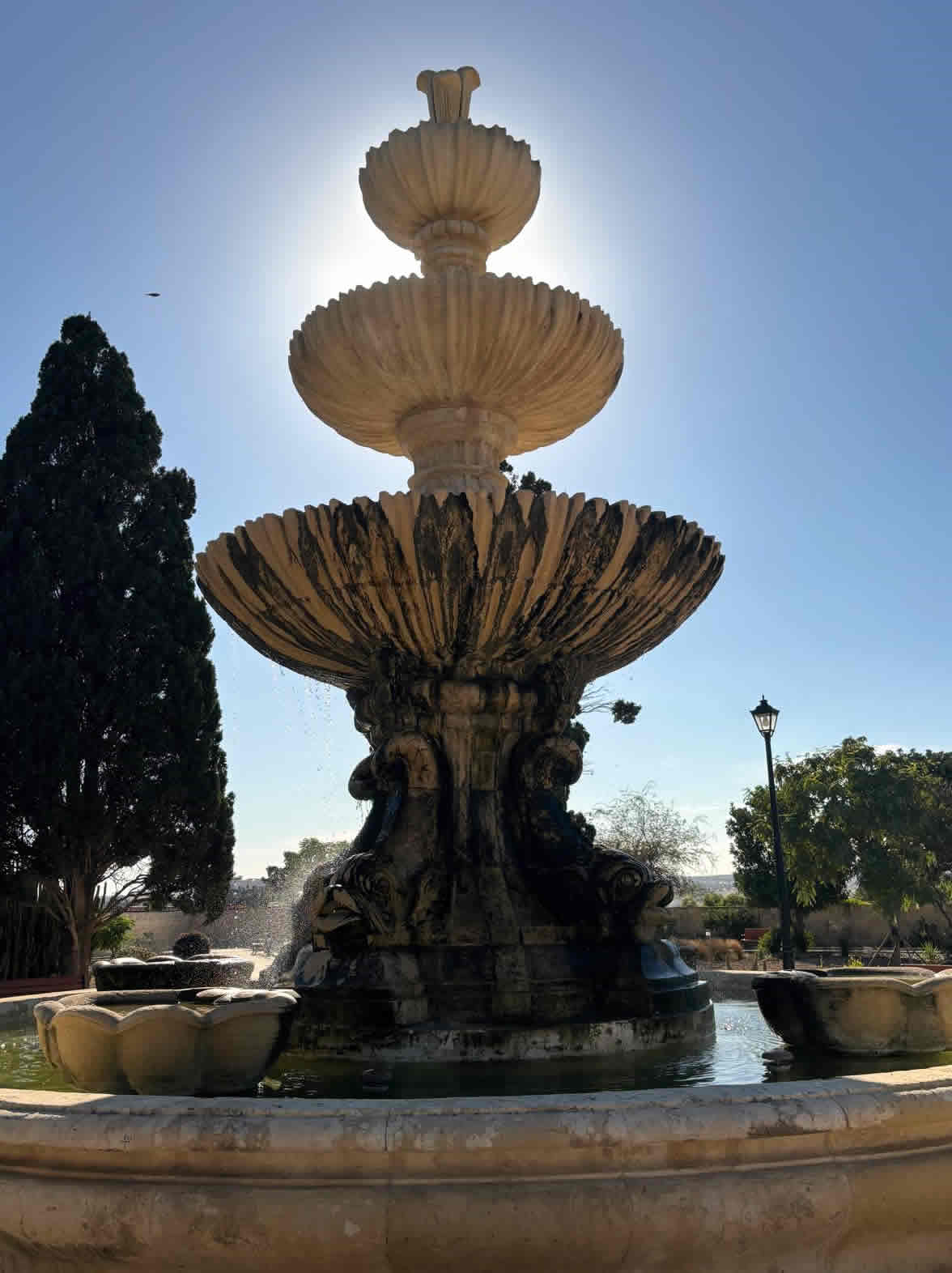
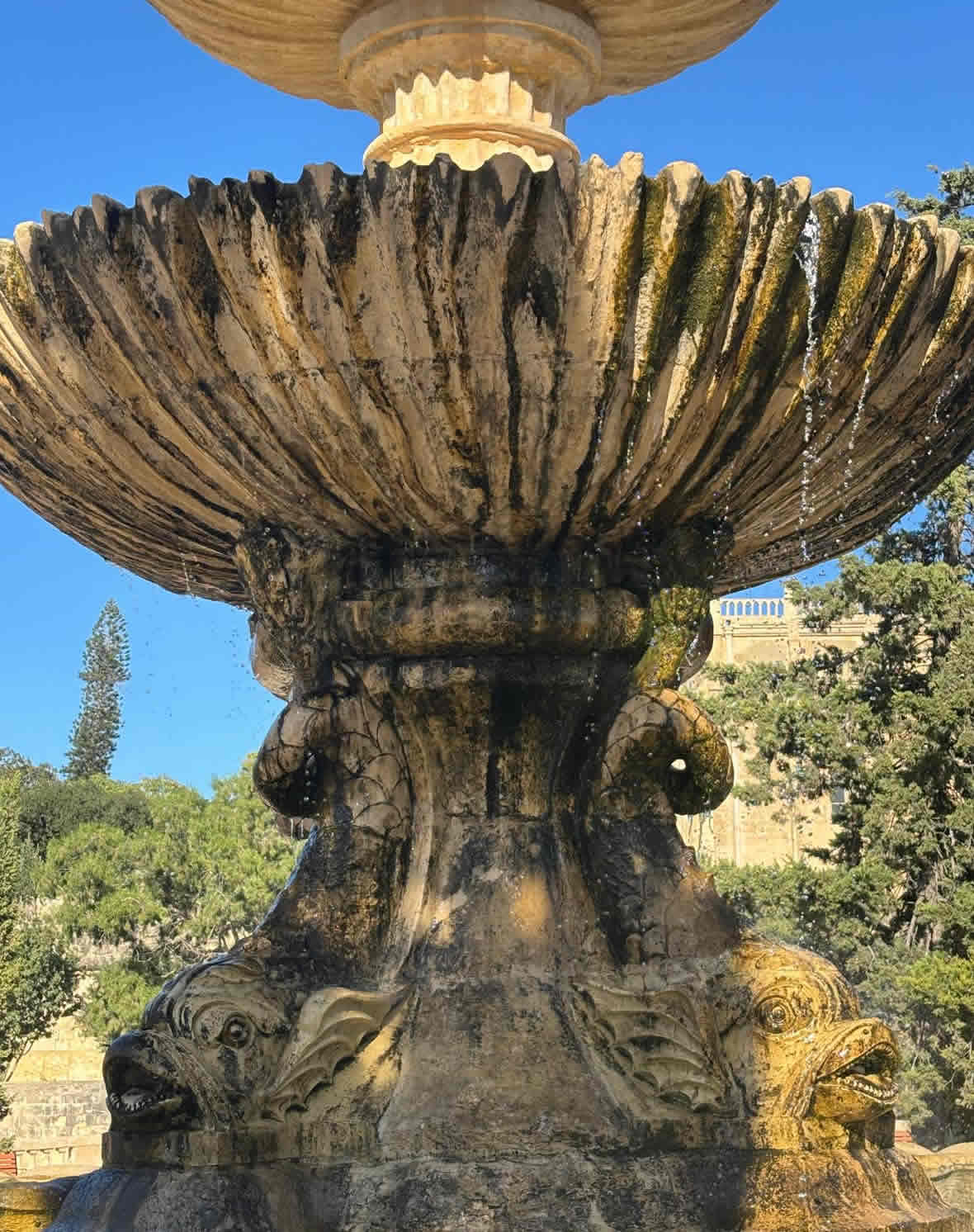
| Material & Decoration | - The fountain is stone. - Its basin has a head of a lion as the spout. - There are two interlocking seashell‑shaped basins (or more, depending on modifications) surrounded by a garland of flowers. - It bears the coats of arms of Grand Master Wignacourt and of the Order of St John. - On the lower part is a radiating sun motif with the motto *Omnibus Idem” \(“to all the same” / “everyone is equal”) |
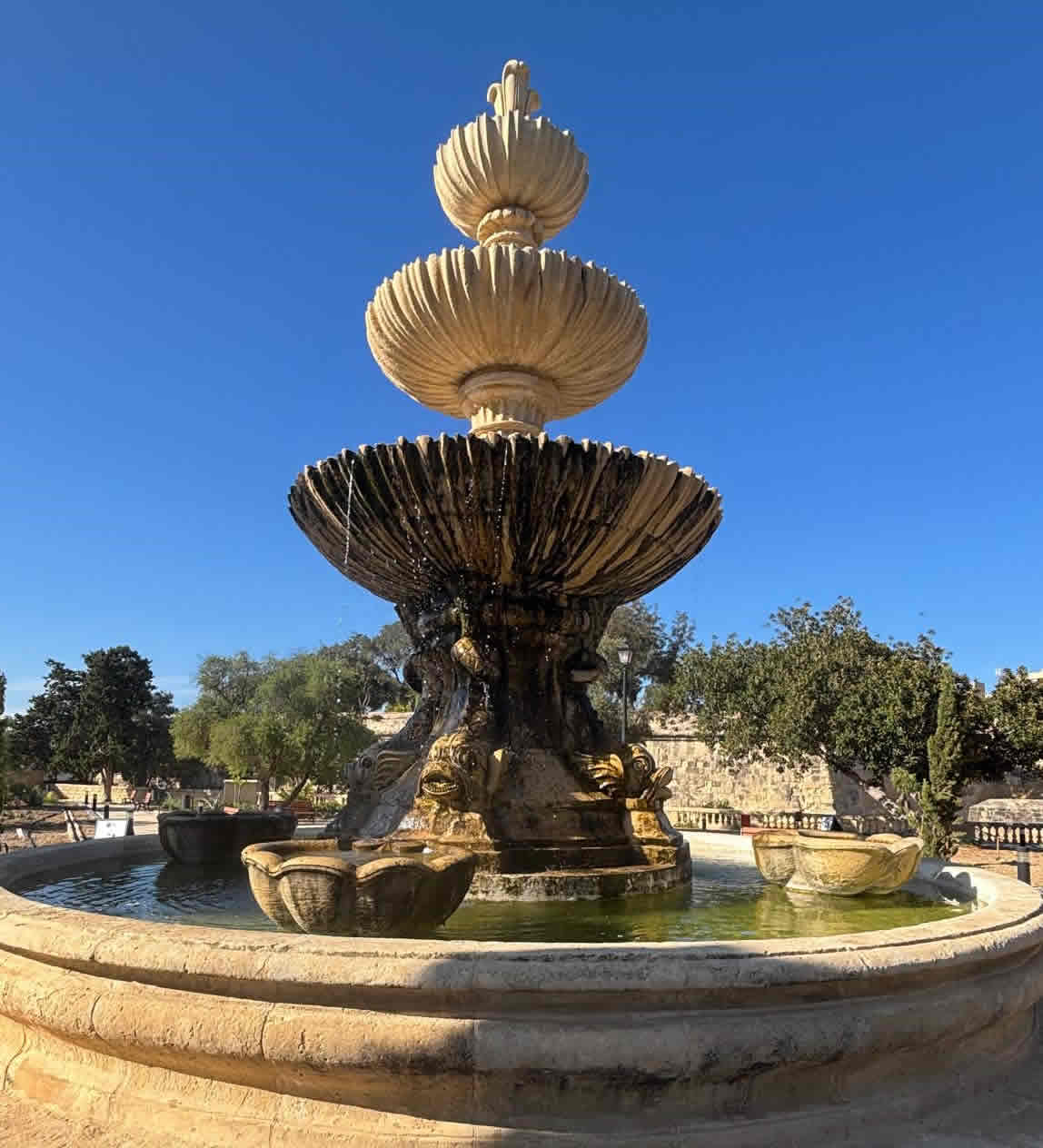
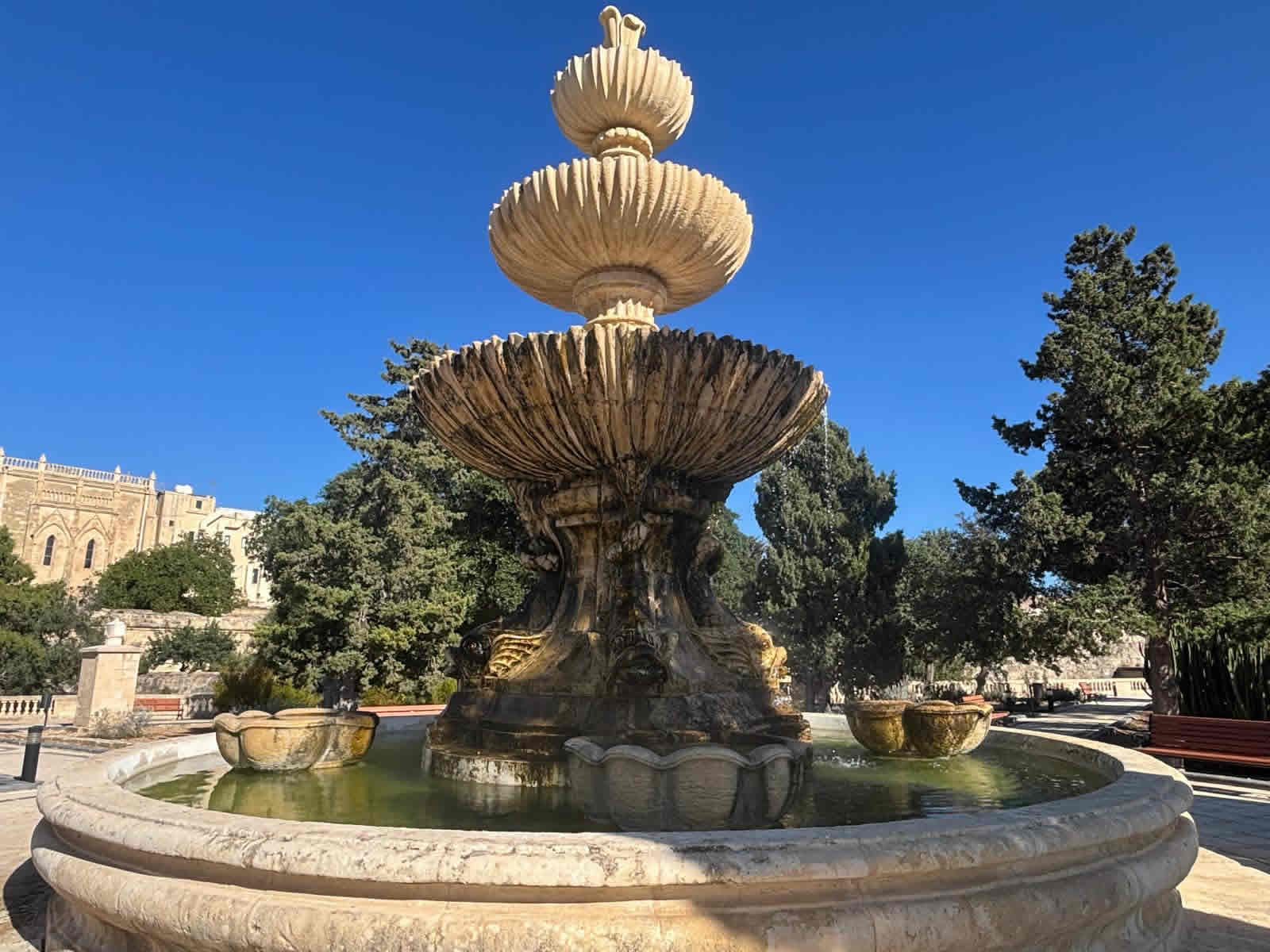
| Structure | Large circular basin at the base; superimposed smaller basins (seashell‑shaped) above; decorative elements like lion’s head, garlands. Some accounts say the fountain had three superimposed seashell basins. |
Changes & Relocations
Over the centuries, the fountain has been moved multiple times and modified. Here are the main changes:
| Time |
| Change / Move /Reason / Notes |
| Late 19th century |
| The fountain was moved from its original location in Valletta (in St George’s Square) to the side of the Royal Opera House. |
| 1960s |
| When City Gate was modified / redeveloped, further change in position was made. The fountain was relocated a few metres. |
| 1986 |
| Restored by Din l‑Art Ħelwa. |
| 1999 / 2000 |
| During the restoration of *St James Cavalier* (which was converted into a Centre for Creativity), the fountain was again moved a few metres. |
| Recent / 2008 onward |
| Scheduled as a Grade 1 national monument. There have been concerns about its state of preservation, with commentary noting it is “falling into disrepair” and calls for restoration. |
Symbolism & Motto
One notable feature is the motto “Omnibus Idem”, Latin for “Everyone is the same” (or “the same to all”), which appears on the lower section of the fountain. It emphasises egalitarian idea: water of the aqueduct is for all.
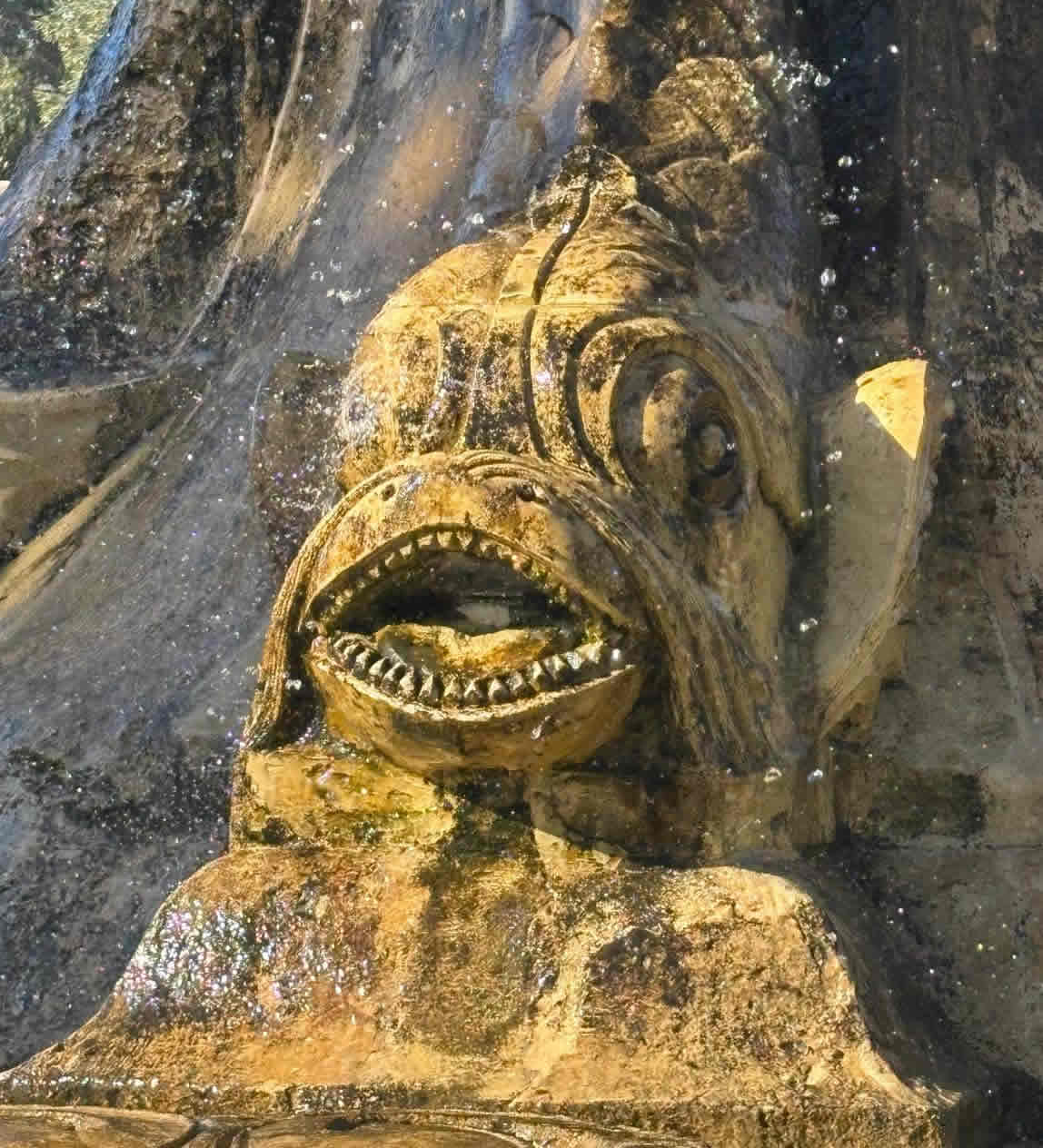
The fountain also includes heraldic symbols (Wignacourt’s arms, the Knights’ arms), sculpted decorations (seashells, lion’s head, garlands) that are more than purely functional—they are commemorative / decorative.
Current State & Issues
The fountain is currently located in Floriana, in St Philip’s Gardens, after being moved by British authorities (originally for military parades etc.).
It is officially protected (Grade 1).
However, it has suffered from neglect. Reports mention corrosion and damage; in some places parts (like dolphins or other sculpted elements) have been lost or are degraded.
Interesting Points & Matters of Debate
Some historical sources say that the original fountain in St George’s Square was demolished in 1745 (or at least significantly altered) and replaced by a Pinto‑era fountain; others hold that the Wignacourt Fountain was renovated rather than destroyed.
How many basins the fountain had originally (2 or 3) is a matter of some discrepancy in different accounts. Some say the third basin was added later.