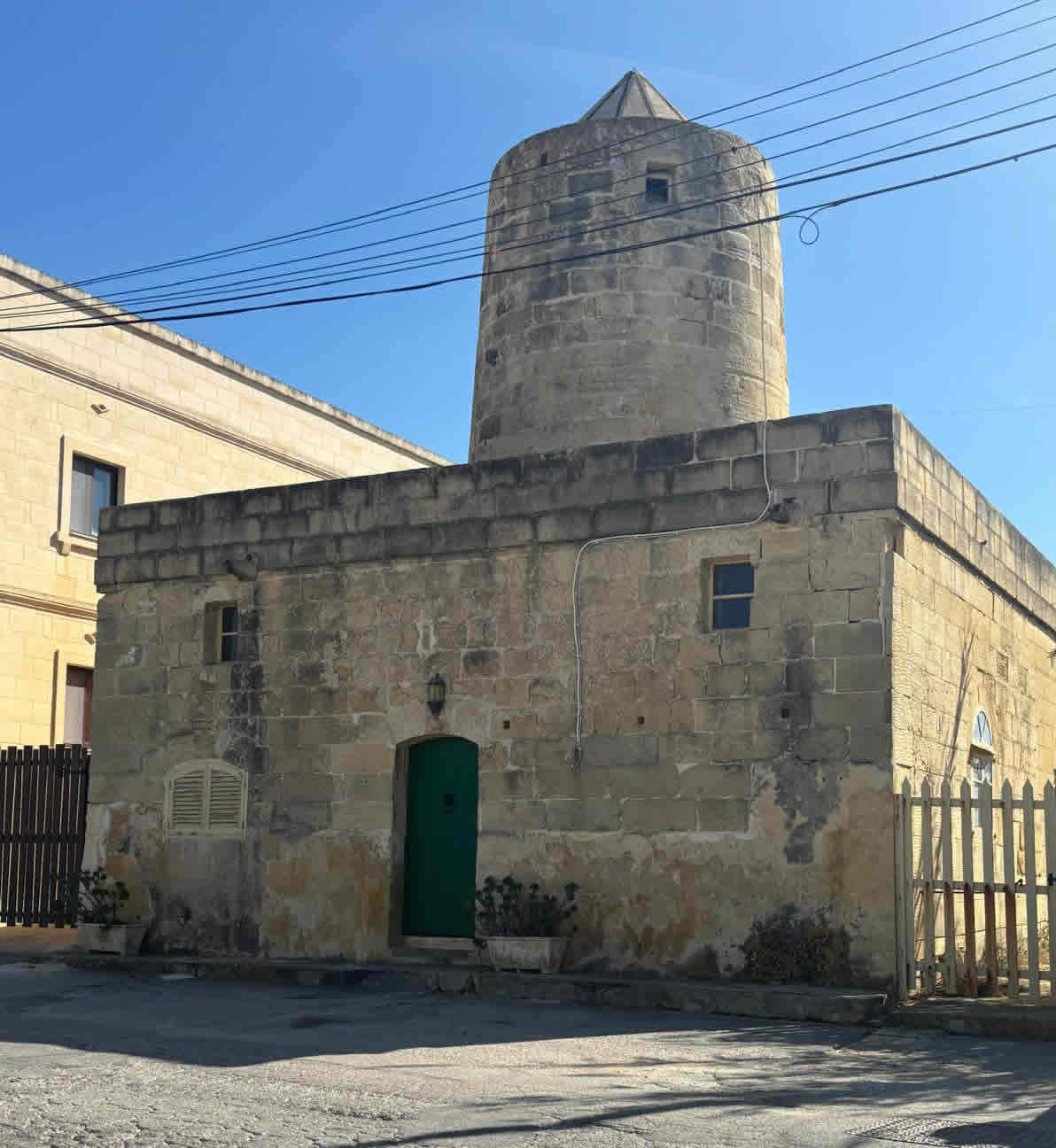
Santa Lucija Windmill - Gozo
History and construction description of the Santa Luċija (Santa Lucija) Windmill in the hamlet of Ta’ Santa Luċija / Ta’ Kerċem, Gozo.
📍 Location
The coordinates of Santa Lucija Windmill are:
- 36.042578, 14.218878
Short ID & location
Local name: Il-Mitħna ta’ Santa Luċija (Santa Lucija Windmill).
Place: the hamlet of Santa Luċija, administratively part of Ta’ Kerċem, island of Gozo .
A small tower-type windmill built in the late 19th century (commonly dated c.1885) in the fertile hamlet of Santa Luċija (Ta’ Kerċem). It is a late/privately built mill that served local farmers, later fell out of working use (sails removed) and today survives as a built relic.
Full history
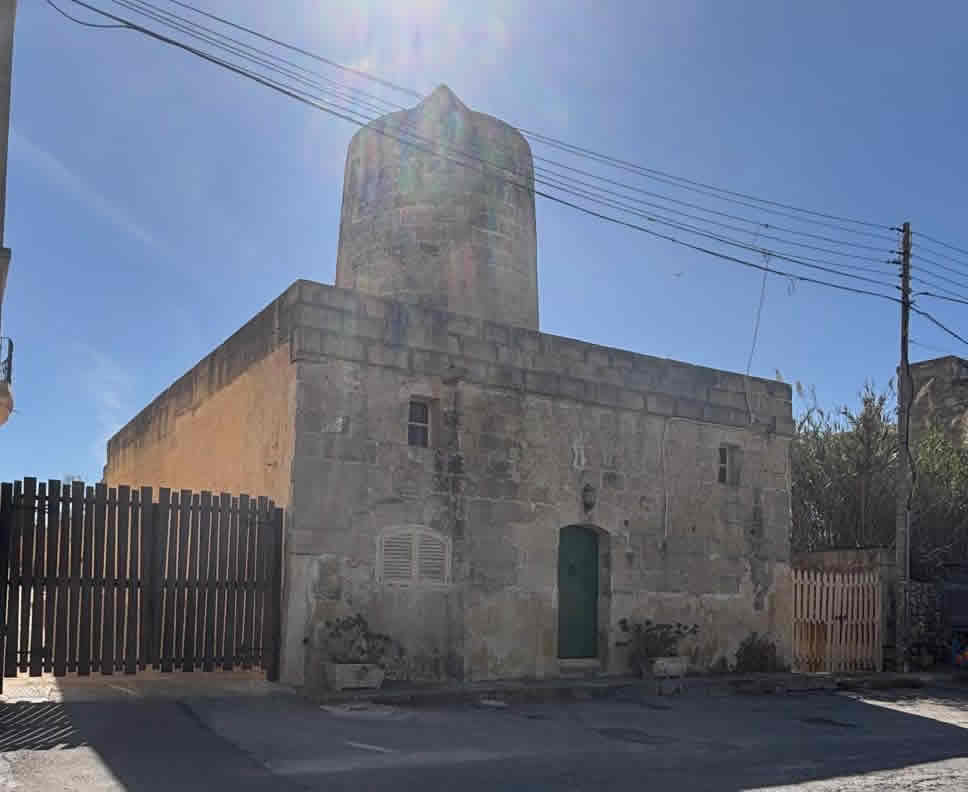
Most specialist lists and local windmill databases date the Santa Luċija mill to 1885 (late 19th century). That places it among the later, privately funded windmills on the islands — a period when steam and motor technology were beginning to appear, but traditional windmills were still economical for small rural communities.
Ta’ Santa Luċija is a particularly green/fertile pocket of Gozo (springs, arable fields around the hamlet). Windmills were built where local grain production could supply a village-scale miller; Santa Luċija’s small size and rural character fit the pattern of a minor local mill rather than a large, foundation-built Knights’ mill.
Whereas large, early windmills in Malta/Gozo were often built by charitable/foundation initiatives (e.g., Manoel de Vilhena foundations in the 18th century), the late 19th-century windmills (including Santa Luċija) were typically private investments by local millers or landowners. Specific archival names for the builder/first miller of Santa Luċija are not given in the accessible online references I found.
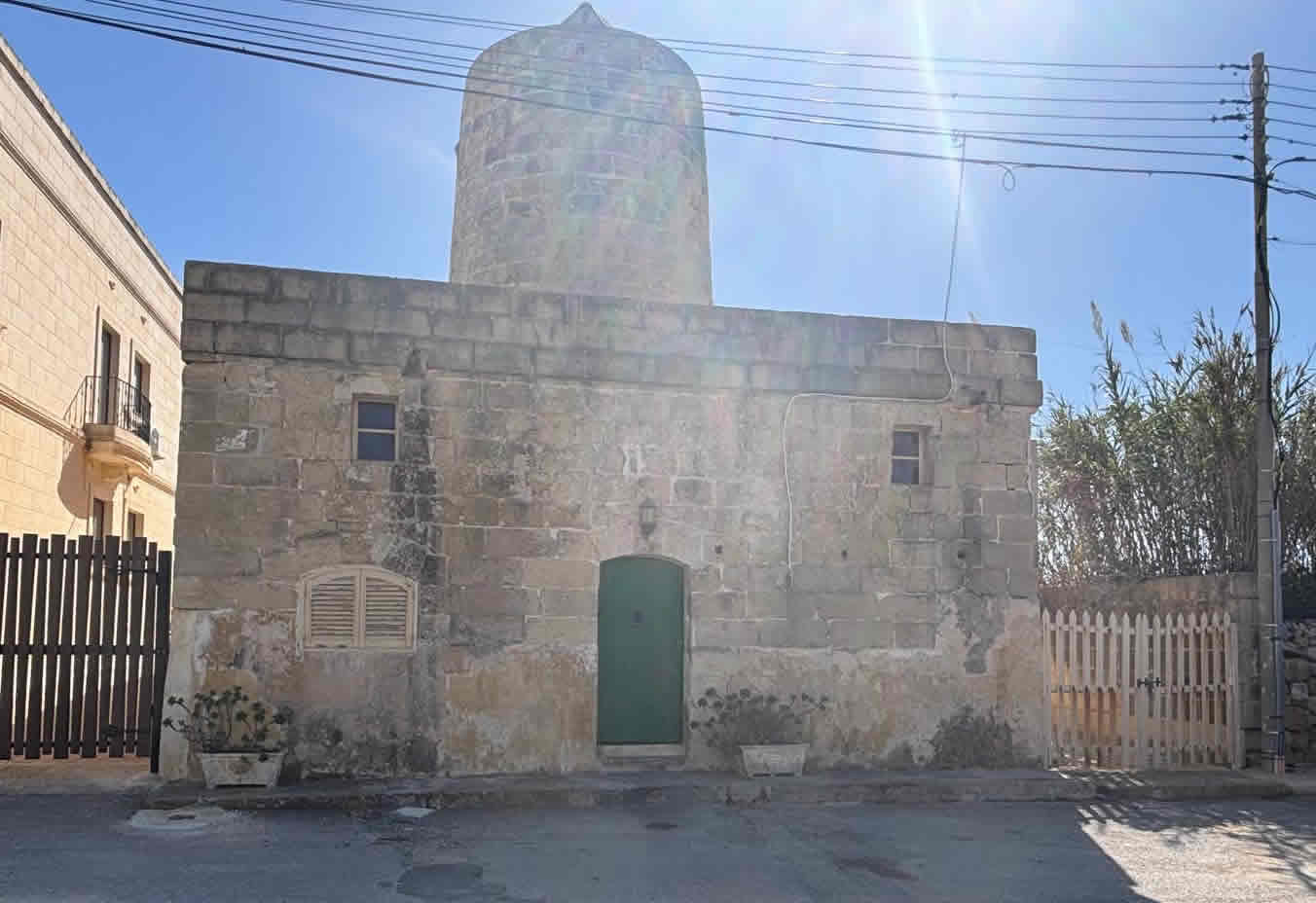
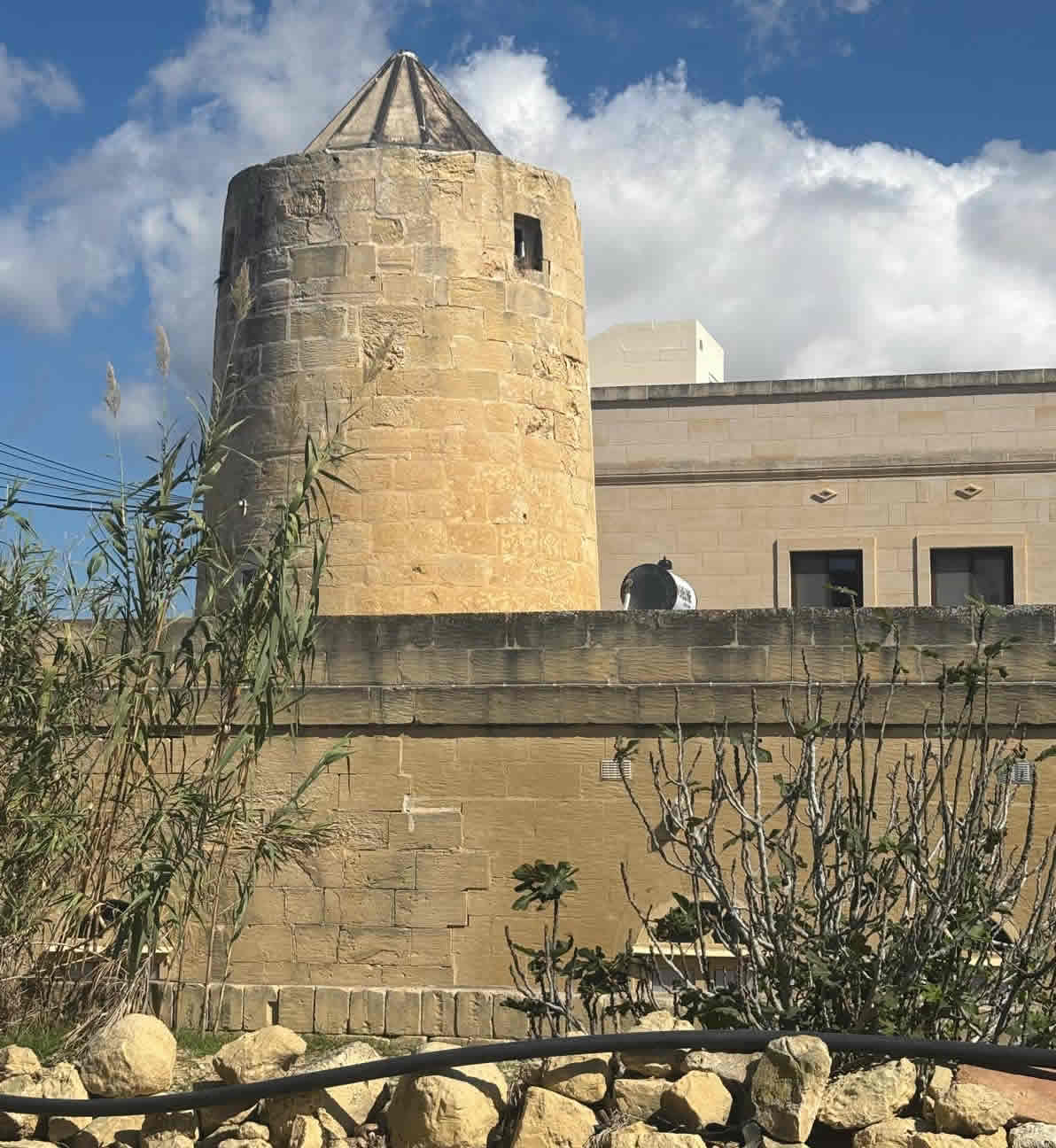
Like other rural mills, Santa Luċija worked for local grain until motorised milling and improved transport made small windmills uneconomic; sources describe it as having its sails removed and the mill no longer working as a commercial mill by the 20th century. Different local notes describe it as a small mill that "remains" (i.e., survives as a structure), suggesting the fabric is still present but the machinery and sails are gone or incomplete.
Construction & technical details
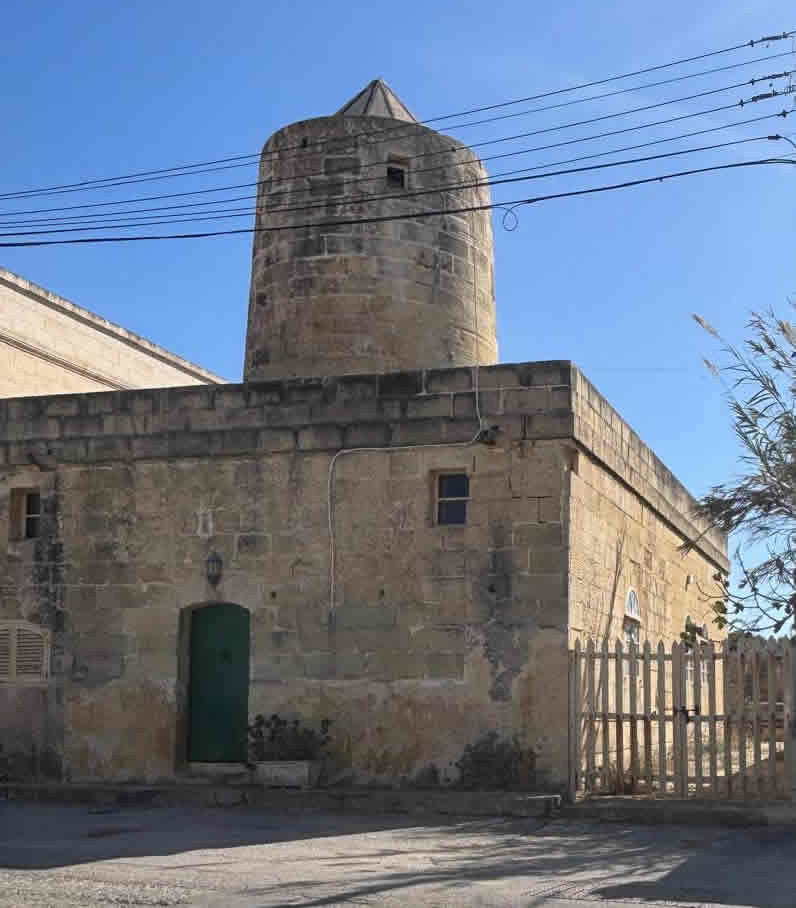
Tower mill: the standard Maltese/Gozo type — a cylindrical stone tower rising from a low rectangular base of rooms (storerooms, bakery or miller’s accommodation). That general plan (central tower containing the spindle & stones, peripheral rooms on two floors) is the norm for Gozo mills and is the form reported for Santa Luċija in the databases and photo inventories.
Local limestone masonry (the usual Maltese globigerina limestone), with rubble/ashlar walls and lime mortar — the same traditional materials used across Maltese windmills. Late-period mills sometimes show simpler finishes because they were built to modest budgets.
Historically the mill would have had a wooden windshaft and sail arms (sweeps) with sailcloth or lattice frames — the common Maltese arrangement. The Santa Luċija mill’s sails have been removed (sources note “sails removed”), and available photos and local descriptions show the core tower/base without functioning sails. The number of original arms is not stated explicitly in the online entries; typical Maltese mills had 4–6 arms depending on design and period.
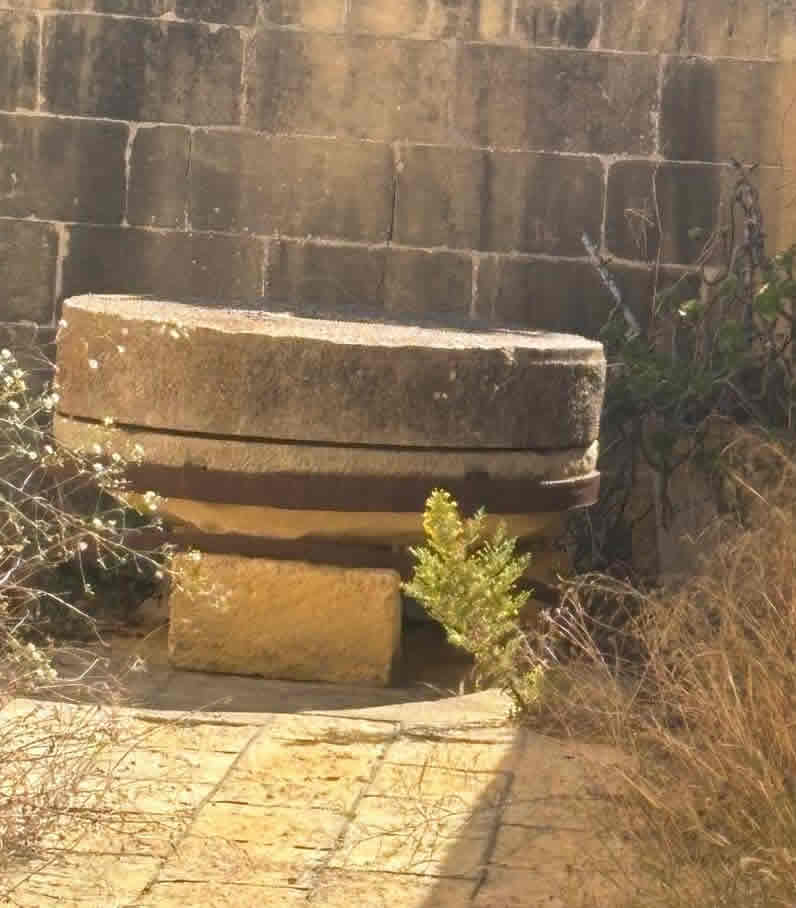
The working mechanism would have included: a horizontal windshaft carrying the sail arms outside and the brake wheel inside; gearing (often wooden cogs) driving a vertical shaft carrying the runner (upper) millstone above a stationary bed (lower) stone; sack hoists and grain chutes arranged around the tower; and storage/working rooms radiating from the tower. The precise survival of these fittings at Santa Luċija is not recorded in the online summary sources — most late small mills lost their internal machinery or had it scavenged when operations ceased. For the general arrangement, see comparative studies of Gozo mills.
5. Dimensions & measured drawings
I could not find published measured plans or exact dimensions for the Santa Luċija mill in the open web sources (the specialist windmill database records the date and location but does not publish measured drawings).
Current condition & use
Online local notes describe the mill as extant (standing) but with its sails removed and no longer functioning; it appears as a small historic structure within the hamlet rather than an active museum piece like Ta’ Kola in Xagħra. There are photo records and local guides that show the mill as part of the rural streetscape. Public access / ownership status is not uniformly reported (many small mills are on private land or part of private dwellings).
Quick recap / takeaways
Built: c. 1885 (late-19th century private village mill).
Type: Maltese tower windmill (cylindrical tower crowned by sails, with peripheral service rooms).
Materials: Local limestone masonry, traditional lime mortar; wooden internal millwork historically.
Working life: Served local farmers; fell out of commercial use in the 20th century — sails removed; structure survives.