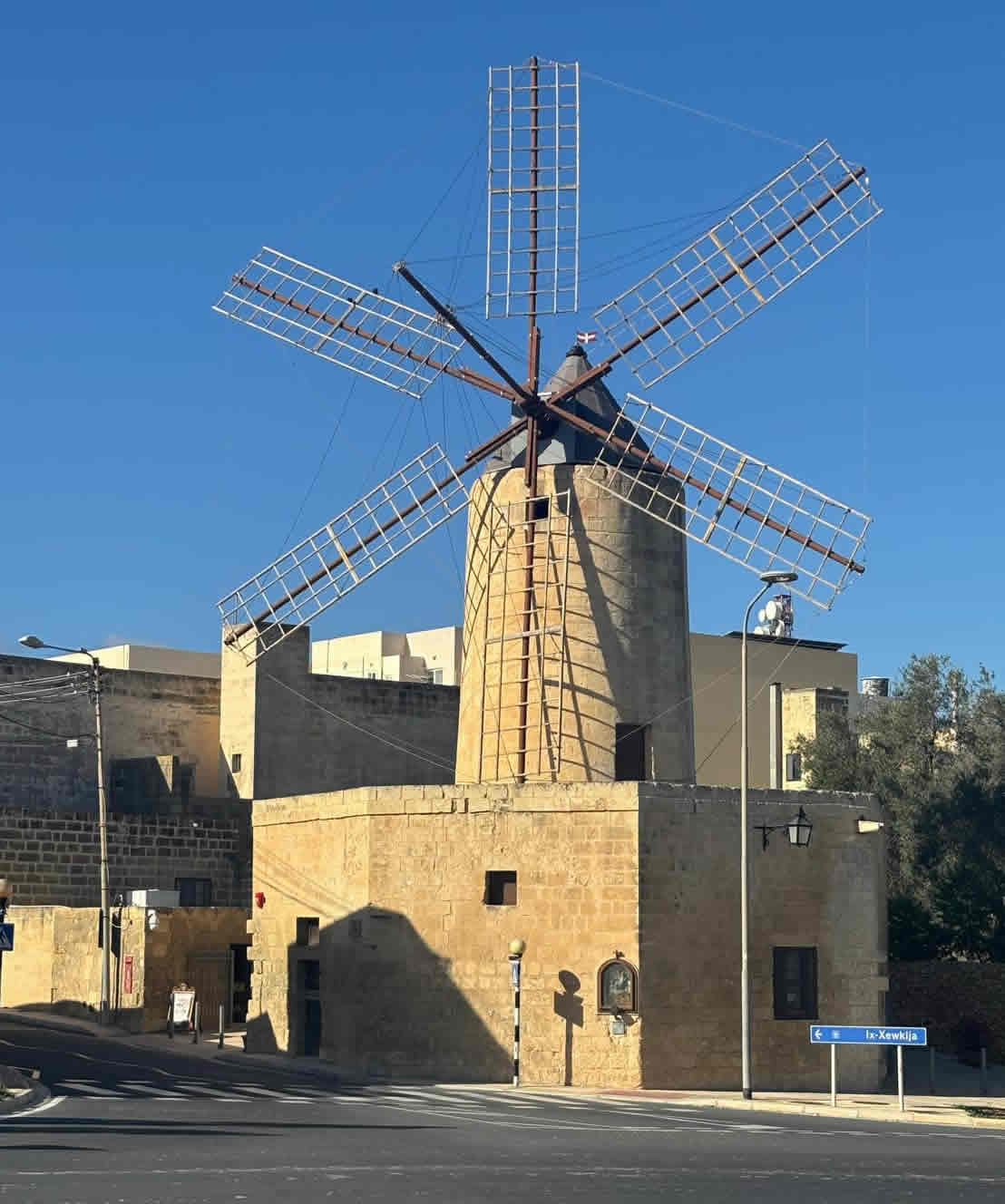
Tat-Tmien Kantunieri Windmill - Gozo
History and construction description of the Xewkija / Tat-Tmien Kantunieri Windmill, Gozo.
📍 Location
The coordinates of Tat-Tmien Kantunieri Windmill are:
- 36.035921, 14.260364
Tat-Tmien Kantunieri Windmill (Il-Mitħna tat-Tmien Kantunieri) — full history, construction and restoration
Quick summary
Tat-Tmien Kantunieri (literally “the Eight-Cornered Mill”) is the oldest surviving windmill on Gozo, standing in Xewkija on the main Mgarr–Victoria road. It was commissioned by Grand Master Ramon Perellos and began operation c. 1710. The mill burned out in 1886, passed through private hands during the 19th and 20th centuries, served a variety of community uses (including being the first base for the Xewkija Band Club), and was fully conserved and reopened after a major restoration project completed in early 2021.
Construction & original design
Patron & date: Built for the Perellos foundation (Grand Master Raymundo Perellos y Rocafull, reign 1697–1720) and put into operation around 1710. Contemporary scholarship and local histories agree on the Perellos connection and the early-18th-century date.
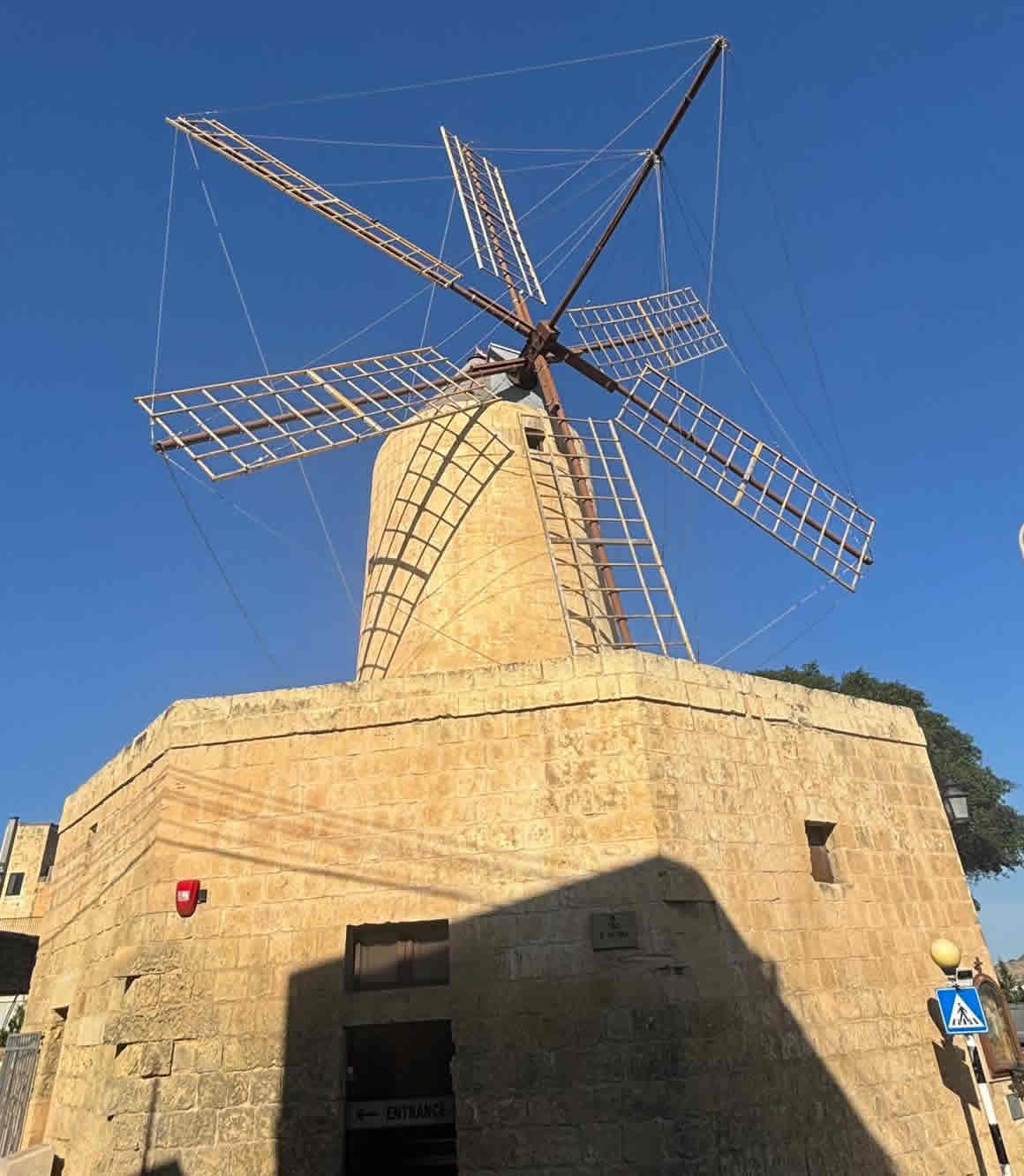
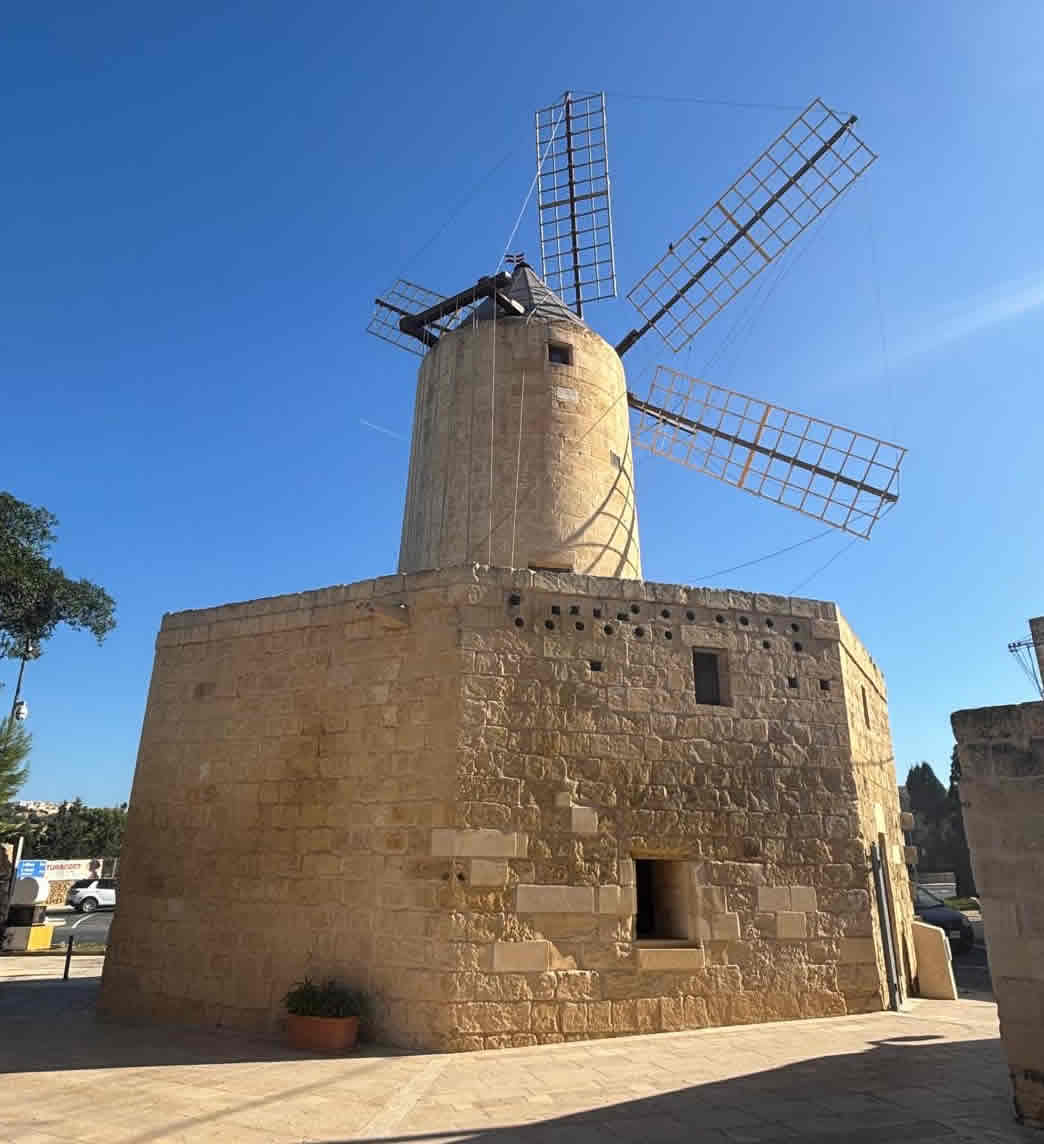
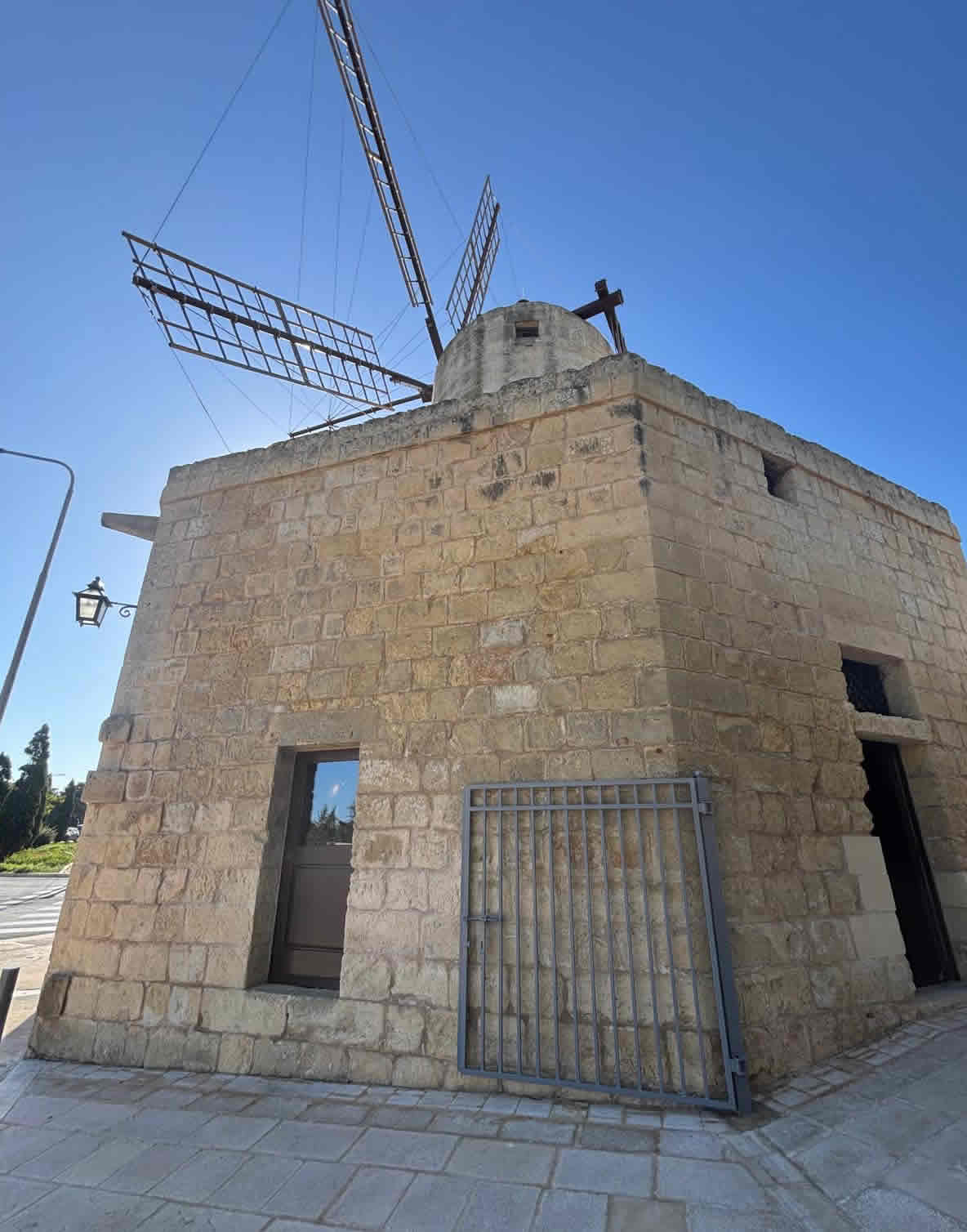
Type & plan: Unusually for Maltese mills, it is commonly described as having an octagonal/near-octagonal base (hence the local name “Tat-Tmien Kantunieri” / “the eight-cornered mill”). Some sources describe it as a round/tower mill with a distinctive base treatment; regardless of exact geometry, it is physically larger and architecturally more elaborate than many later small rural mills.
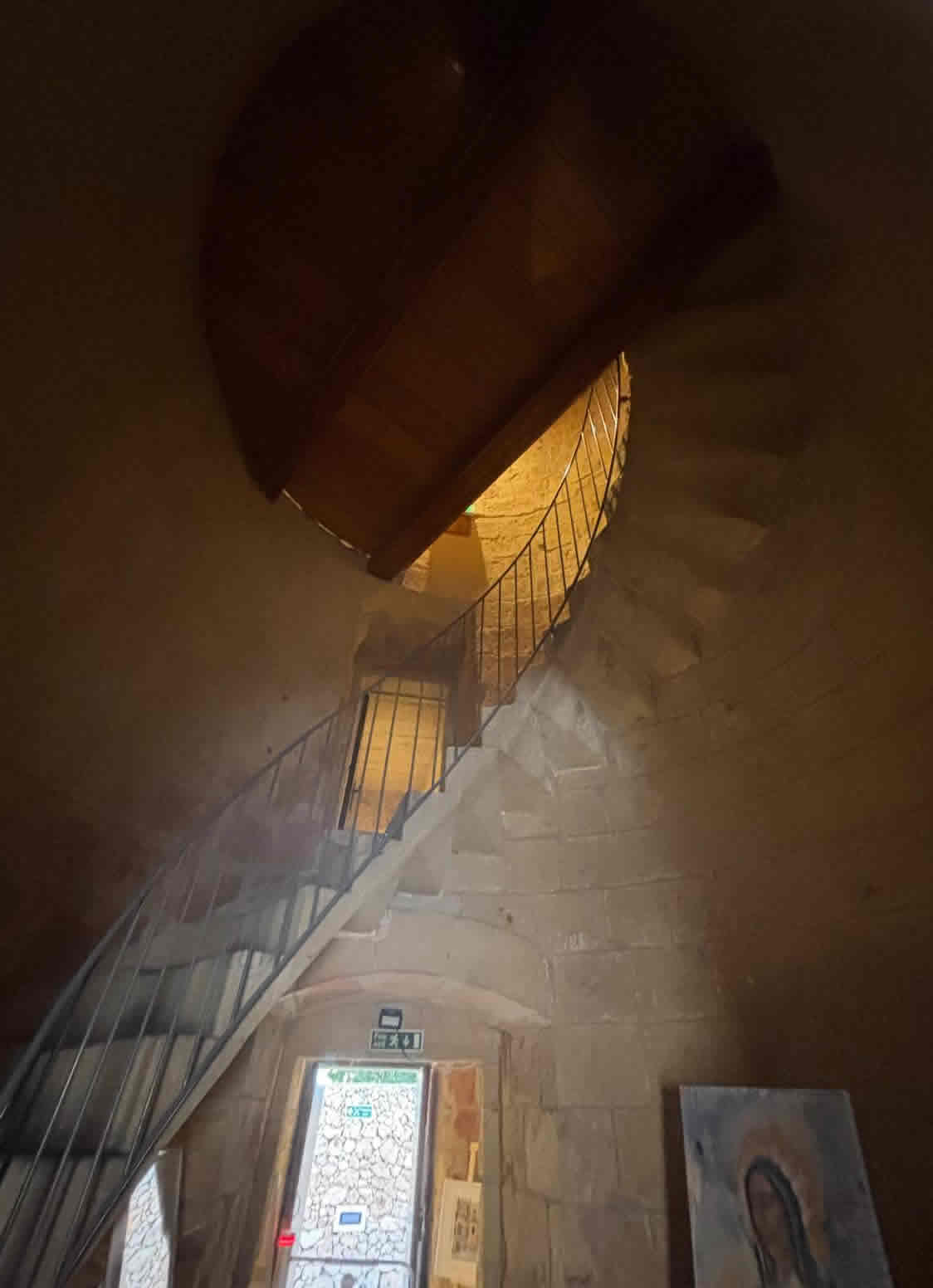
Materials & workmanship: Built in local limestone using the standard masonry techniques of the Knights’ period. The mill accommodated the classical internal arrangement: ground floor storage and working rooms, a central milling floor with millstones driven by a wooden windshaft and canvas sails, a winding staircase to the roof and cap, and ancillary rooms (kitchen, oven) adjoining the main hall. The structure retains evidence of its original room plan (entrance hall flanked by two parallel rooms; kitchen with original oven; a birth room above the entrance).
Internal layout & machinery
Typical internal arrangement (and what the Xewkija mill retains):
Large entrance hall with two parallel service rooms (storerooms/workrooms).
Rear kitchen area — the mill retains its original oven (a rare survival).
Central winding staircase giving access to the upper mill chamber and roof (terrace where the sails were worked).
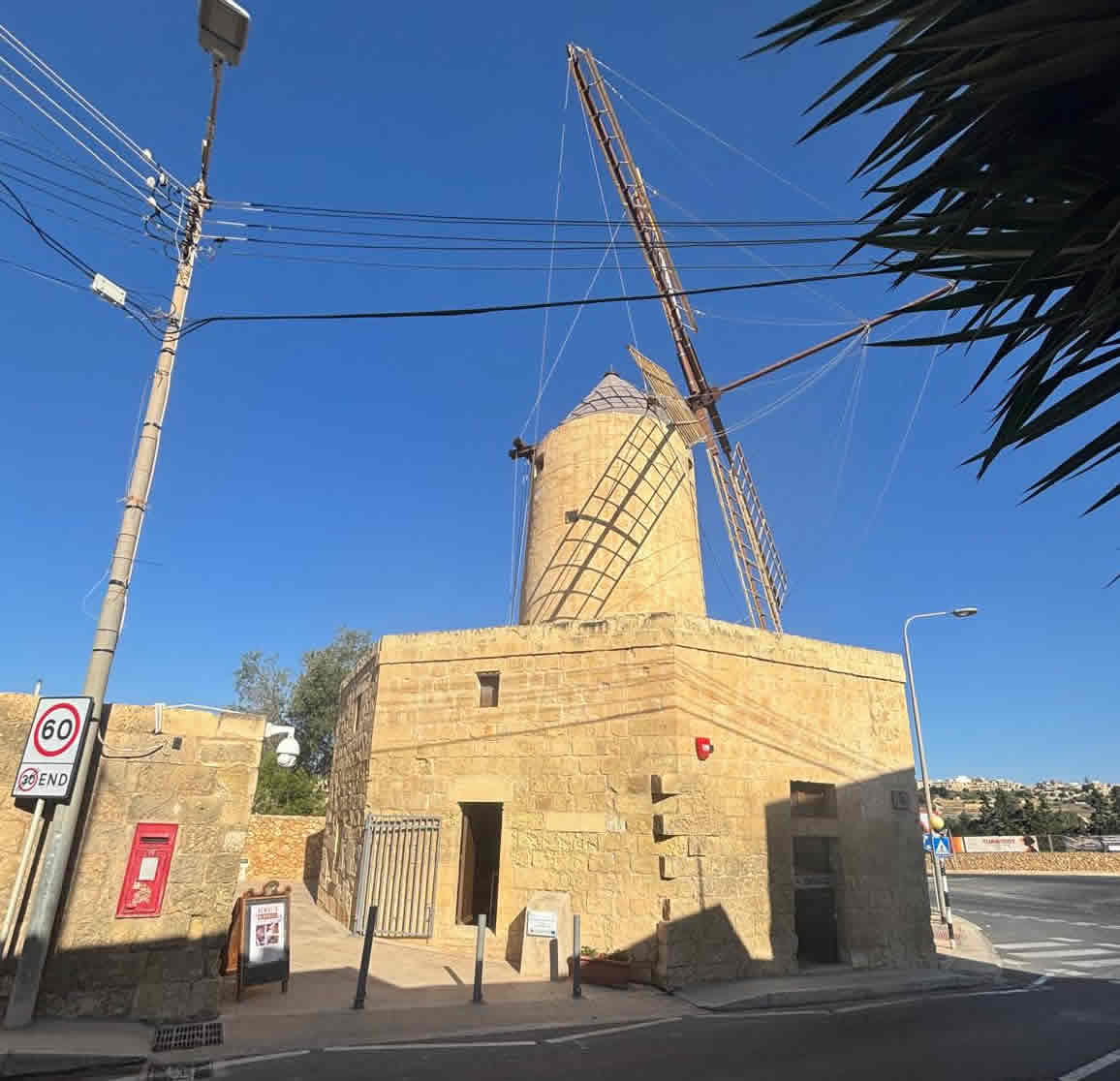
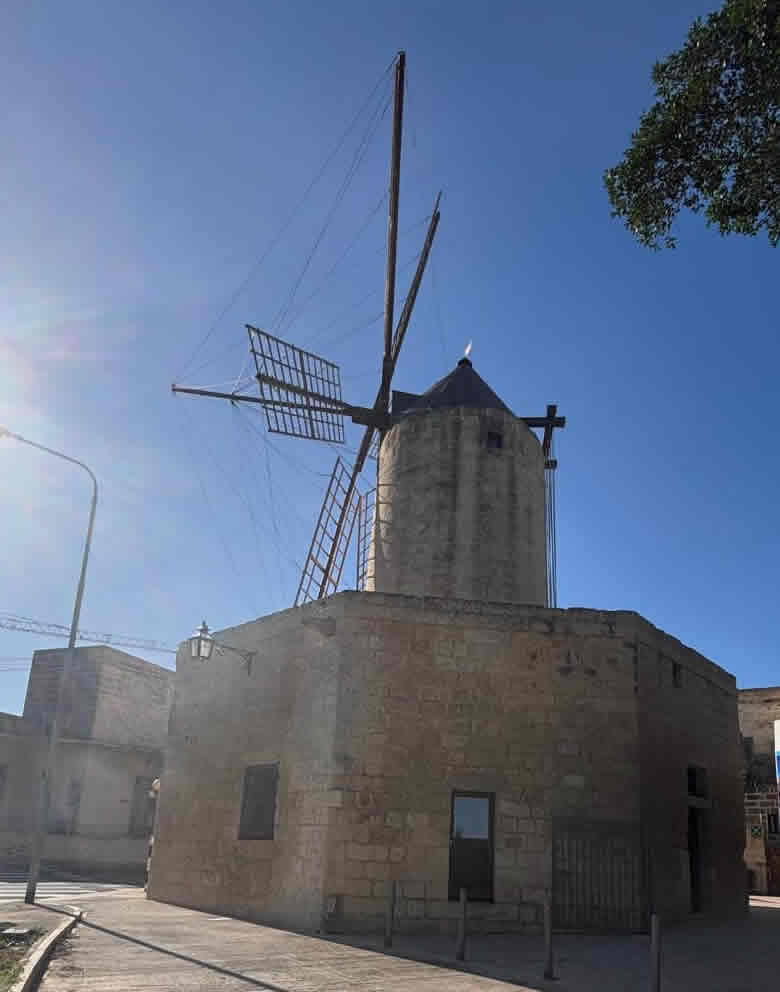
Historically the mill had an eight-pointed sail-assembly (wooden arms / fan-like sweeps) driving a horizontal windshaft and the internal gearing that turned the millstone(s). Recent works re-installed mechanical parts during restoration.
Operation and social/economic role (18th–19th centuries)
Milling function: The mill ground cereals (wheat, barley) for local farmers. It used a multi-vane sail arrangement: wooden arms/vanes (a fan-like assembly) drove the windshaft which, through gearing, turned the millstones — comparable to the principal windmills built across Malta and Gozo in the Knights’ era.
Early millers & leases: The mill first operated under miller Ganni (Gio Maris) Scicluna according to local records. Mid-19th-century notarial material shows the mill under lease to members of the Xicluna/Xicluna (Scicluna) family for decades; a notary petition dated 7 March 1851 by Marcello Xicluna appears in the archival record, where he disputes rental terms — a useful window into the economic pressures millers faced as private centimoli and small private mills appeared. Later in the 19th century the mill was owned/operated by the Camilleri brothers.
Disaster, decline & 20th-century uses
Fire of 1886: The mill remained in operation until 1886, when it was destroyed by fire (accounts note the mill “burnt down” in that year). The fire effectively ended its era as a working mill.
Post-milling uses: After the fire and through the 20th century the building changed roles: it stood empty for long periods, was used for community activities, and served as the first home of the Xewkija Band Club (Banda Prekursur) between 1956 and 1965. Over decades the fabric suffered degradation and later insensitive alterations (concrete repairs, infill), but core masonry survived.
Restoration — rationale, works and outcome
Need for conservation: By the 2010s the windmill was recognised as structurally vulnerable and historically important — a unique early-18th-century Perellos-era mill and an essential landmark for Xewkija and Gozo. Planning approvals for a careful conservation programme were obtained in the late 2010s.
Scope of works: The restoration (announced and reported 2017–2020) removed later intrusive concrete elements, consolidated the masonry, repaired internal floors, reinstated appropriate traditional finishes where possible, reinstated or conserved surviving mechanical elements, and reintroduced interpretive elements and a small public square adjacent to the mill. Conservation aimed to balance authenticity (repair and preservation of original fabric) with public access and interpretation.
Mechanical reinstatement: Part of the project involved re-installing mechanical parts so the mill could demonstrate its historic function (the windshaft and vanes were repaired/reinstated to allow the sails to turn for interpretive displays).
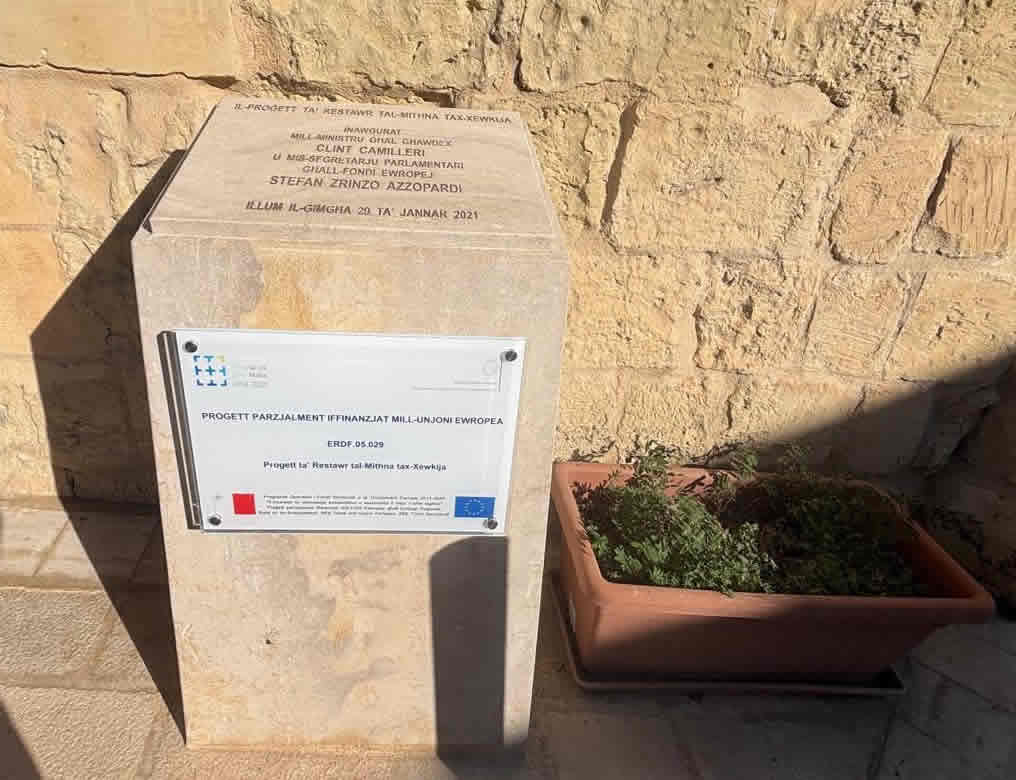
Inauguration / reopening: The restored windmill was inaugurated on 29 January 2021. Public demonstrations and media pieces (including a short documentary/feature) followed, illustrating the mill’s role and showing the vanes turning for the first time in generations.
Significance & legacy
Oldest surviving Gozo mill: Tat-Tmien Kantunieri is widely recognised as Gozo’s oldest surviving windmill (earliest standing structure of its kind on the island) — an important link to early-18th-century rural industry commissioned by the Knights.
Cultural anchor: Beyond its technical interest, the mill functioned as a community node (band club base, meeting place) and now acts as an interpretive heritage site that anchors Xewkija’s historic identity.
Summary timeline (key dates)
Built: 1710, commissioned by Grand Master Ramon Perellós y Rocafull (the Knights’ mill-building programmes) and operated initially under the Perellós foundation.
Working life: Served as a commercial grain mill for the Xewkija / Mġarr area through the 18th–19th centuries. A mid-19th-century notarial note (1851) records lease/rent disputes connected with the mill.
Destroyed by fire / end of original operation: the commonly cited date for its destruction by fire is 1886 (after which it ceased regular operation, though later phases of rebuilding/adaptation followed).
Restoration & reopening: Conserved and fully restored in a recent project; the restored mill and re-installed mechanical parts were inaugurated in January 2021 following planning approval and works.