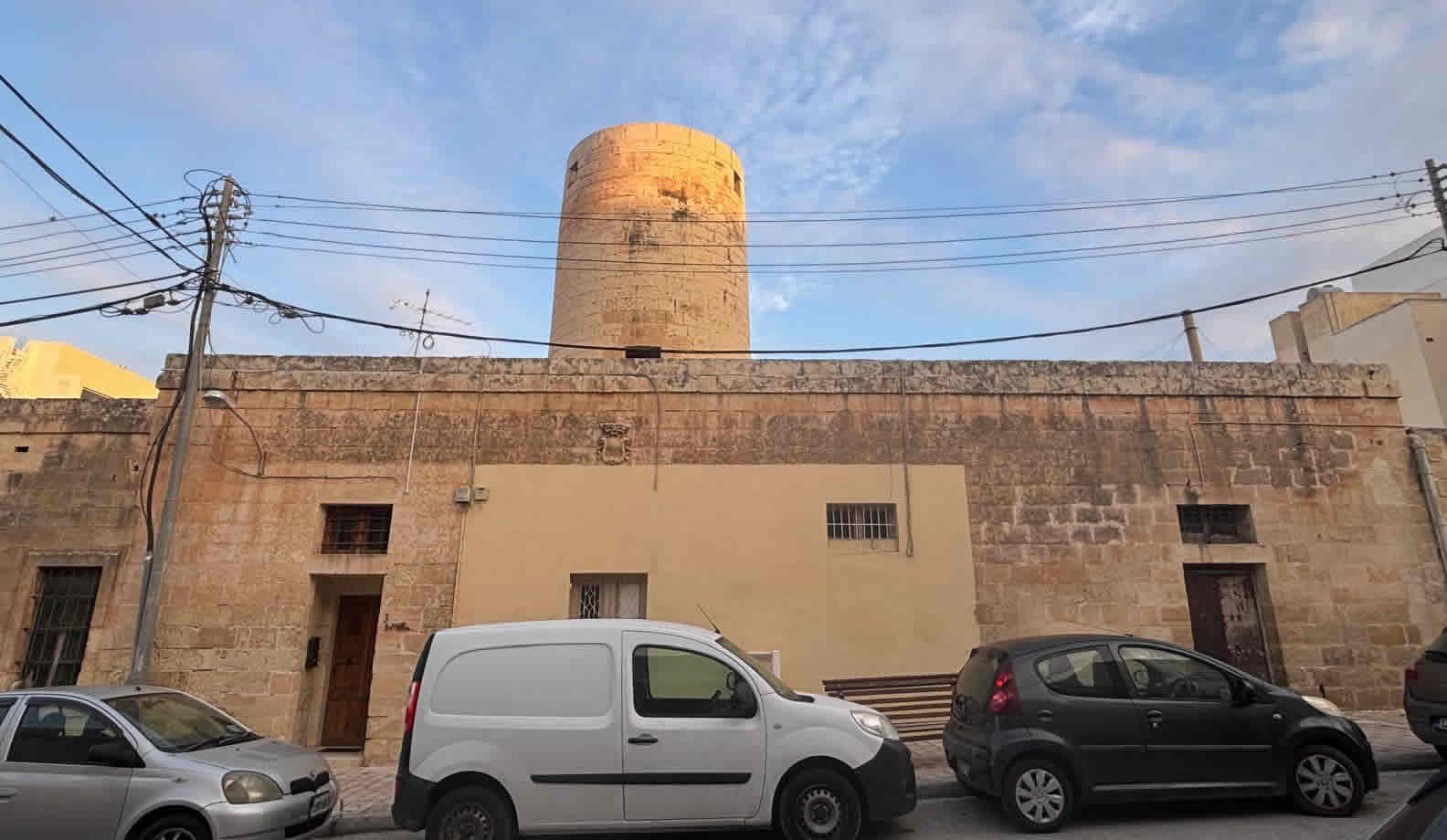
Here’s a summary of the construction and history of Tas Sghajtar Windmill in Naxxar, Malta:
📍 Location
35.913500, 14.436846Details on Tas-Sgħajtar Windmill Corner Triq il-Mosta / L'abbate Savoia in Naxxar, Malta — history, construction, later use and current status.
Short summary
A historic tower windmill in Naxxar, usually dated to the late-17th century and attributed to the Cottoner (Cotoner) Foundation, later losing its sails and being converted to residential use; it is recorded in heritage registries.
History — dates & who built it
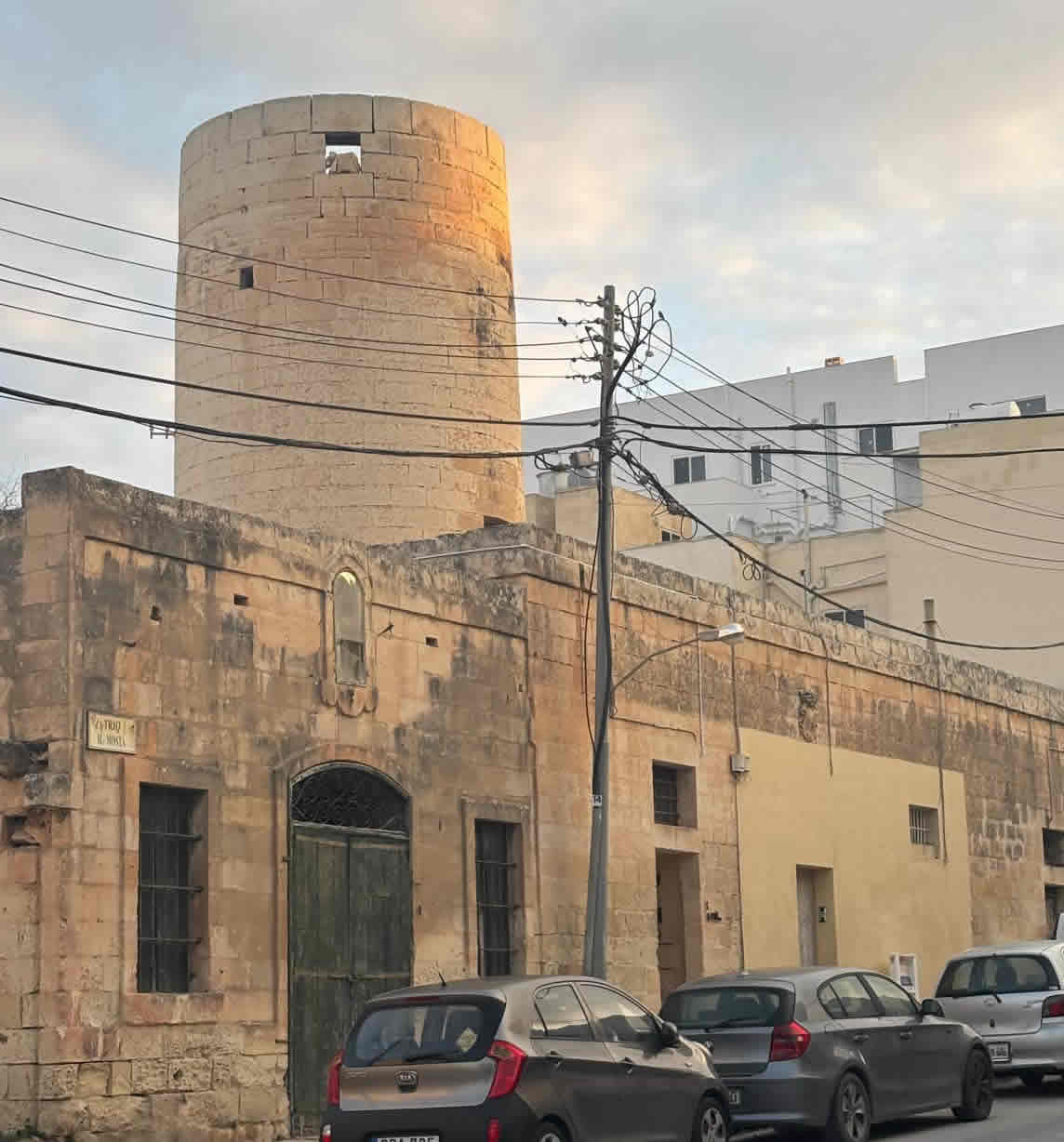
Traditional / published dating: specialist windmill registries (Windmills of Malta) and local histories date the mill to c.1670 and attribute its foundation to the Cottoner (Cotoner) Foundation — the same benefaction that funded a number of island windmills in the late-17th century. This dating is the common secondary-source claim used in windmill catalogues.
Later records / compiled lists: aggregated lists of Maltese windmills repeat the foundation attribution and note the mill’s later loss of sails and conversion to a house (these lists are compilations of local sources and inventories).
Construction — typology, materials & layout
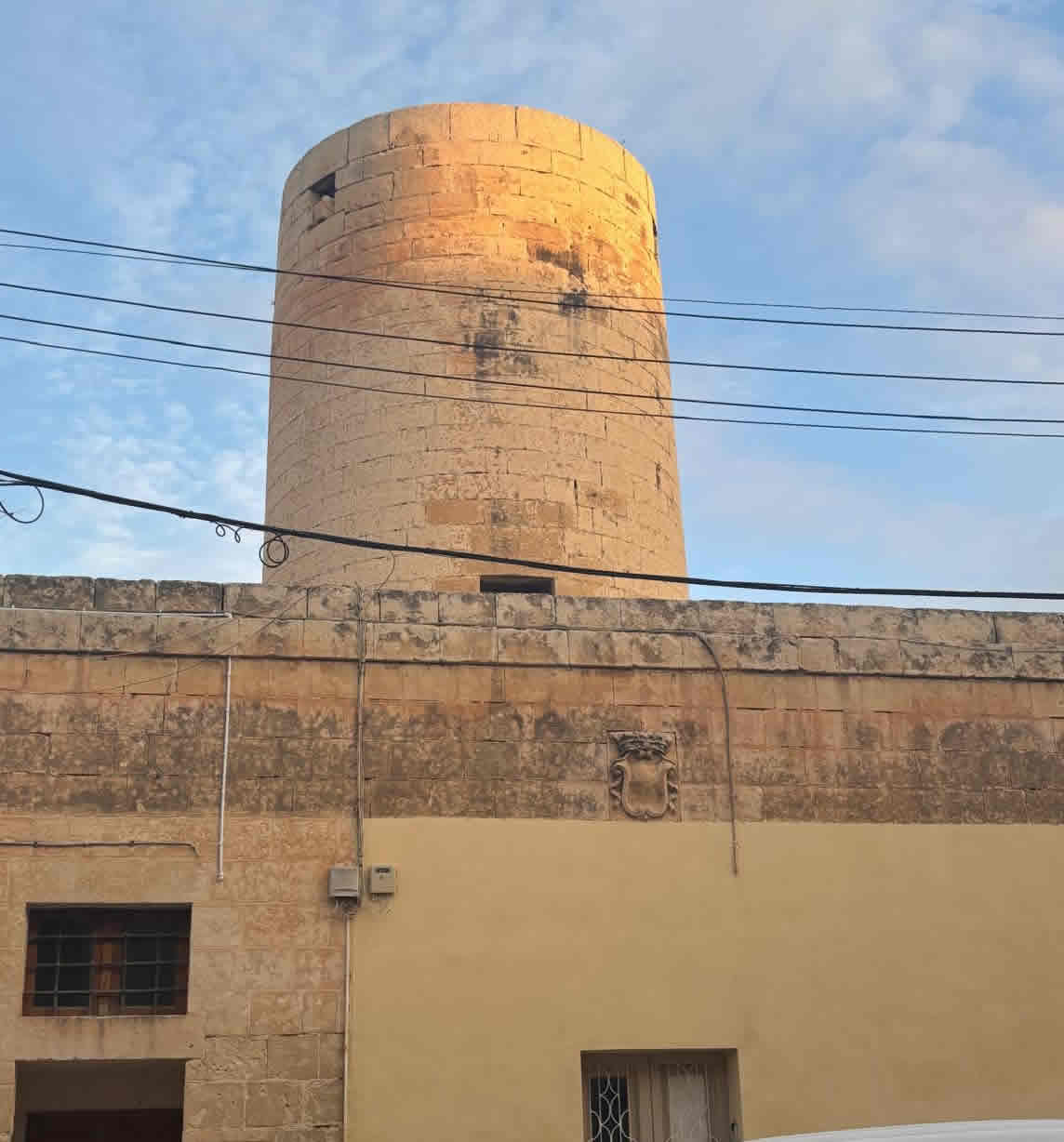
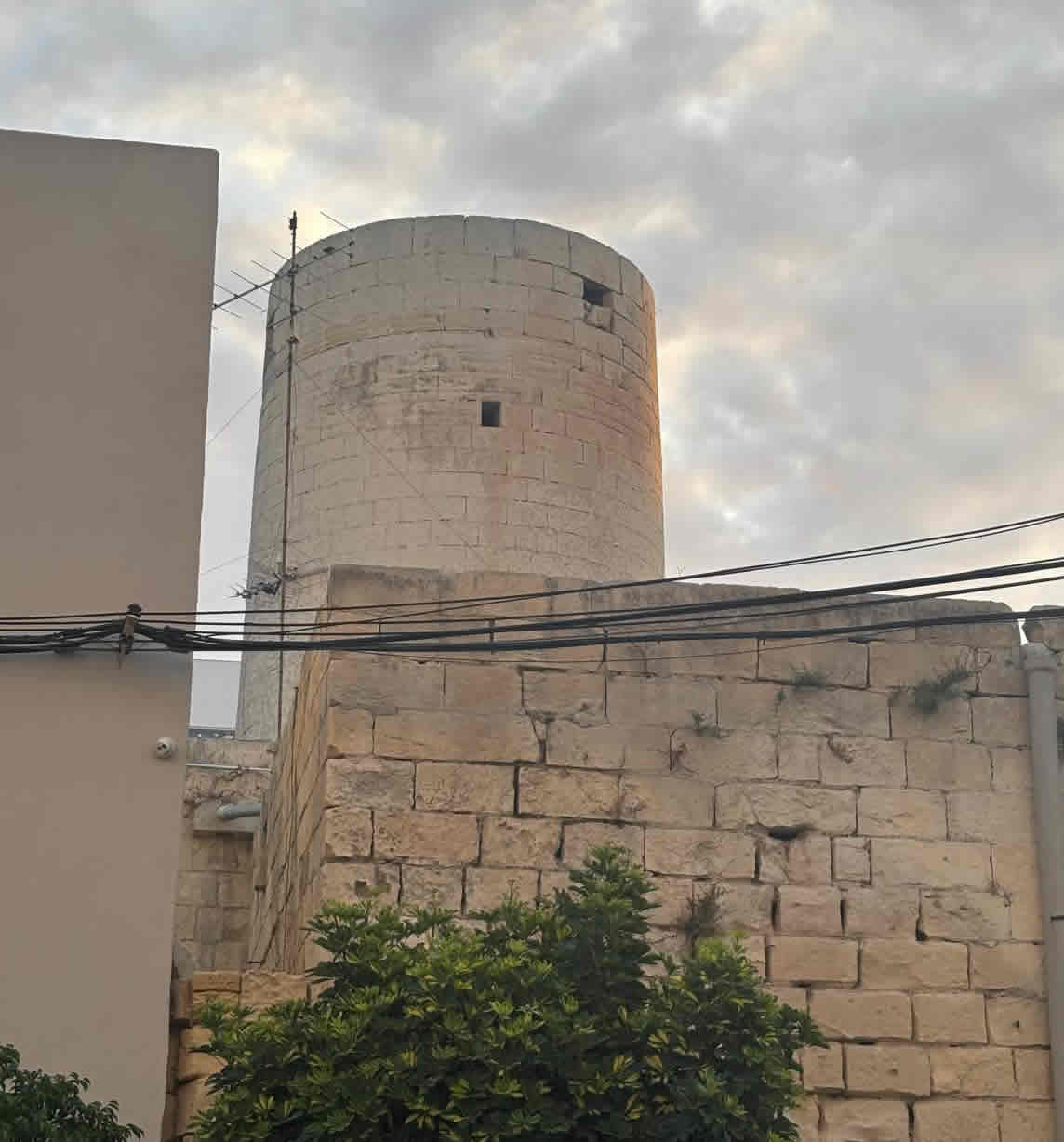
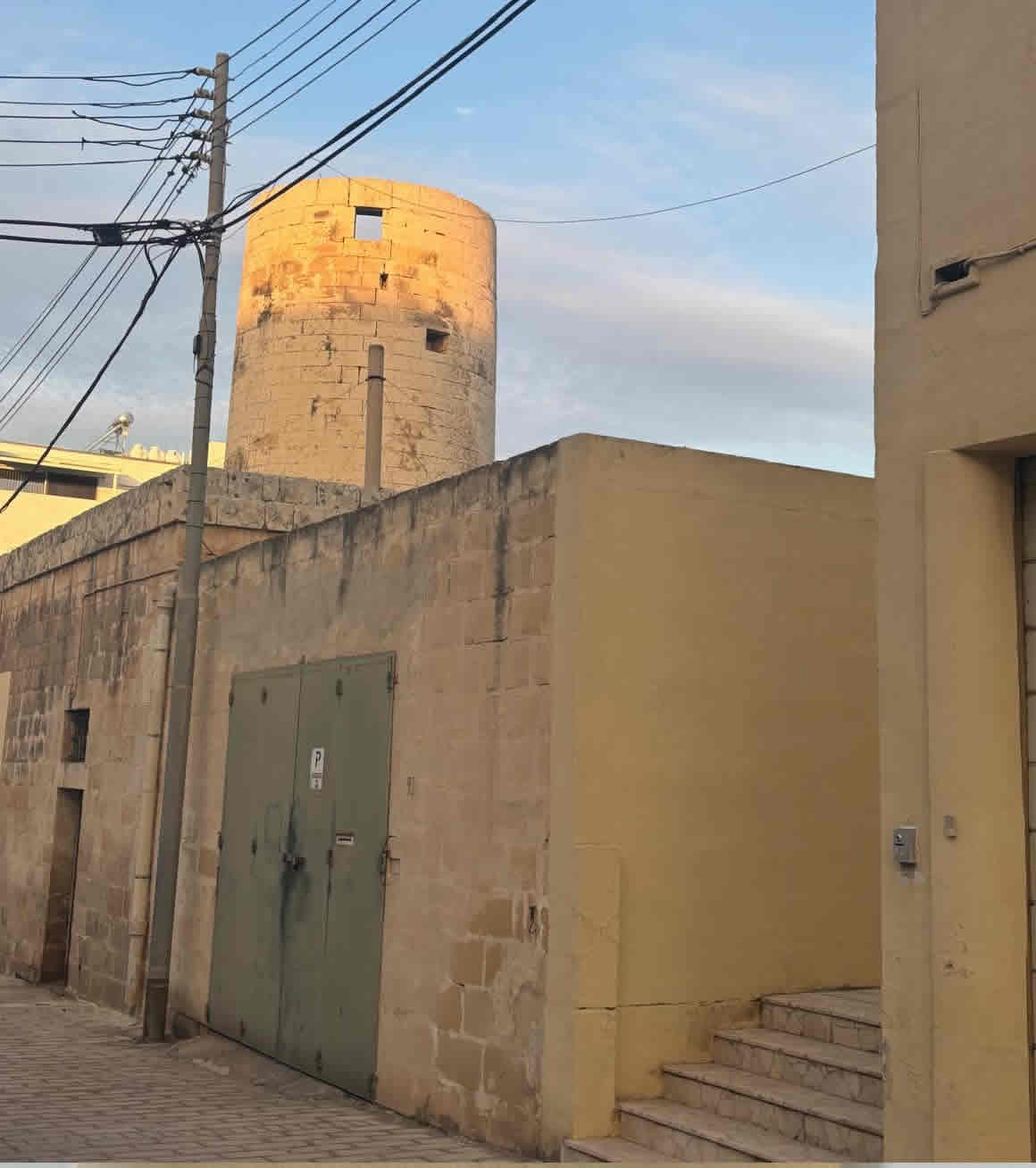
Type: a tower (round) windmill — the standard Maltese form: a cylindrical stone tower rising from a low rectangular base of service rooms (storage, bakery / miller’s accommodation).
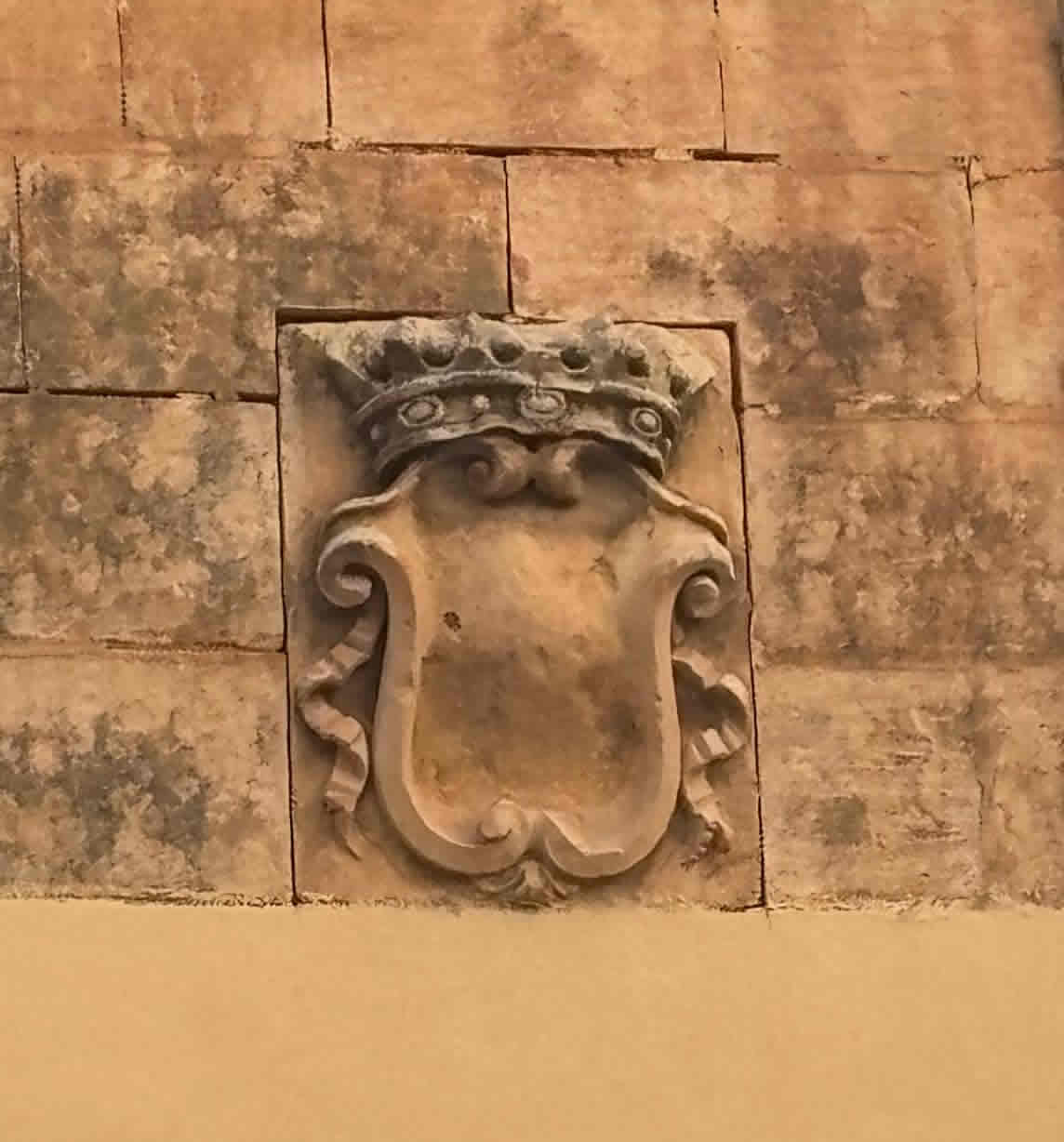
Materials / build: typical local globigerina limestone masonry set in lime mortar (vernacular island building practice). Public photo evidence shows the usual ashlar/rubble finish and a small façade niche. No published measured drawings are openly available in the usual web sources.
How it worked / original use
Function: a grain mill — milling local wheat/barley to flour for the village and surrounding farms. Mechanically it would have followed the island norm: external wooden sail-arms on a horizontal windshaft turning internal gearing and a runner stone above a bedstone, with storage rooms and space for the miller’s family in the base. No original milling machinery survives in situ as far as published summaries report.
Decline, adaptation & current status
Sails removed / conversion: like many rural mills, the sails were removed once steam and motorised milling made small windmills uneconomic; the building was adapted to residential use (private house). Published windmill catalogues and local guides note the mill’s conversion and loss of mechanical fittings.
Heritage / protection: the mill is recorded in national/local heritage datasets (references to a MEPA/SCH fiche appear in public structured data entries). That indicates the structure is documented in the national inventory / planning files and subject to statutory protections; the MEPA/SCH fiche is the place to get the formal legal status and any official condition/description.
Official / legal facts (from the Government Gazette & SCH / National Inventory)
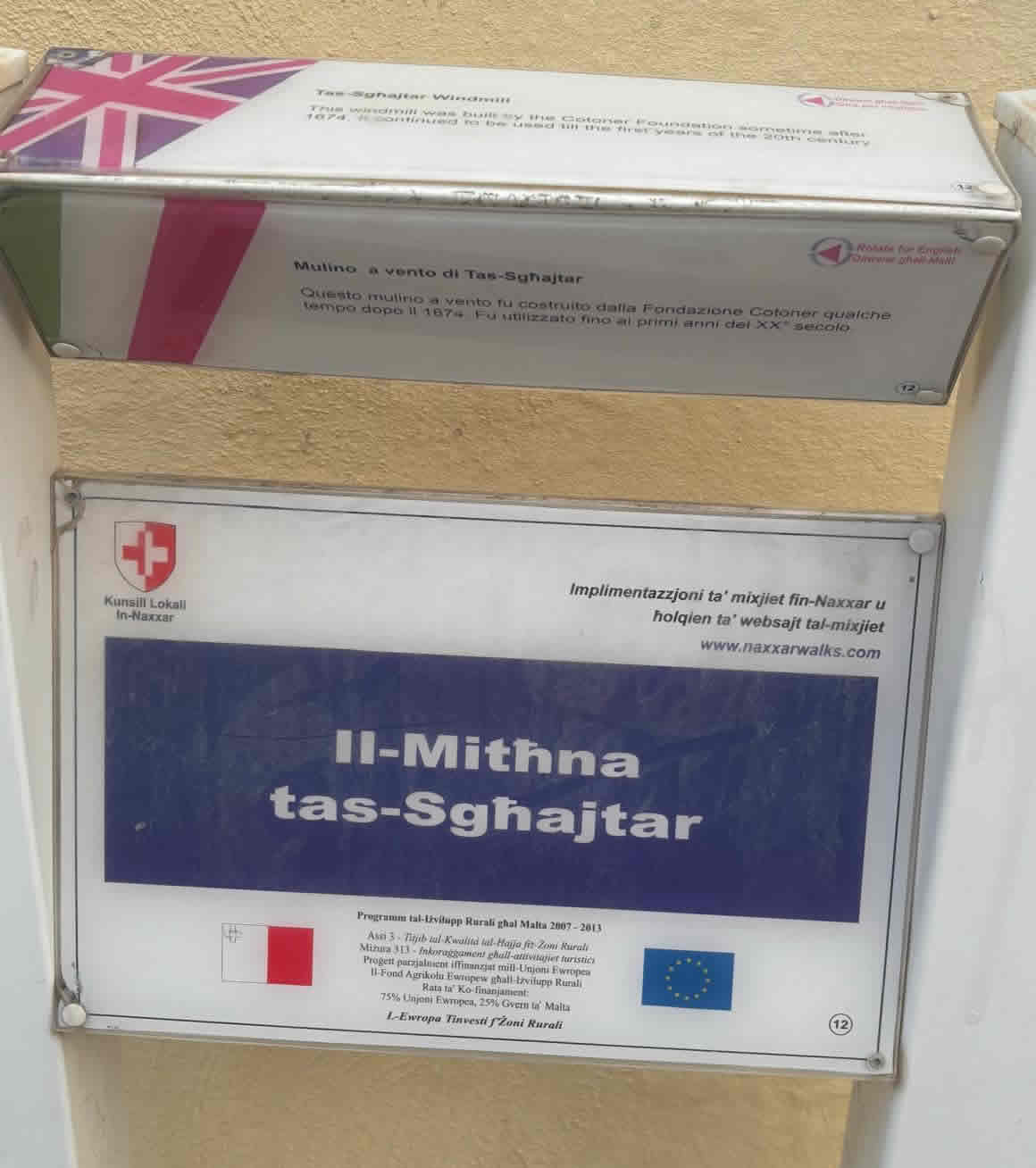
Official National-Inventory entry (Superintendence of Cultural Heritage): Inv. No. 02981 — Il-Mitħna tas-Sgħajtar. (listed under Naxxar; street given as Triq il-Mosta).
Legal effect / scheduling: included in the National Inventory / scheduling notice published in the Government Gazette (11 Apr 2025). The Gazette notice reminds that scheduled properties cannot be altered or damaged without the Superintendent’s permit.
Heritage grade (Sch / Wikidata): the item is recorded as Grade 1 in the structured data (Wikidata references the SCH/MEPA record).
What the MEPA / SCH fiche (and heritage registers) record — concise technical summary
(assembled from the inventory listing + specialist windmill sources)Name / common name: Il-Mitħna tas-Sgħajtar (Tas-Sgħajtar Windmill).
Location / address: Corner / area of Triq il-Mosta (Naxxar). Coordinates recorded in structured data: ≈ 35°54′48.78″N, 14°26′12.26″E.
Approximate construction date / patronage: commonly dated c. 1670 in specialist windmill catalogues; attributed in those secondary sources to the late-17th-century foundations (the same era of Cottoner/Cotoner foundation mills). (This is the commonly cited date in specialised compilations — the MEPA fiche will usually repeat this or mark it as approximate if no notarial deed was attached.)
Type & plan: Round (tower) windmill — “tower + base” arrangement, mound/tower mill type; base generally square and radial rooms around the tower (typical Maltese form).
Materials: local globigerina limestone with lime mortar (standard vernacular Maltese construction).
Mechanics & machinery: specialist notes say the original milling machinery does not survive in situ (sails removed and internal gearing/stones lost or taken).
Later use / current status: recorded as converted to residential use / private occupancy in local notes; the structure is extant but without sails. The SCH listing/scheduling protects the building fabric and requires permits for any interventions.