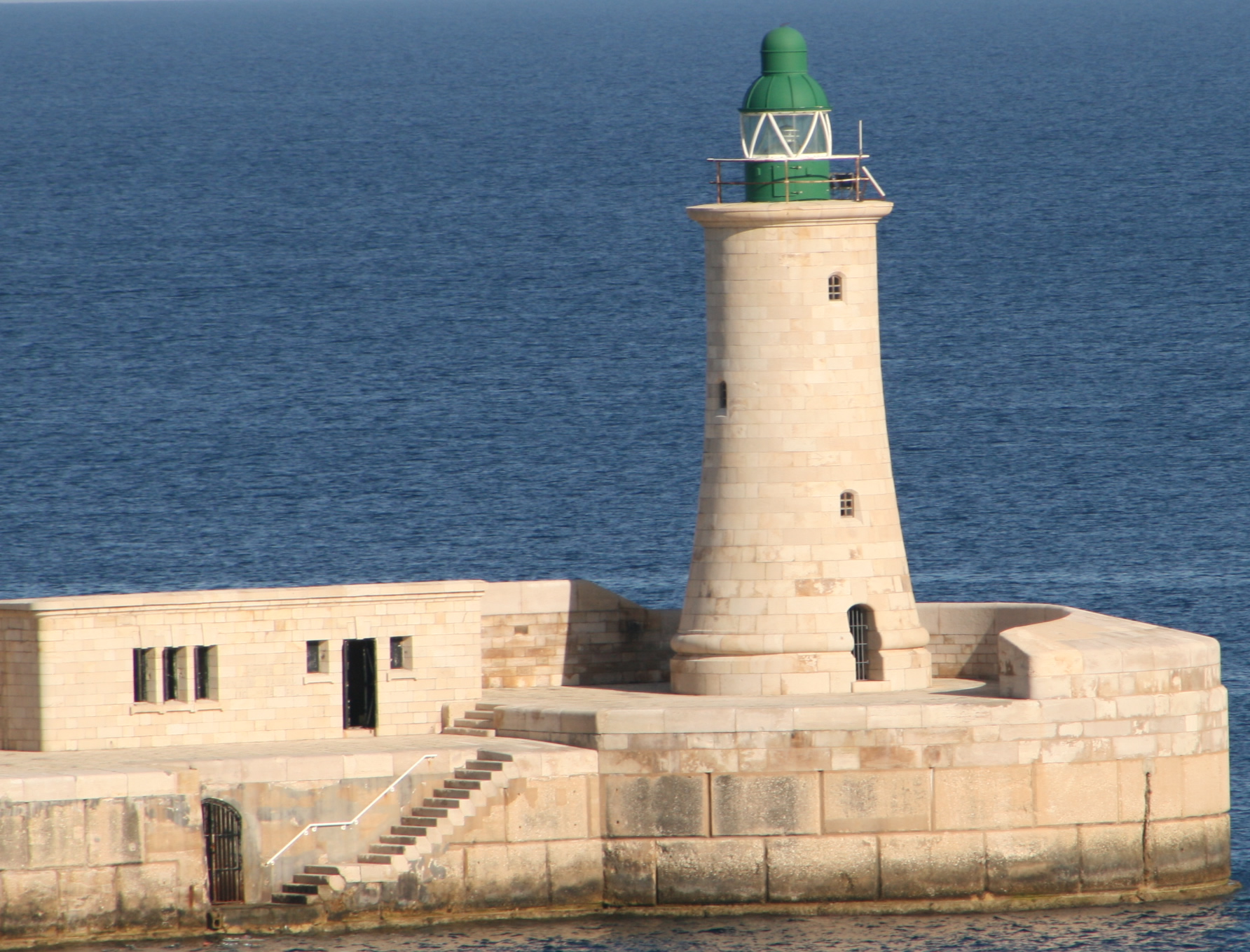
St. Elmo (Grand Harbour west breakwater) Lighthouse (the small light at the tip of the St. Elmo arm that marks the west side of Valletta’s Grand Harbour entrance).
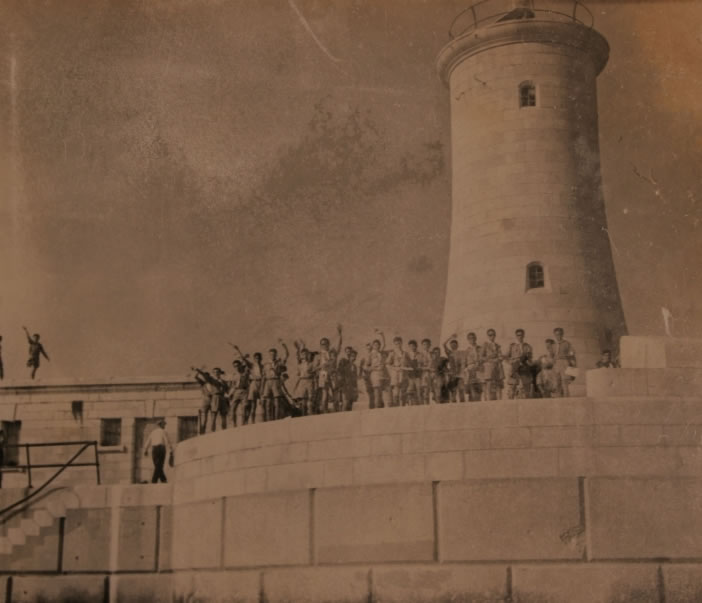
National Archives of Malta PHO 1222
Quick facts
Location: tip of the St. Elmo (west) breakwater, Grand Harbour, Valletta (marks the west side of the harbour entrance).
Built as part of the Grand Harbour breakwater works: breakwater programme started in the 1900s (foundation stone laid 20 Apr 1903); breakwater & lights completed in the 1908–1910 period (many contemporary accounts give 1908 as the completion year for the tower).
Tower form / size (typical recorded figures): a short tapered/ cylindrical masonry tower on the circular breakwater head — commonly recorded tower height ≈ 14 m with a low focal plane appropriate to a harbour entrance light; nominal range ≈ 7 nm (quick-flashing green characteristic in many lists). Some directories give slightly different numbers — see notes below.
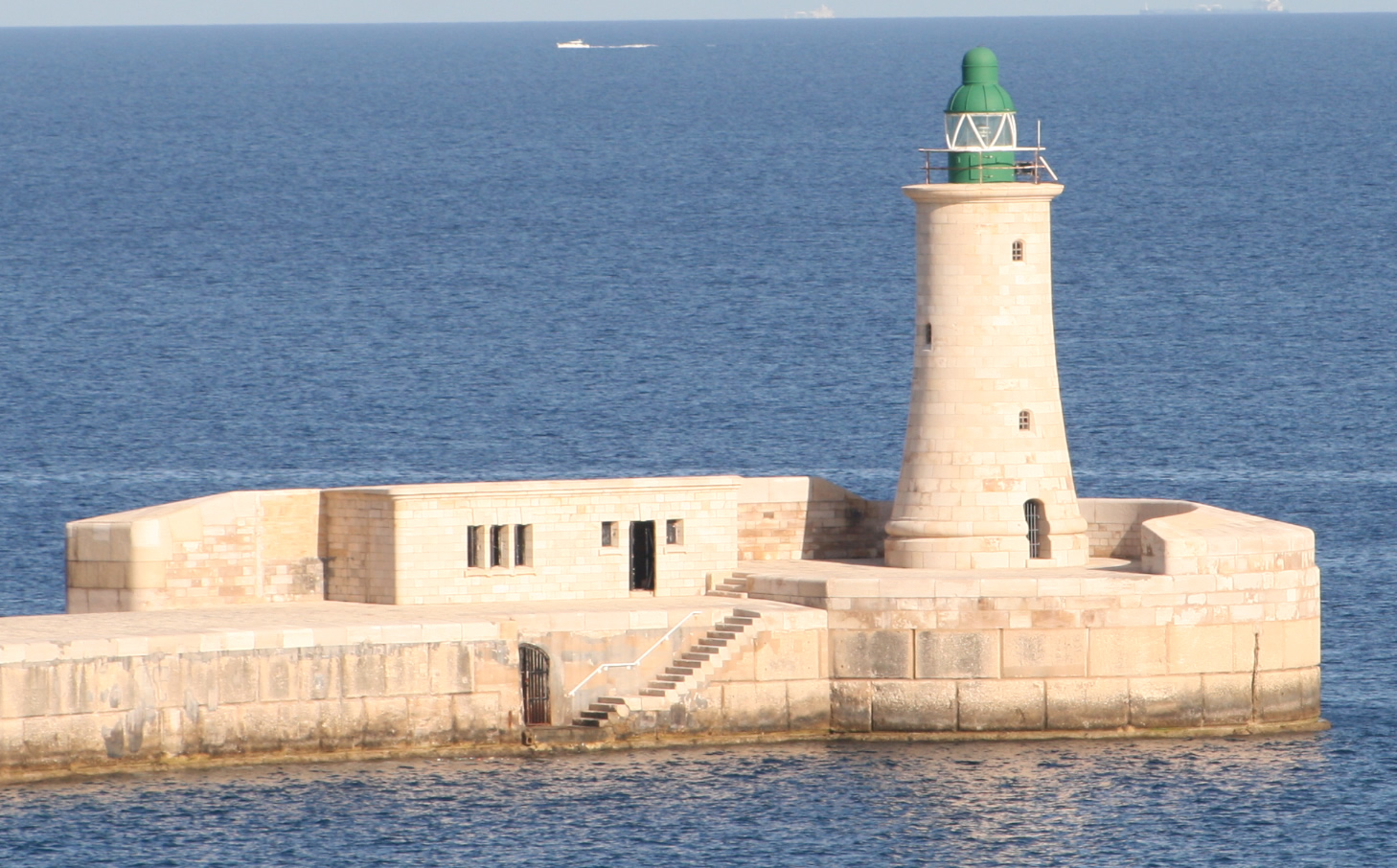
History — chronological overview
Why the breakwater & lights were needed (context)
At the turn of the 20th century the British Admiralty undertook a major breakwater programme to shield Grand Harbour from severe northerly winds and to improve anchorage and naval facilities. The works included two arms/heads and small lighthouses on the ends to mark the harbour entrance — the St. Elmo light marks the west arm.
Design & construction (1903–1910)
The tender for the Grand Harbour breakwater was issued c.1902; the foundation stone was laid by King Edward VII on 20 April 1903. Construction took several years (works and finishing stages are variously dated 1903–1908 and into 1909–1910 in different sources). The breakwater heads and their small harbour lights (St. Elmo / the west head, and Ricasoli / the east head) were completed as part of this programme.
Archival technical drawings in Arkivji (National Archives of Malta) document elevation & sectional drawings, revised lighthouse designs and detailed construction plans for the St. Elmo breakwater lighthouse and its keeper’s arrangements (see Arkivji items PDM-04-60935, PDM-04-60937 and related sheets). Those plans show the tower proportions, the breakwater head arrangement (circular masonry head), and lantern/structural details.
20th century → present
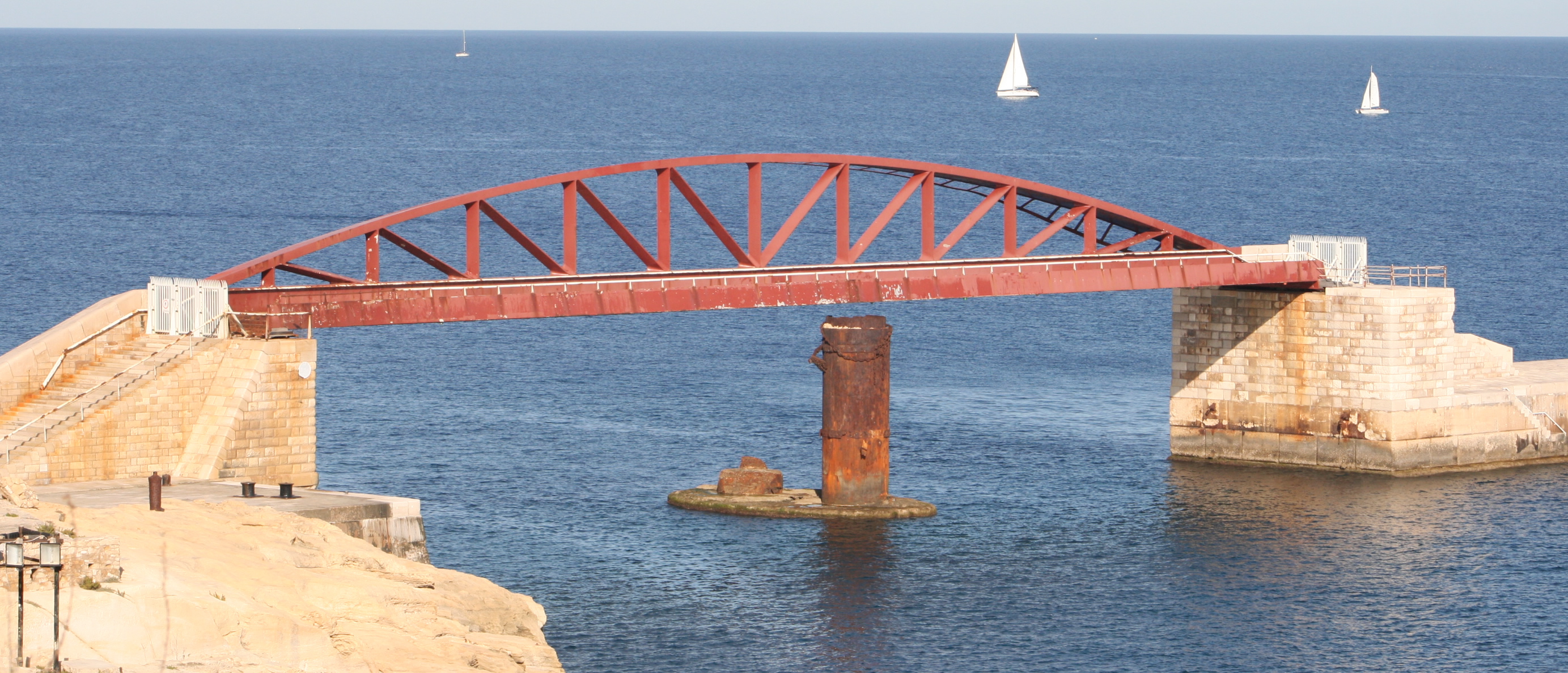
The tower served as a harbour-entrance beacon through the 20th century. The breakwater and bridge arrangements (there was an early bridge/footway to the breakwater) changed over time — e.g., the bridge was destroyed in wartime operations and the breakwater head and lights saw repairs and restorations in later decades. The St. Elmo breakwater light remains an operational harbour light and a familiar visual marker seen from ferries and the Valletta waterfront.
Construction & technical description
Site & foundation
The lighthouse is founded on the circular masonry head of the St. Elmo breakwater. The archival breakwater plans make clear the tower was built integrally with the head (massive blockwork and apron), not simply mounted on a timber pier — the head was engineered to receive the small masonry tower and withstand wave action.
Tower & materials
Form: short tapered / cylindrical masonry tower with gallery and small lantern house. Drawings and period descriptions show a plain masonry finish typical of early-20th-century harbour lights in Malta.
Materials: local limestone / masonry laid over the prepared breakwater head, with iron/metal lantern fittings. The keeper’s quarters and service details for the breakwater were shown in the archival plans.
Optic & light characteristic
Historically recorded as a harbour entrance light using a small optic (4th-order or similar suited to harbour lights in many contemporaneous installations) with a green quick-flashing characteristic in numerous lighthouse lists. Typical recorded nominal range in modern directories ≈ 7 nautical miles (suitable for channel marking rather than long-range coastal navigation). (Directories and photographic inventories corroborate the quick green flash and range figures.)
Notes on discrepancies / cautions
Completion date: sources vary: many contemporary and photographic sources cite 1908 as the year the St. Elmo arm tower was finished; other accounts and some official histories put final completion of the whole breakwater project and related works into 1909–1910. The Arkivji revised design sheet is dated 1908, which supports a 1908 completion for the lighthouse tower itself while finishing works on the entire breakwater extended slightly later. (
Tower height / focal heights: published lists sometimes give slightly different numeric values (I’ve seen 14 m cited in a number of inventories and 23 m quoted elsewhere for different lights). The Arkivji elevation/section drawings are the best primary source for exact built dimensions.