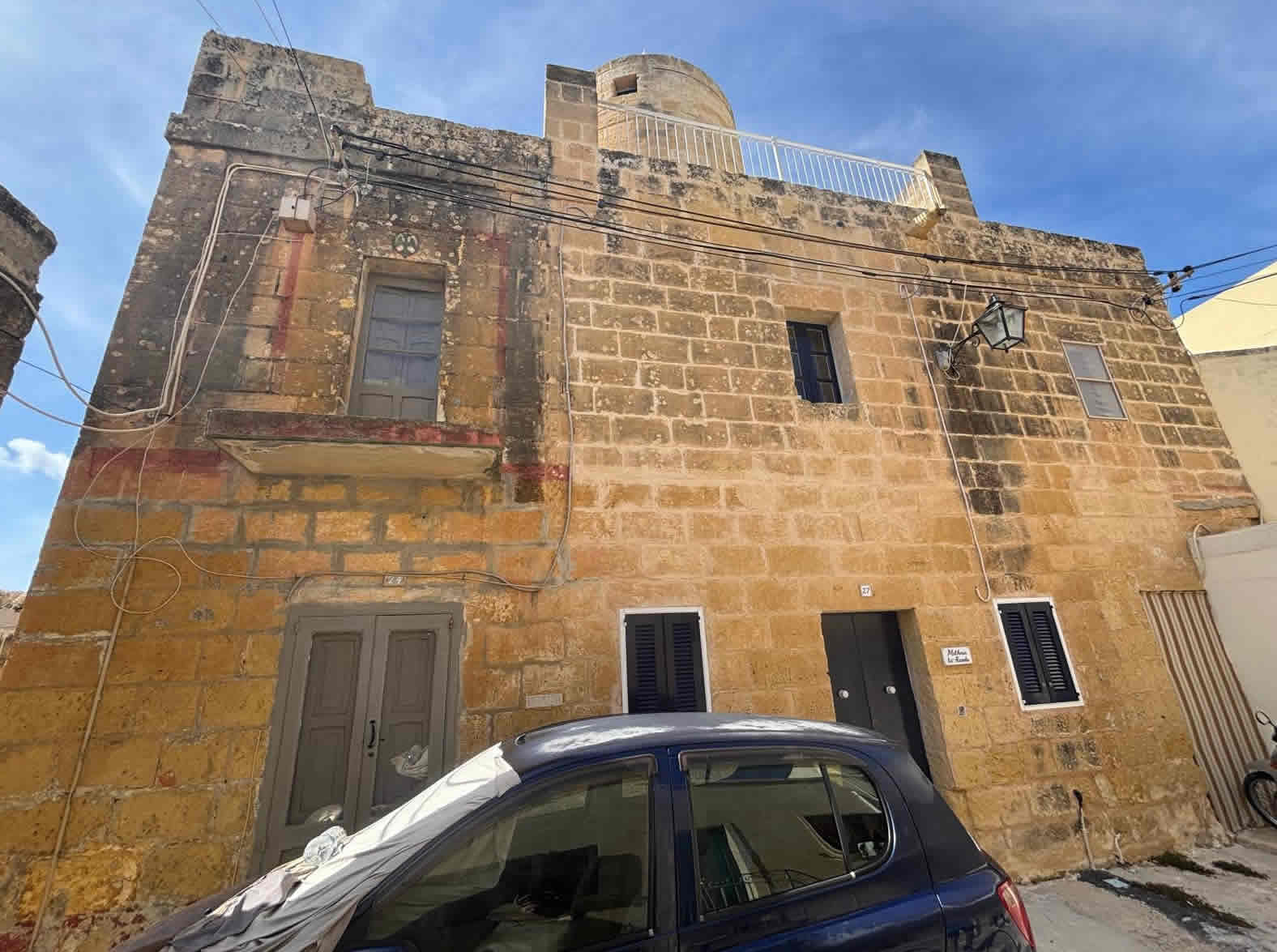
Here’s a summary of the construction and history of Ta 'Randu Windmill / -Xaghri Windmill in Fontana, Gozo:
📍 Location
36.041328, 14.234962Ta’ Randu Windmill (Triq il-Qalb ta’ Ġesù, Fontana, Gozo)
Here is a detailed breakdown of the history and construction of the windmill commonly referred to as Ta’ Randu in Fontana (Gozo).
1. Historical background
The mill name “Ta’ Randu” is a personal/family style name that appears in several mills in Gozo (the surname “Randu” or “Randu/Camilleri” family) — so one must be careful that one is referring to the Fontana one.
In a historical photo catalogue of Fontana (1917-19) there is a listing: “Fontana-Gozo • Parish church and Windmill. In the background, the Ta’ Randu Windmill”. This places the windmill clearly in Fontana near the parish church of the Sacred Heart of Jesus Church, Fontana.
According to general Maltese windmill listings, the Fontana mill “Ta’ Randu / Ix-Xagħri” is listed but with little detail — the build date is not given, only noted as a “Tower” and with sails removed.
A lifestyle/travel article states:
“Ta’ Randu … born in 1853 and kept on working up until 1977, which means that it is one of the last few windmills to keep functioning.”
This claim is *useful*, but it may refer to another “Ta’ Randu” (the one in Qala) rather than the Fontana one.
Summary of historical data:
Located in Fontana, Gozo (Triq il-Qalb ta’ Ġesù) — confirmed via early-20th-century photo.
Name: Ta’ Randu Windmill.
Probably constructed in the mid-19th century (c. 1850s) or possibly earlier, though exact date unconfirmed.
The mill functioned as a grain-milling windmill (using wind power) for local agricultural communities.
At some point the sails were removed (common for many Maltese windmills when they became obsolete) and it ceased its original function.
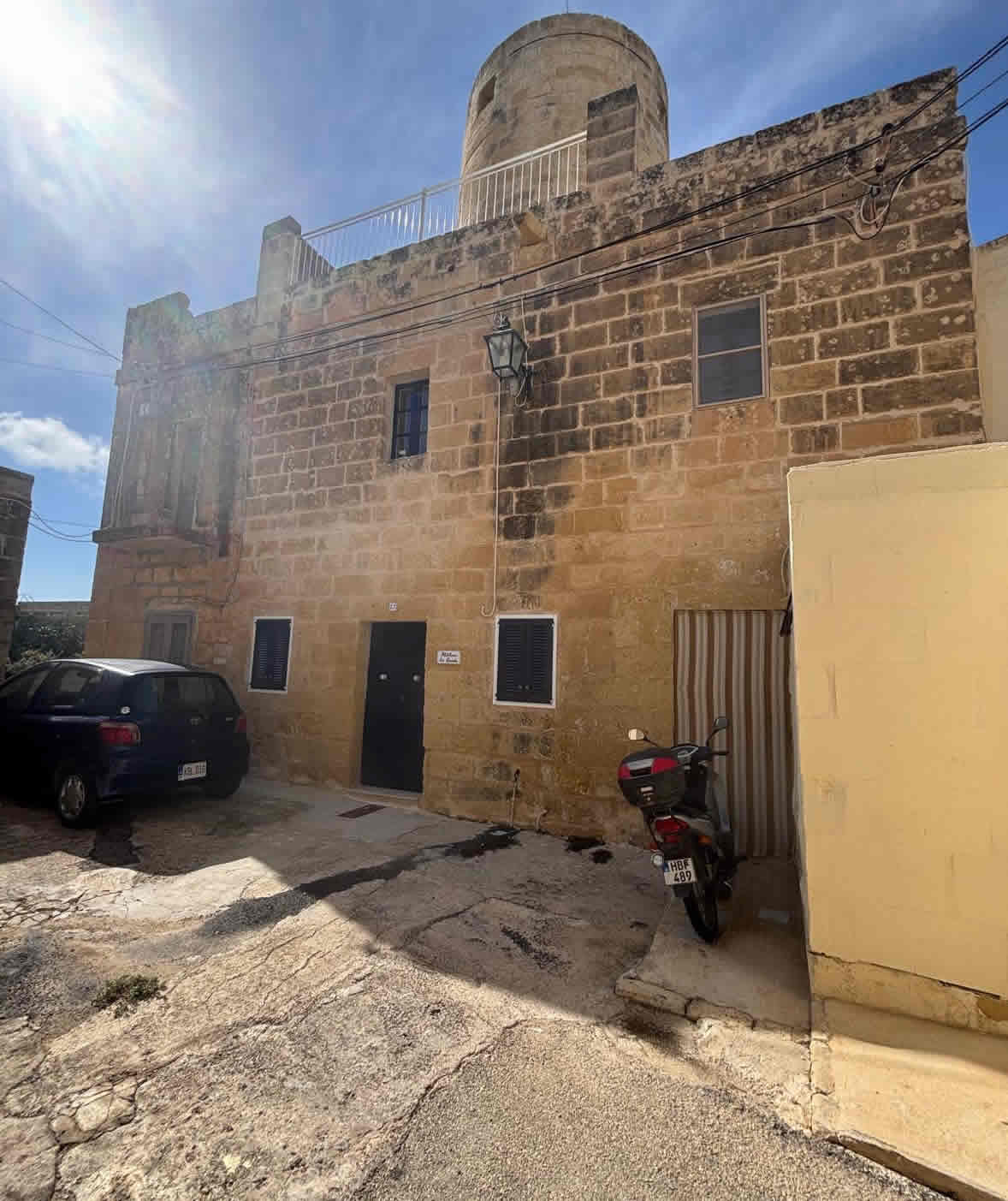
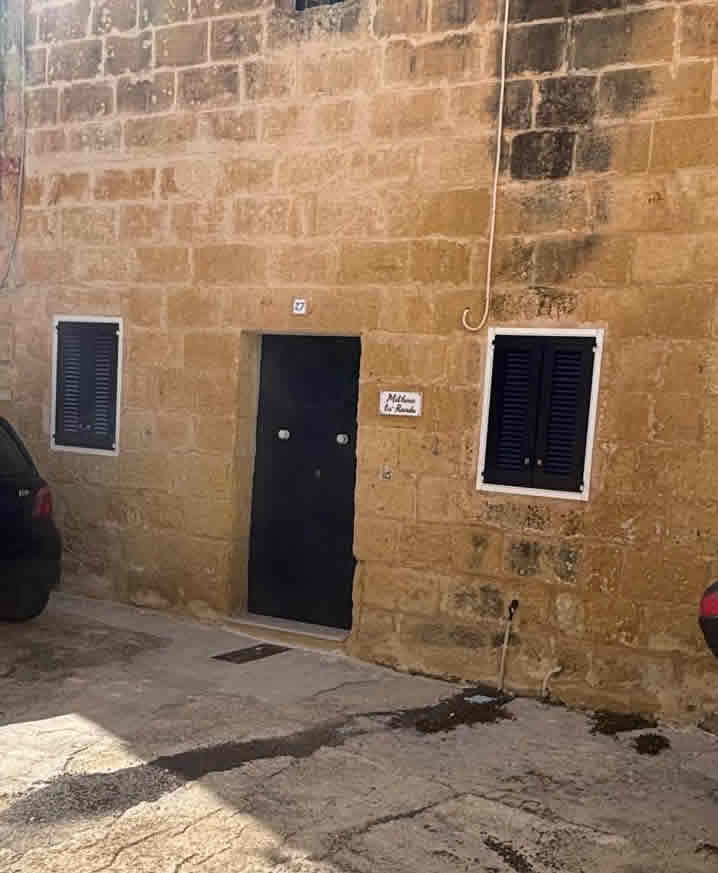
Presently it stands as a historic structure (currently used as a private residence) and is a visible landmark near Fontana.
2. Construction / architecture
Even though specific construction records for this windmill are limited, we can infer from the “typical Maltese windmill” model and some references that match the structure. From general maltese windmill research:
Maltese island windmills (especially in Gozo) often are tower mills: a cylindrical stone tower, with a rotating cap and sails (or vanes) attached at the top.
The base often includes attached rooms: milling workshops, storage, sometimes the miller’s living quarters. The tower houses the grinding mechanism: heavy millstones, gearing, etc.
In the case of many Gozo windmills, one finds:
A spiral staircase inside the tower (or alongside) giving access to upper levels.
The sails must be oriented to the wind; a wooden cap (sometimes cone-shaped) that can rotate so the sails face into the wind.
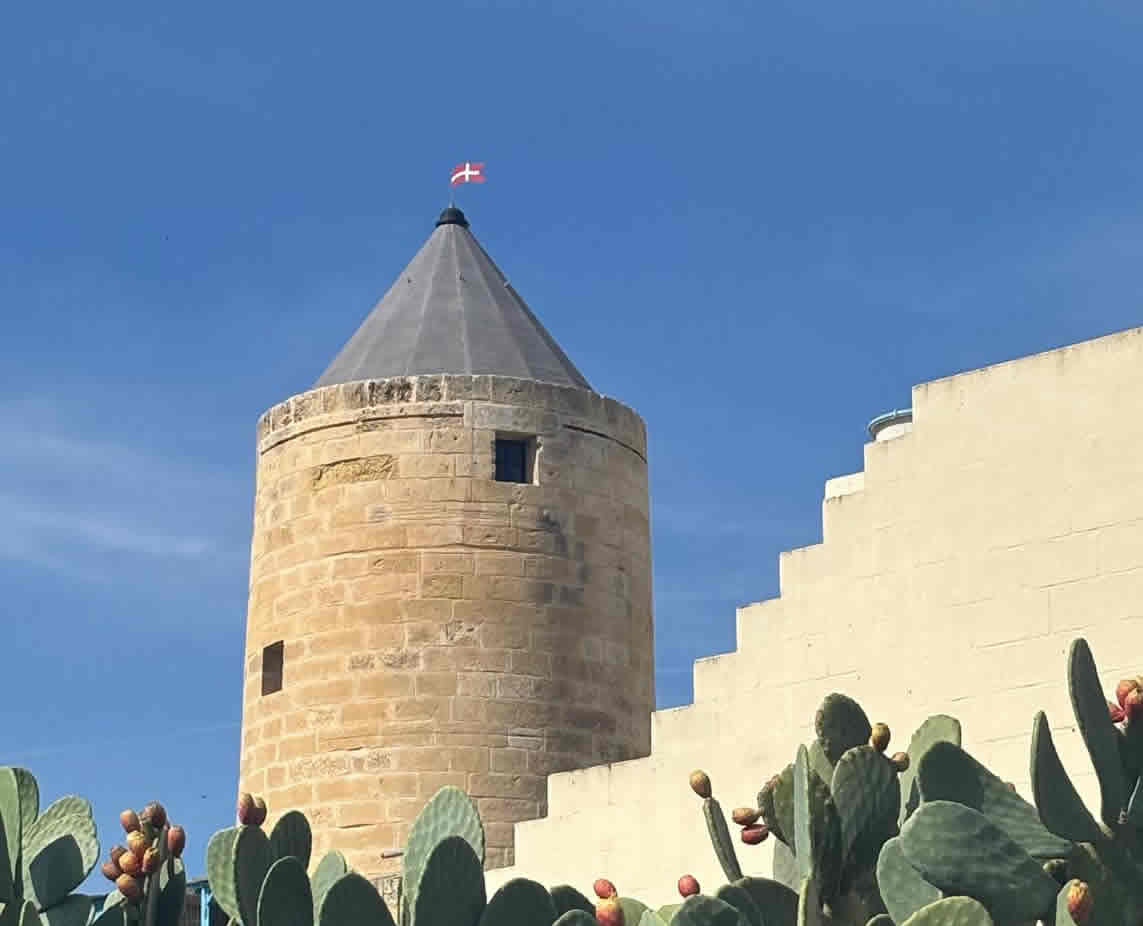
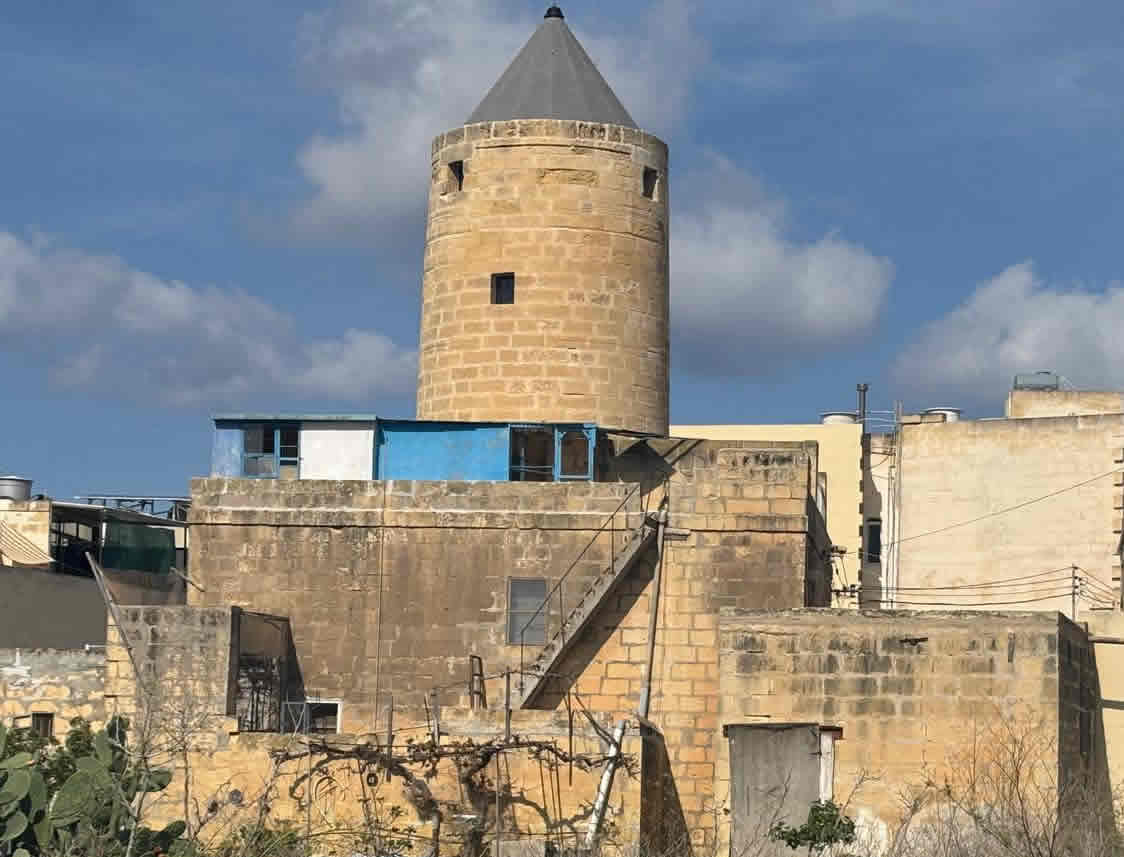
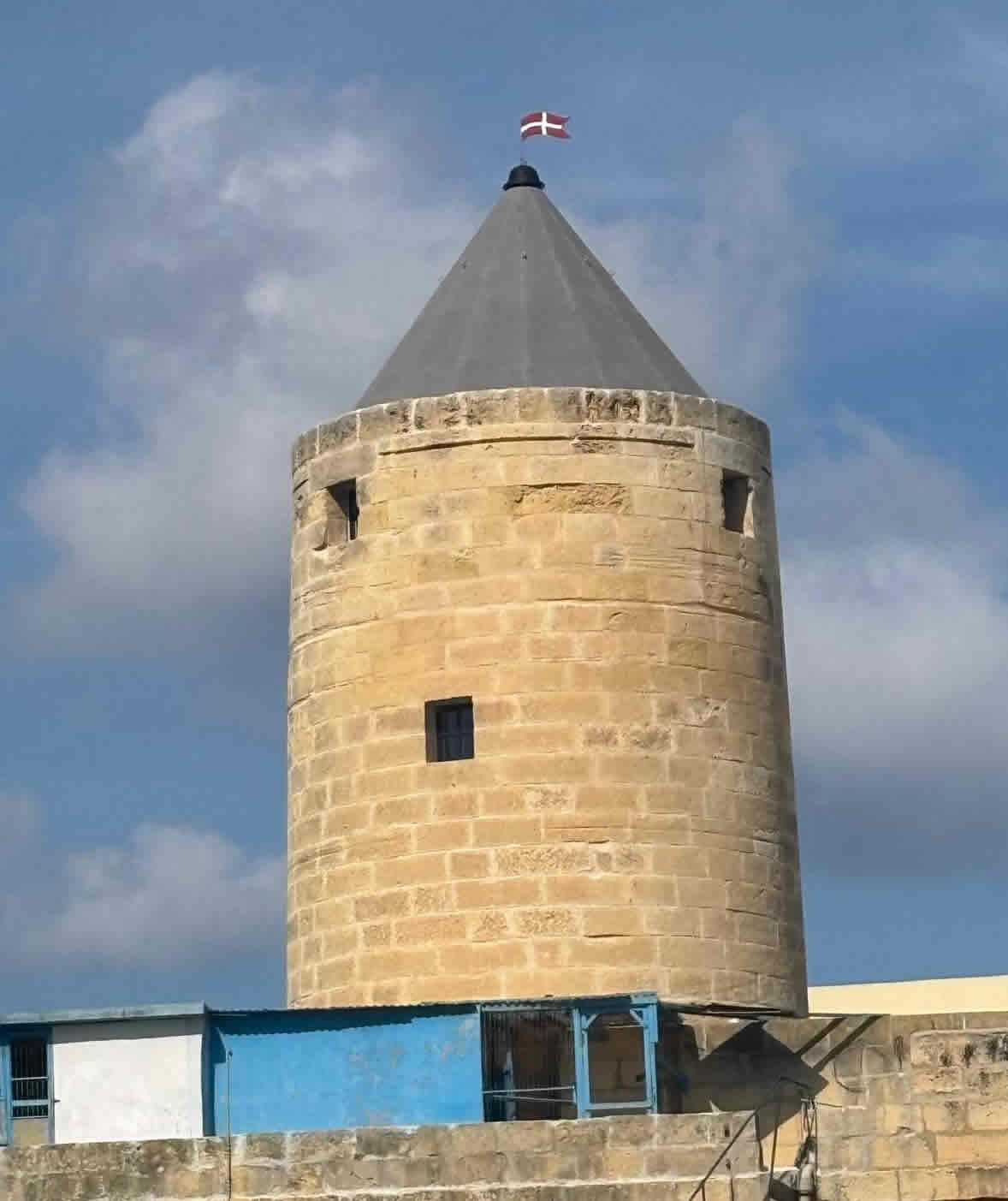
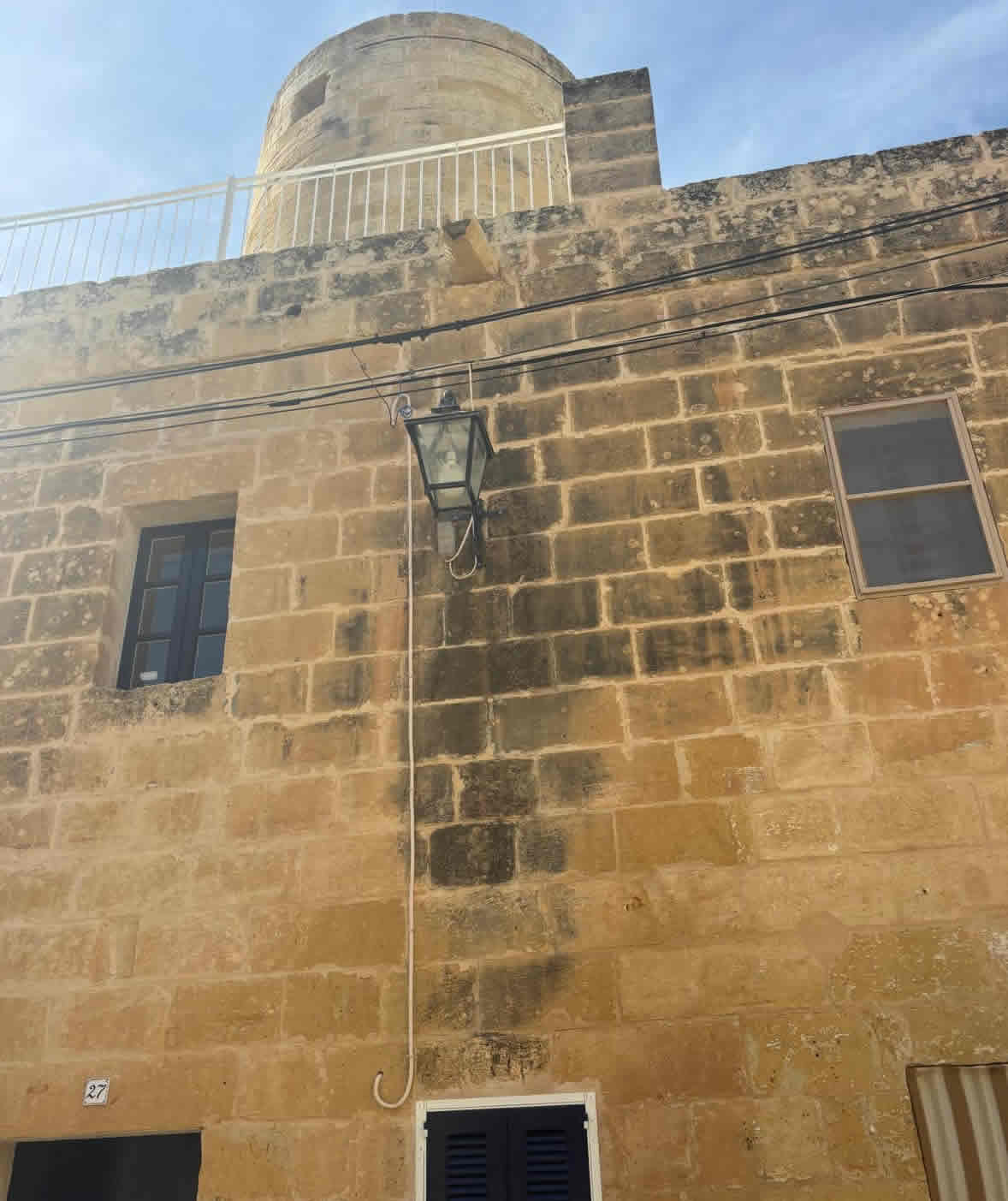
For the Fontana & general “Ta’ Randu” type mid-19th century mills: built of local limestone, thick walls, tower height sufficient to catch steady wind. The remaining external photographs show a cylindrical tower rising out of a rectangular base of rooms.
Mechanical features: heavy circular millstones (upper and lower), a main shaft connected to the sails; the wind via the sails drives the shaft which turns the stones to grind grain into flour. (Typical in Maltese mills)
For this specific windmill: From the photograph in the 1917-1919 catalogue, we see the tower standing behind the church and farmhouse. That suggests the tower is somewhat set back from the village front line — in a semi-rural setting.
Construction details for the Fontana windmill (inferred):
Tower: cylindrical stone construction, likely built in one phase (or possibly two if rebuilt/modified).
Base/Support: rooms around the tower for storage and milling operations.
Sails: Six (or maybe more) wooden arms radiating from a central hub (common number is six) — though I cannot confirm exact number for this one.
Cap: Wooden, likely conical or shallow, designed to rotate so the sails face wind.
Internal: central shaft, gearing, millstones (upper and lower), possibly wooden or stone floors for storage/working.
Orientation & site: Positioned so as to catch prevailing winds, likely on a slightly elevated site relative to village houses.
3. Significance and later use
The fact that a photograph from the 1910s shows the mill in the background of the parish church indicates it was a well known landmark at that time.
It appears that by the 20th century the mill had likely ceased commercial operation (wind-milling became economically less viable with steam/industrial milling). The listing “sails removed” in the windmill database implies that the sails had been taken down.
The listing in a travel-article (1853-1977 service) suggests longer usage, but as stated this may not be fully confirmed for this exact windmill.
In contemporary times, the presence of the mill adds cultural and heritage value to the village of Fontana. It helps illustrate traditional milling techniques and rural life in Gozo’s past.
If accessible, one might see the structural remains, though I did not locate a detailed recent interior survey specifically for this windmill.
4. What we don’t definitively know
Precise construction date for the Fontana windmill. I found earlier sources listing a “1853” date for a Ta’ Randu (likely Qala version) but not reliably for Fontana.
The original builder’s name / miller lease holder for this mill in Fontana.
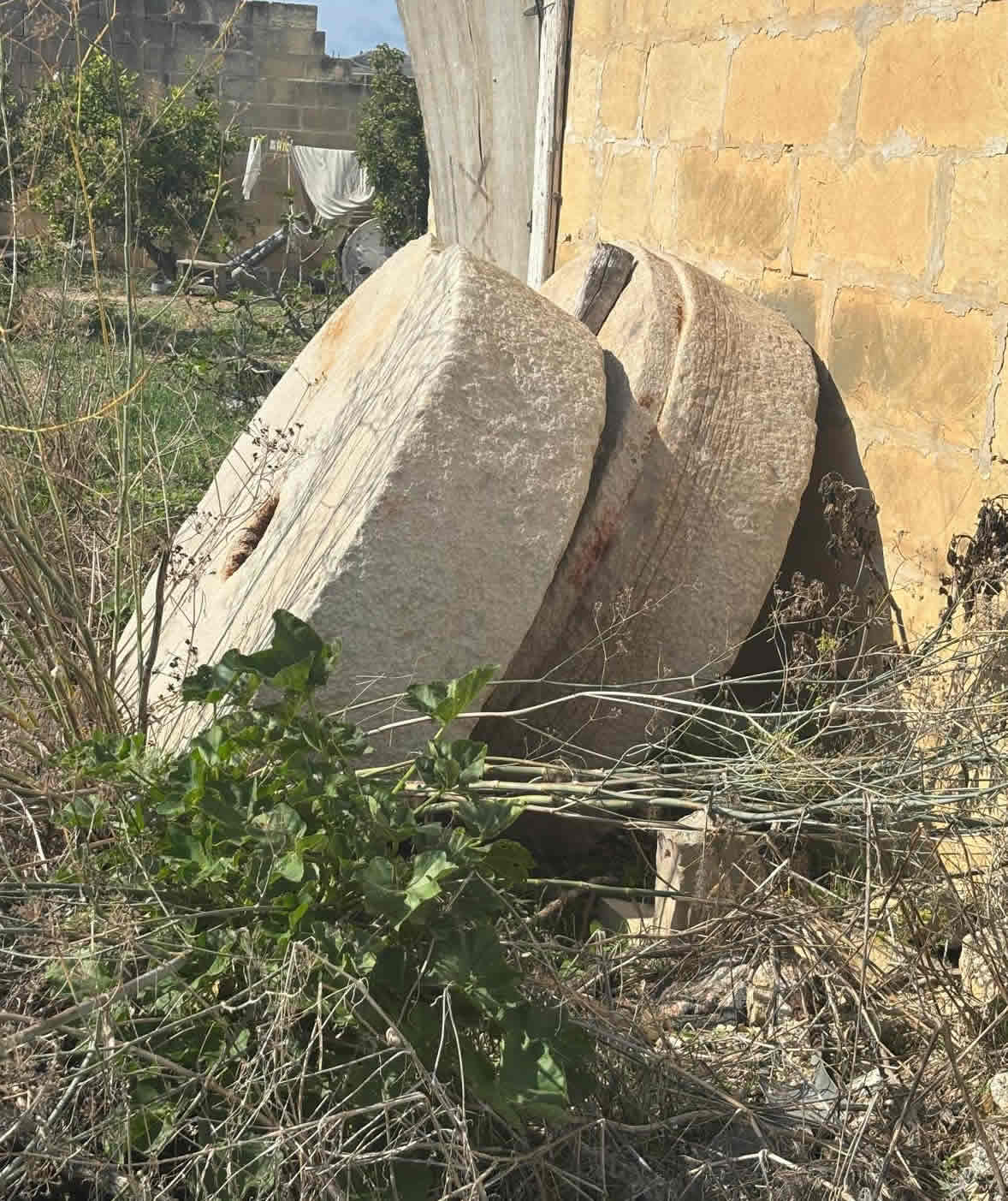
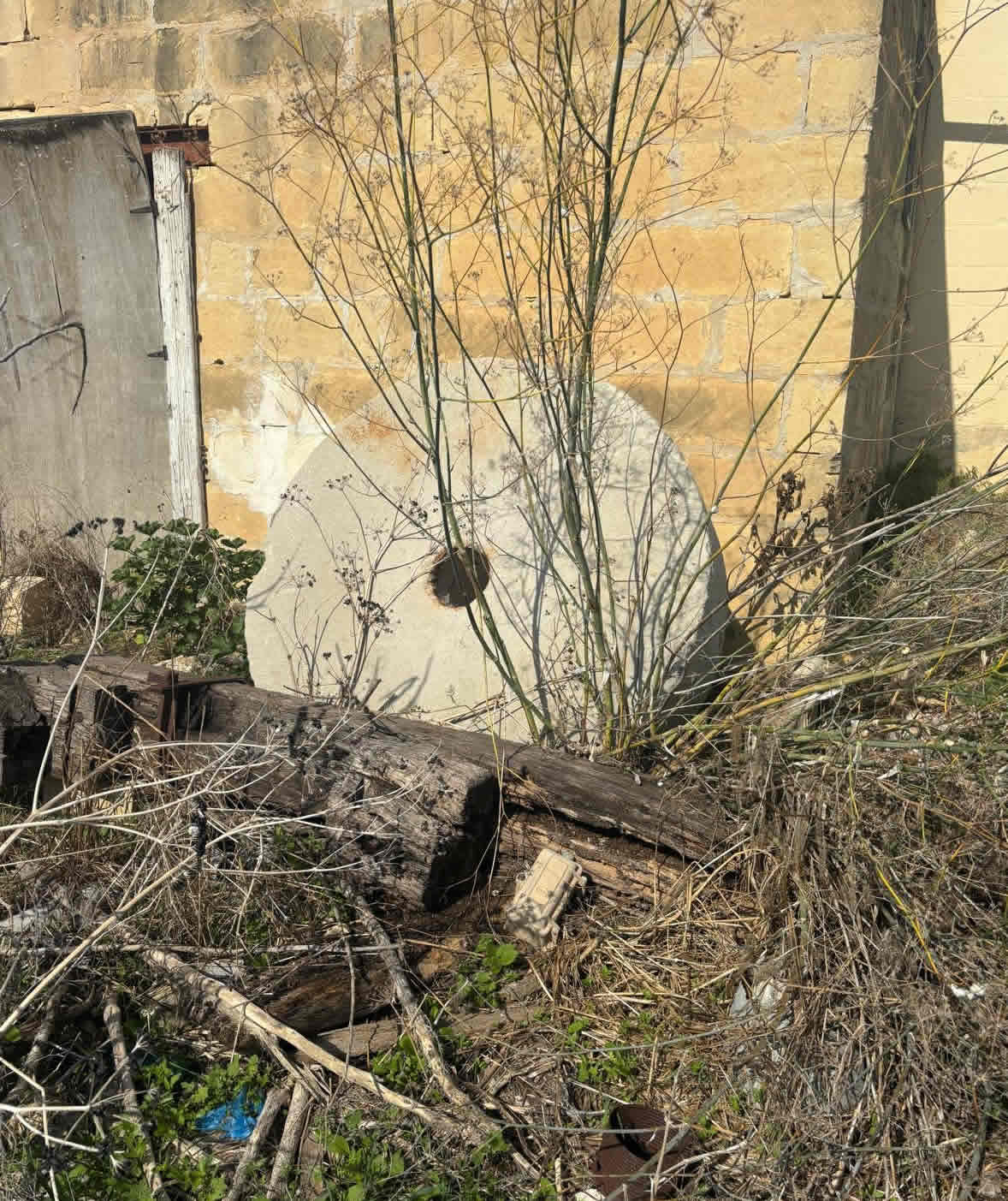
Whether the machinery (millstones, gears) remain intact inside this mill. There are a number of millstones at the back of the mill in the field, see photos.
Current interior access status (private property or heritage open site) — user comments suggest some windmills are view-only from outside.