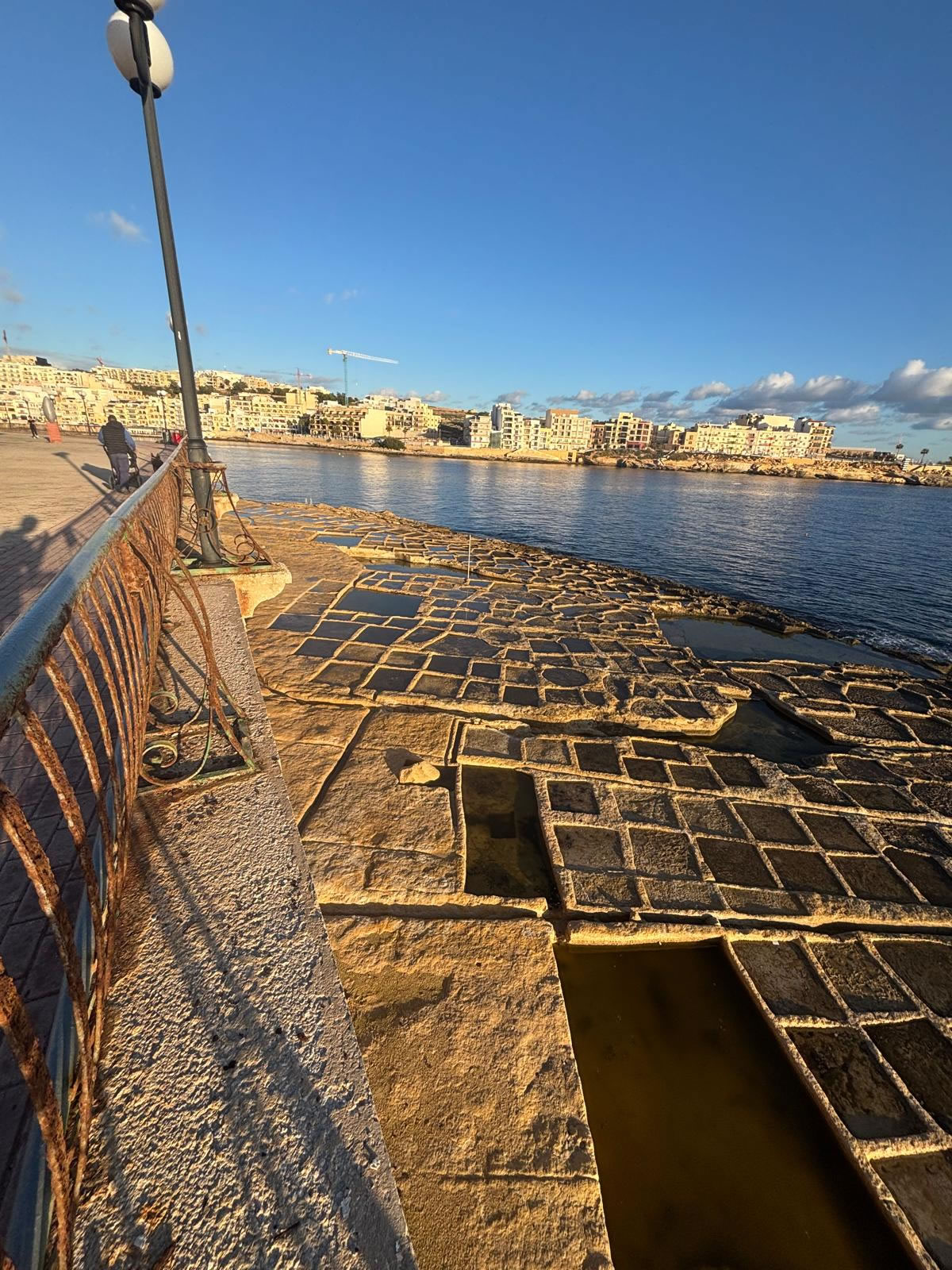
📍 Location
The coordinates of Marsaskala Salini Salt Pans are:
- 35.863450, 14.571687
They run for a length of approx 350 metres along the coast
Here is the history of the Marsaskala Salini salt pans
Salt pans on Triq is-Salini, Marsaskala — full history, construction, use and present state
The salt pans along Triq is-Salini (Marsaskala) are rock-cut and partly reworked evaporation basins whose origins almost certainly go back centuries (very likely Roman/medieval beginnings), were intensively used and expanded under later regimes (Knights → British), reached their commercial peak in the 19th century, then declined in the 20th century. Today they are an archaeological/industrial-heritage landscape and a small-scale ecological resource — mostly abandoned but still popular with visitors and occasionally used for artisanal salt harvesting.
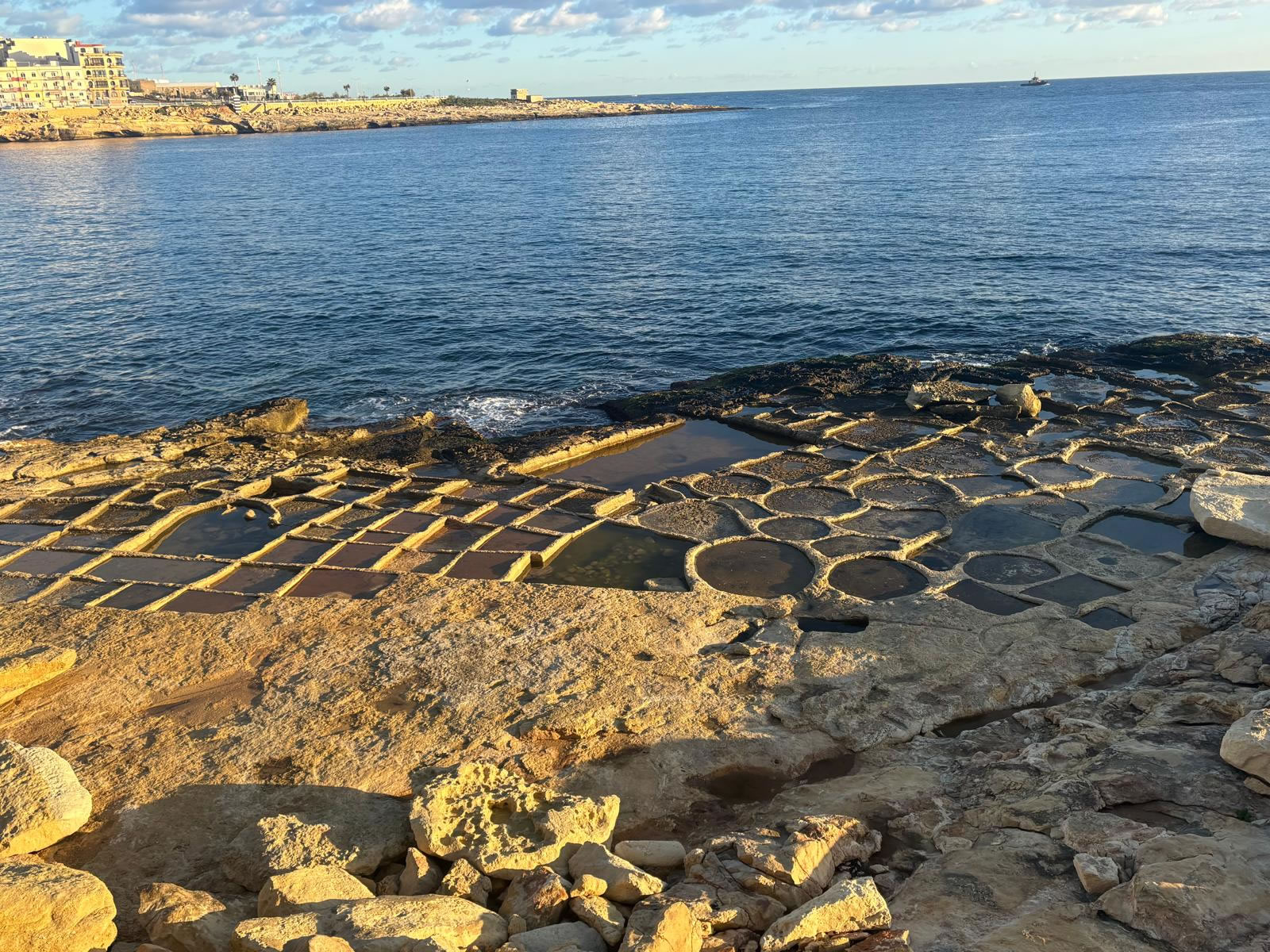
1. What the “salt pans” at Triq is-Salini actually are
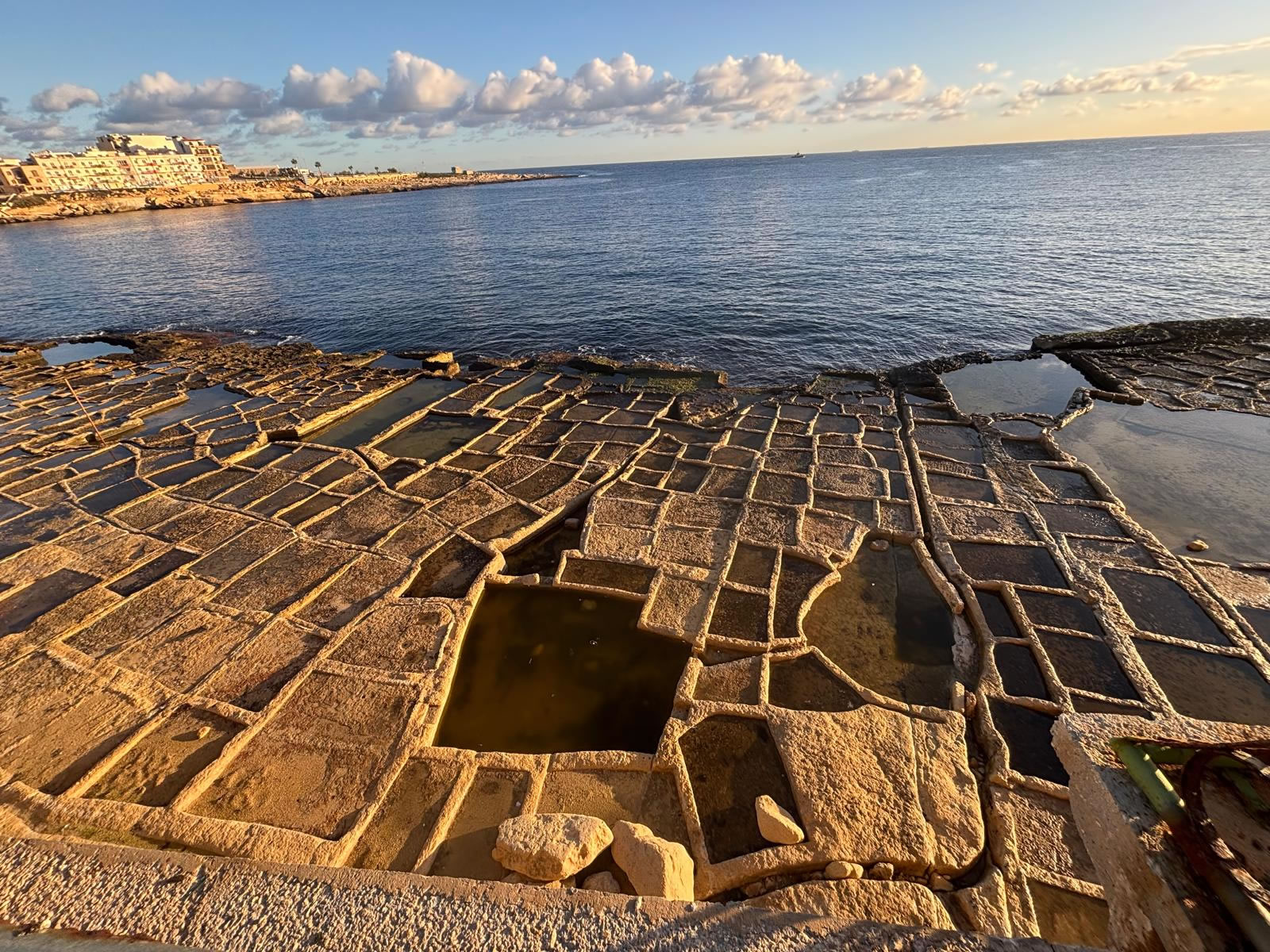
They are shallow, rock-cut basins carved into the coastal limestone platform and arranged as a patchwork of pans and channels. Sea water floods the pans at high tide and then evaporates, leaving crystallised salt which can be raked and collected. The form you see today is the result of many episodes of cutting, repair and reuse over centuries.
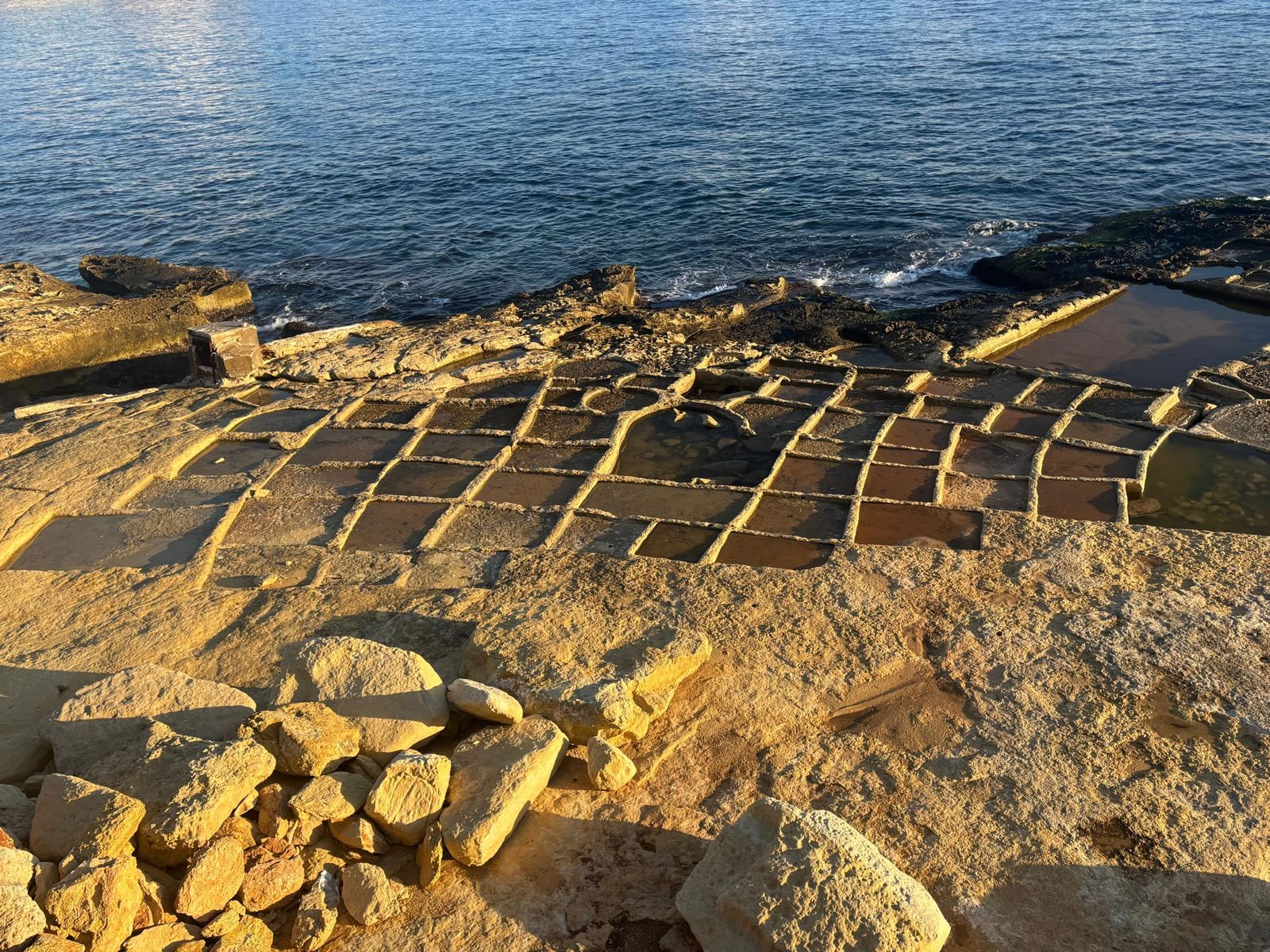
2. Origins — antiquity to medieval period
Archaeological and historical studies suggest salt-extraction sites around Malta often date back to Roman times or earlier; many coastal pan complexes were used intermittently over long periods. Local tradition and early surveys of Marsaskala’s pans likewise argue for very old origins (Roman/late-antique through medieval), although exact documentary evidence for Triq is-Salini’s earliest phase is limited in the public record. In short: very old — probably Roman origin, reused continuously.
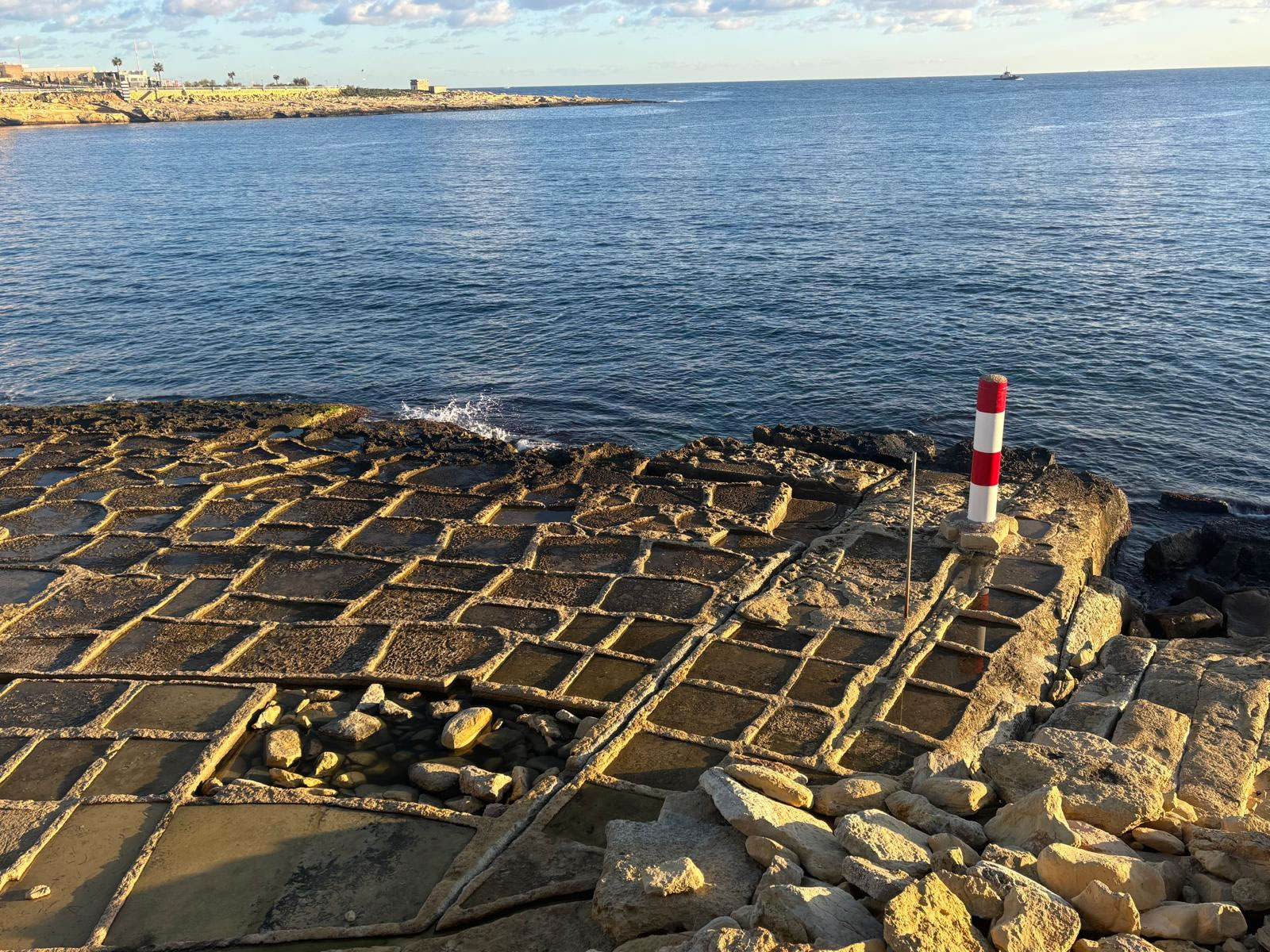
3. Development and commercial use (Knights → 19th century)
Under the medieval and Knights periods salt became an important commodity in Malta (for curing food, leather processing, preservation). The larger purpose-built Salina pans and smaller coastal pans were managed, repaired and expanded during the Knights’ era and again under British rule.
Salt production in Malta scaled up in the 19th century with organised evaporating pans (Salina Bay is the best-known example). The Marsaskala pans were part of this island-wide network of small producers — locally important even when larger Salina operations dominated exports. The 19th century is when salt production reached its commercial peak on the islands.
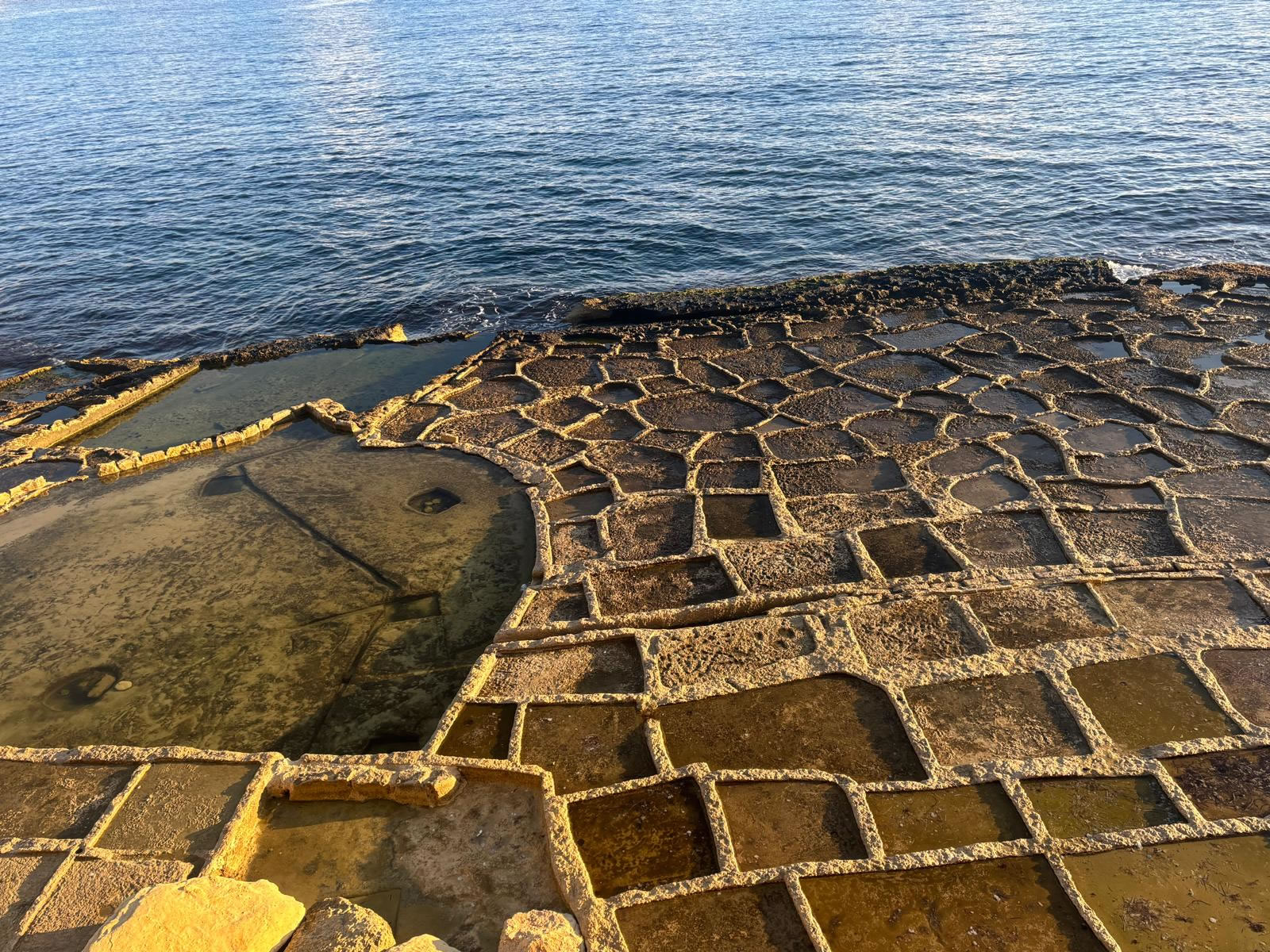
4. How the pans were constructed and worked (technical detail)
Construction: craftsmen cut basins directly into the limestone; pans are separated by low rock ridges and channels. Where necessary, stone walls and shallow troughs were built to control water flow. The arrangement is modular: seawater is let into a set of pans, concentrated through successive smaller pans, then left to evaporate.
Working method: flooding at high tide → settling/filtration → progressive concentration in shallower pans → final crystallisation in the shallowest pans → raking and collection. Traditional production is labour-intensive and seasonal (best in hot, dry months).
5. Decline in the 20th century and recent history
Large-scale salt production became industrialised elsewhere (and the 1979 storms that badly damaged the Salina Bay pans accelerated decline). Small coastal pans such as those at Marsaskala fell into disuse, were abandoned or used intermittently by a few local operators. Conservation, development pressures and storm damage all reduced active production during the 20th century.
6. Present status — heritage, ecology and occasional production
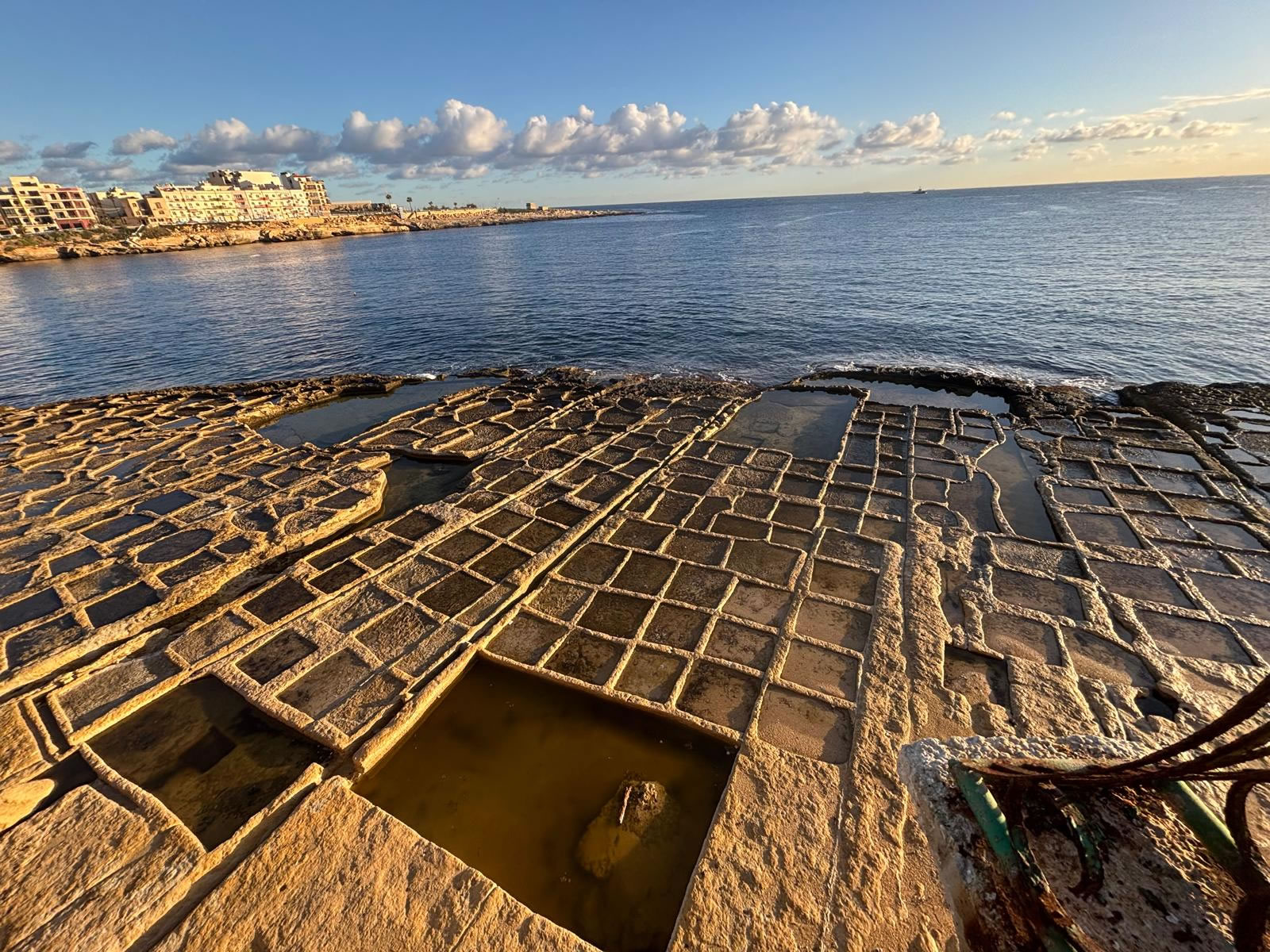
Heritage & visitors: the Marsaskala salt pans are now a visible element of the coastal heritage (documented in local guides and photographed widely). They are popular with walkers and photographers along Triq is-Salini.
Ecology & conservation: the pans form little intertidal wetlands used by waders and invertebrates; nature groups and wetland inventories register Marsaskala among coastal wetland sites requiring protection (they’re part of the local Natura/wetlands considerations). Management calls in the literature stress the need for cleaning and maintenance if traditional salt production is to continue.
Small-scale salt production: in some places in Malta artisanal salt is still harvested and sold as a specialty product. In Marsaskala there are reports and local interviews of a few people maintaining small patches and occasionally collecting salt, but large-scale commercial output no longer occurs.
7. Why they matter (summary)
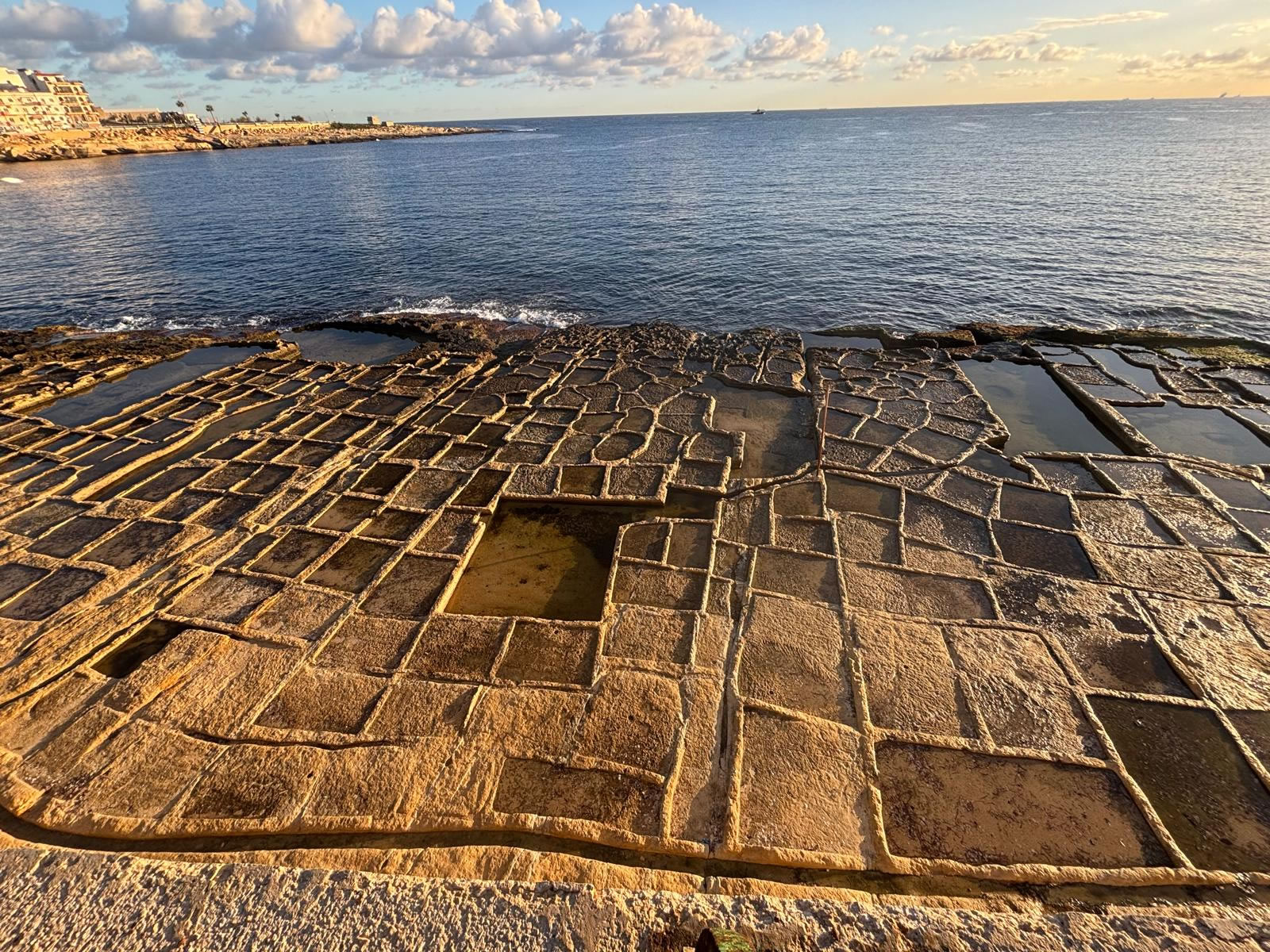
The Triq is-Salini pans are a layered cultural landscape combining industrial archaeology (rock-cut pans), maritime economy (salt trade), and coastal ecology (small wetland habitat). They illustrate traditional Mediterranean salt-making technology still legible on the Maltese coast and merit protection and sensitive management.